




Do Heat Pumps Work in Cold Weather? What the Data Says
Cold-climate heat pumps are rated at 47°F, 17°F and 5°F. Here is how cold 21 US cities actually get, from NOAA normals and official design temperatures, and what a DOE field test found.
- Last reviewed Oct 4, 2026
- 14 cited sources
- 4 min read
- 1Yes: cold-climate heat pumps keep heating well below freezing. ENERGY STAR’s label requires at least 70% of rated capacity and a COP of 1.75 at 5°F.
- 2In a DOE field test in 22 homes, the median COP at 0–5°F was 1.9; backup heat ran about a quarter of the time at −10°F to 0°F.
- 3The coldest month’s average low is below 17°F in about 1 in 4 contiguous-US ZIP codes and below 5°F in about 1 in 23 (NOAA 1991–2020).
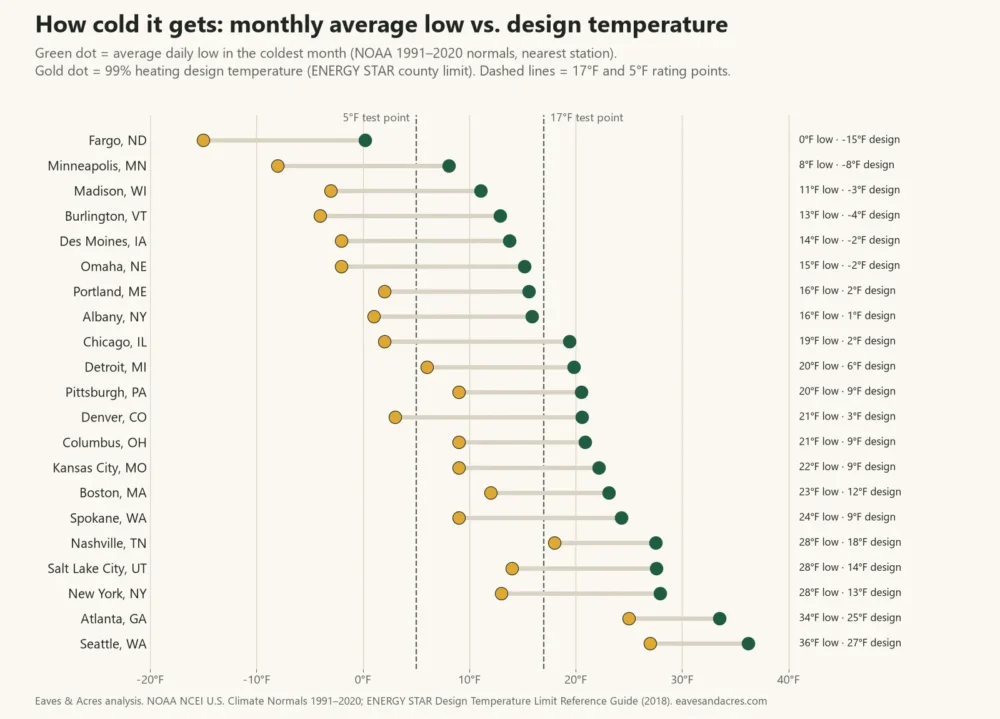
- 4Monthly averages are not design temperatures: in 21 cities the 99% design temperature is about 9–18°F colder than the coldest month’s average low.
- 5Ask for capacity at your design temperature, not the nameplate; contractors size with ACCA Manual J.
Yes. A cold-climate air-source heat pump keeps heating well below freezing. To earn ENERGY STAR’s cold-climate label, it must still deliver at least 70% of its rated capacity at 5°F, at a coefficient of performance (COP) of 1.75 or better: 1.75 units of heat for every unit of electricity.5 In a Department of Energy field test in 22 homes, the median COP between 0°F and 5°F was 1.9.6 What changes in the cold is how much heat the unit can make, how often it defrosts, and when backup heat has to help.
Whether that matters depends on your winters. In NOAA’s 1991–2020 climate normals, the coldest month’s average low is below 17°F in about one in four ZIP codes in the contiguous US, and below 5°F in about one in 23.1 Below are those numbers for 21 cities, and what monthly averages can’t tell you.
What cold weather does to a heat pump
A heat pump moves heat from outdoor air into the house. The colder that air, the harder the job, so both output and efficiency fall. Pacific Northwest National Laboratory (PNNL) notes that a conventional heat pump’s capacity drops below its rating once it is colder than 40°F, and only a fraction is left in the teens.6 That is where the idea that heat pumps “don’t work in the cold” comes from.
Everything below is about air-source heat pumps. Ground-source (geothermal) systems draw heat through underground pipes instead, and NYS Clean Heat notes that the ground 10 feet down stays at a constant temperature however cold the air gets.10
Cold-climate models close most of that gap with variable-capacity (inverter) compressors. The Northeast Energy Efficiency Partnerships (NEEP) requires one for its cold-climate list,2 and NYS Clean Heat credits inverter compressors and better defrost controls for today’s performance.10
The three temperatures on a spec sheet: 47°F, 17°F and 5°F
NEEP’s list reports capacity and COP at 47°F, 17°F and 5°F, plus the lowest temperature the manufacturer publishes data for.2 47°F is a mild day; 17°F is close to a normal January night in Chicago (19°F) or Albany (16°F); 5°F is deep cold. ENERGY STAR tests cold-climate units down to 5°F and notes that they keep running below it.4
What makes a heat pump “cold-climate”
NEEP’s specification is meant as a minimum for efficiency-program qualification, and NYS Clean Heat requires it for rebates.10 DOE’s Cold Climate Heat Pump Challenge set a stricter target that eight manufacturers built prototypes for.8
| Requirement | ENERGY STAR cold climate | NEEP ccASHP v4.0 | DOE Challenge (prototypes) |
|---|---|---|---|
| COP at 5°F (max capacity) | ≥ 1.75 | ≥ 1.75 | ≥ 2.4 (24,000–48,000 Btu/h), ≥ 2.1 above |
| Capacity at 5°F vs. 47°F | ≥ 70% | Must be reported (47, 17, 5°F) | 100% |
| HSPF2 (seasonal efficiency) | ≥ 8.1 ducted, ≥ 8.5 ductless | ≥ 7.7 ducted, ≥ 8.5 non-ducted | Not listed here |
| Compressor | Not listed here | Variable capacity | Cut-out no higher than −10°F |
Sources: PNNL’s summary of the ENERGY STAR criteria,5 NEEP2 and DOE.7 Our glossary explains what HSPF2 measures. PNNL says a properly sized cold-climate heat pump
can meet 100% of a home’s heating load in nearly any location
To check a model, look it up on NEEP’s cold-climate heat pump product list3 or ask whether it is ENERGY STAR cold-climate certified.
How cold it gets where you live
A 5°F rating matters only if your winters get near 5°F. We found the coldest month for every contiguous-US ZIP code in NOAA’s 1991–2020 normals, using the nearest weather station, and grouped ZIP codes by that month’s average daily low.1
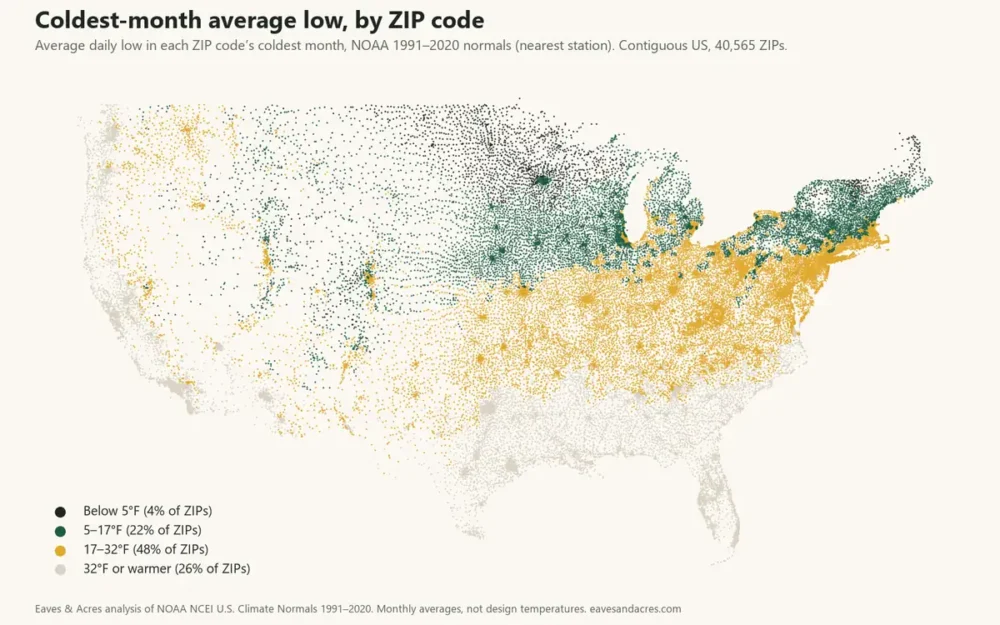
About 26% of ZIP codes have a coldest-month average low below 17°F. Only 4% are below 5°F, mostly in Minnesota, the Dakotas and Wisconsin, with pockets in northern New England and the Rockies. Nights below zero are more widespread: half of all ZIP codes average at least one a year, and 19% average ten or more.1
For 21 cities, here is the coldest month next to the design temperature that load calculations use. Those come from ENERGY STAR’s Design Temperature Limit Reference Guide, which gives each county a 99% heating design temperature from ASHRAE and ACCA Manual J data.9
| City (ZIP) | Coldest month | Average low | Nights at or below 10°F | Nights at or below 0°F | 99% design temp. |
|---|---|---|---|---|---|
| Fargo, ND (58102) | Jan | 0°F | 71 | 42 | −15°F |
| Minneapolis, MN (55401) | Jan | 8°F | 46 | 23 | −8°F |
| Madison, WI (53703) | Jan | 11°F | 42 | 20 | −3°F |
| Burlington, VT (05401) | Jan | 13°F | 38 | 16 | −4°F |
| Des Moines, IA (50309) | Jan | 14°F | 28 | 10 | −2°F |
| Omaha, NE (68102) | Jan | 15°F | 27 | 9 | −2°F |
| Portland, ME (04101) | Jan | 16°F | 27 | 7 | 2°F |
| Albany, NY (12207) | Jan | 16°F | 24 | 7 | 1°F |
| Chicago, IL (60602) | Jan | 19°F | 16 | 4 | 2°F |
| Detroit, MI (48226) | Jan | 20°F | 12 | 2 | 6°F |
| Pittsburgh, PA (15222) | Jan | 20°F | 11 | 2 | 9°F |
| Denver, CO (80202) | Dec | 21°F | 16 | 4 | 3°F |
| Columbus, OH (43215) | Jan | 21°F | 13 | 4 | 9°F |
| Kansas City, MO (64106) | Jan | 22°F | 10 | 1 | 9°F |
| Boston, MA (02108) | Jan | 23°F | 7 | 1 | 12°F |
| Spokane, WA (99201) | Dec | 24°F | 9 | 2 | 9°F |
| Nashville, TN (37201) | Jan | 28°F | 3 | <1 | 18°F |
| Salt Lake City, UT (84101) | Jan | 28°F | 1 | <1 | 14°F |
| New York, NY (10001) | Jan | 28°F | 3 | <1 | 13°F |
| Atlanta, GA (30303) | Jan | 34°F | <1 | <1 | 25°F |
| Seattle, WA (98101) | Dec | 36°F | <1 | <1 | 27°F |
Nights at or below 0°F and 10°F are NOAA’s average days a year with a low at or below that mark, at the same station. Where a county has several stations, ENERGY STAR uses the coldest.9
What monthly normals can and can’t tell you
Monthly normals are 30-year averages: good for comparing places, not for choosing equipment.
- An average hides cold nights. Minneapolis averages an 8°F January low, yet 23 nights a year below zero.
- A daily low is one moment. It doesn’t say how many hours stay that cold. In PNNL’s field test, only 8 of 22 homes logged 10 or more hours of heating below 0°F.6
- Design temperatures are colder. In every city in Table 2, the 99% design temperature is roughly 9 to 18°F below the coldest month’s average low: 8.5°F lower in Atlanta, 17.6°F in Denver. Equipment selection starts from the design temperature.9
Valleys also run colder than hilltops, and the nearest station can be miles away; our methodology page explains how ZIP codes are matched to stations.
How cold-climate units did in real homes
From 2022 to 2024, PNNL monitored DOE Challenge prototypes in 22 occupied homes. All were centrally ducted, most were 3-ton units, and all had staged electric backup heat.6 Leaving out defrost and backup periods, median COPs below 30°F ran from 1.6 to 2.7, and 1.9 between 0°F and 5°F.
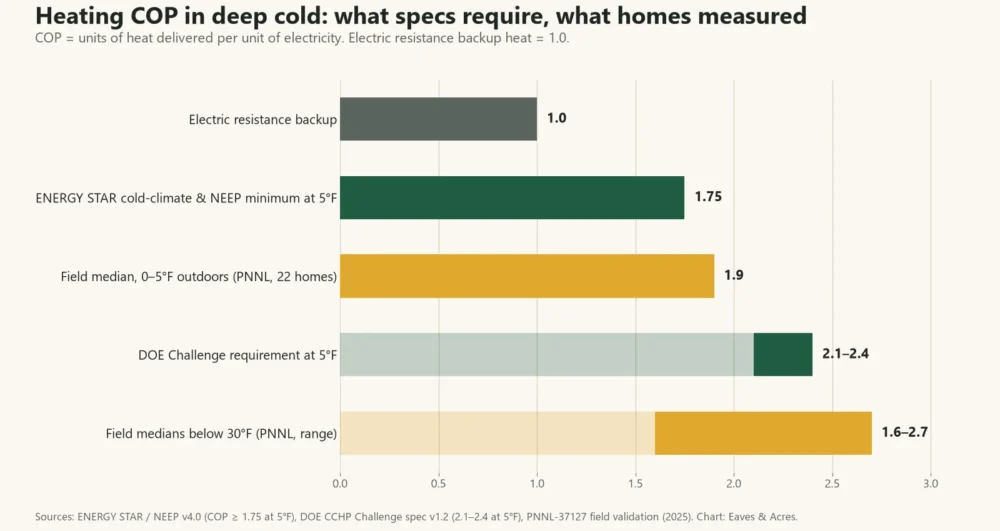
observed COP of most of the units in the field is also higher than 1.75
Between −10°F and 0°F, backup elements were on about 25% of the time; backup energy fell from a median of about 11% of heating energy at 5°F to 0% in milder weather. Heating satisfaction rose from 3.61 to 3.88 out of 5. Many sites had milder winters than normal, so the coldest bins hold less data.6 New York’s energy agency (NYSERDA) likewise found that properly sized cold-climate units gave adequate heat and comfort in New York homes.10 Read the full PNNL field report (PNNL-37127).
Defrost cycles: why the outdoor unit ices up
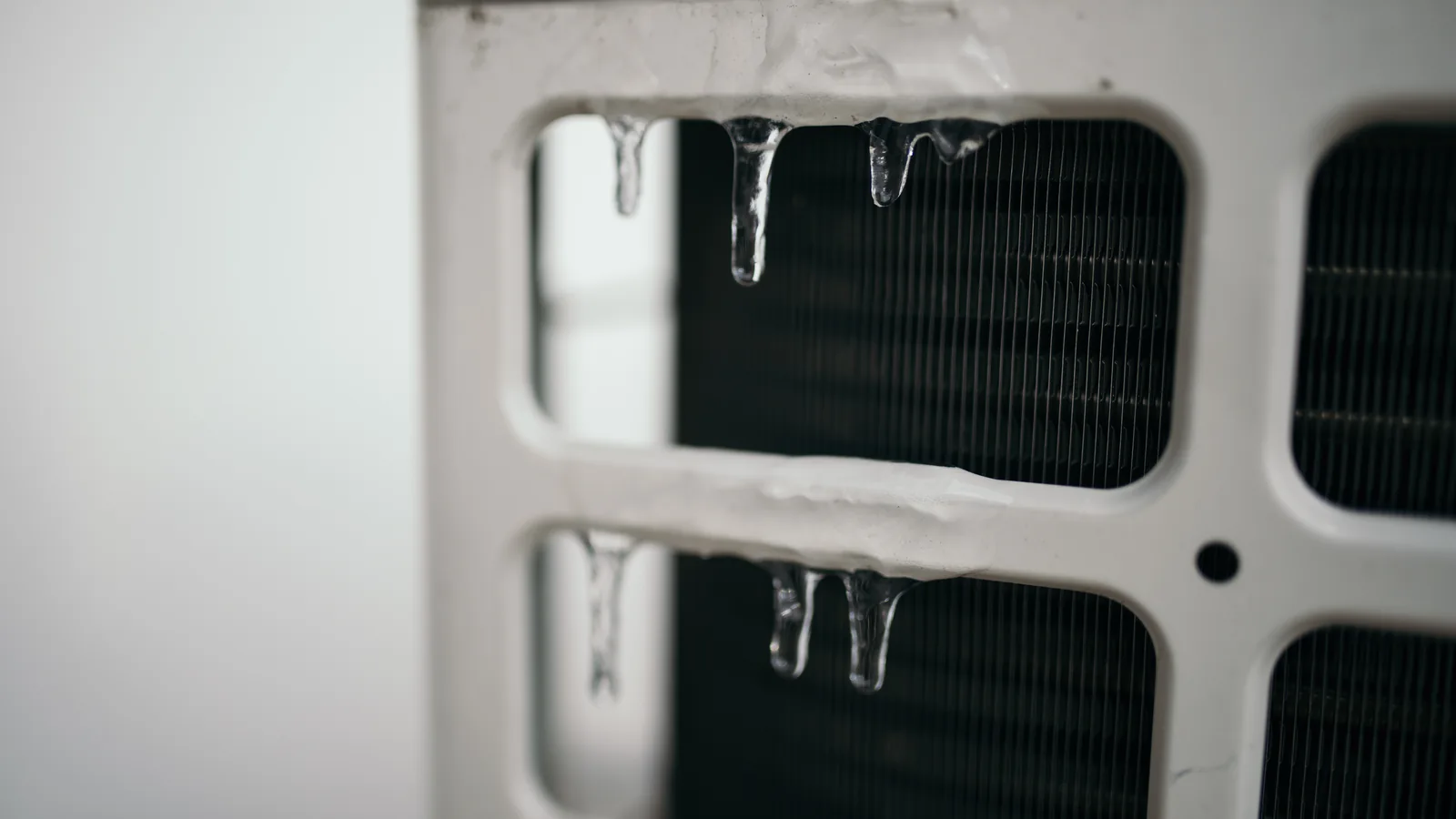
In cold, humid weather, moisture freezes on the outdoor coil, and the frost cuts how much heat the unit can pull from the air. To clear it, the heat pump briefly reverses into cooling mode, moving heat to the outdoor coil to melt the frost.6
The air from your vents can turn cooler meanwhile. PNNL found most units kept the fan running with the first stage of backup heat, about 5 kW; others ran the fan alone or switched it off.6 A short pause or cooler air during defrost is normal; defrost can use significant energy when backup heat runs.
Balance point and backup heat
As it gets colder, your home needs more heat while the heat pump makes less. Where those lines cross is the balance point; below it, PNNL explains, the heat pump cannot meet the home’s needs without backup.5
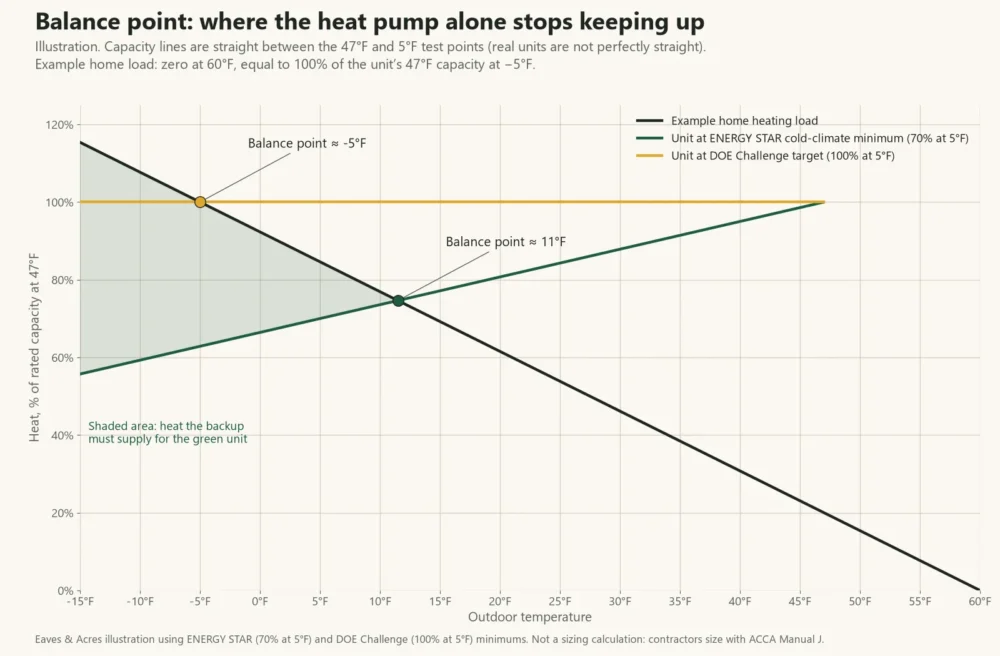
Where it lands is a design choice. In PNNL’s Minneapolis example, four sizing approaches put it at 40°F, 30°F, 0°F or −15°F, from a unit sized for cooling to one sized for all the heat.5 Backup is electric resistance strips or a furnace (dual fuel). Resistance heat has a COP of 1, so hours on backup cost more than heat pump heat. Whether gas backup is cheaper for you is a rates question, covered in our heat pump vs. furnace running-cost guide.
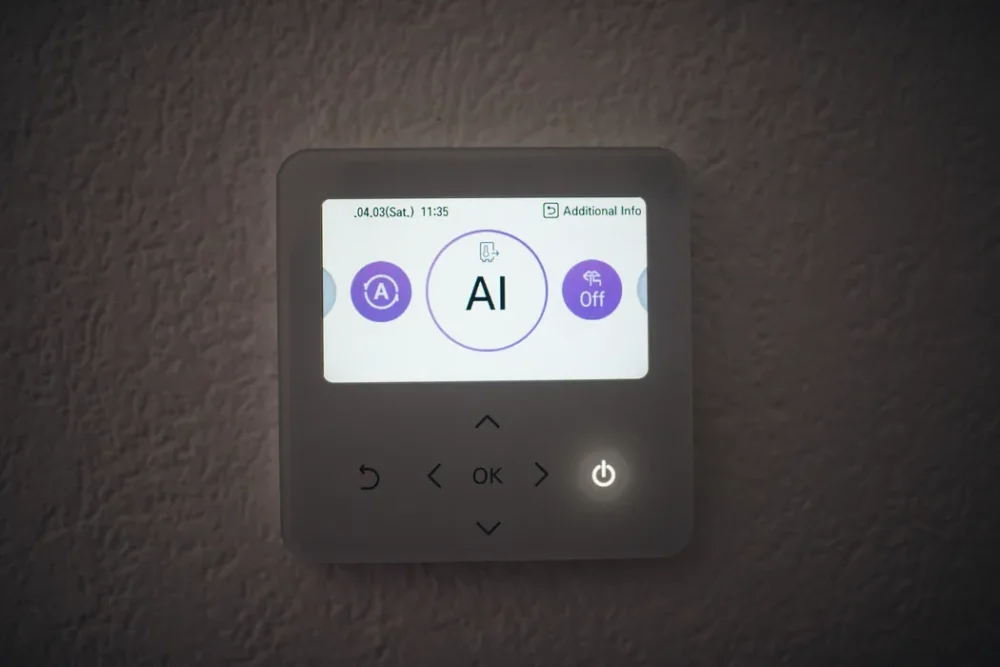
The switchover temperature, below which backup may run, is programmed into the thermostat. In the field it varied from home to home, even for the same manufacturer, which PNNL attributes most likely to thermostat programming and occupant behavior calling for backup in warmer weather.6 If bills spike on mild days, ask the installer to check it.
How to get good performance in a cold winter
- Choose a cold-climate model: ENERGY STAR cold-climate certified or on NEEP’s list.
- Ask for capacity at your design temperature. PNNL says equipment should not be selected on nameplate capacity.5
- Seal and insulate first. NYS Clean Heat recommends an energy assessment and air sealing before sizing.10
- Keep the outdoor unit above the snow. NYS Clean Heat advises mounting it at least 18 inches above the ground, on a gabled side of the house.10
- Ask how backup is set up: its type, stages and switchover temperature.
- Plan for outages. A heat pump stops when the power does; our generator size calculator sizes a backup unit for your elevation.
NEEP’s specification puts the second point plainly: consumers, contractors and designers should
review building loads, equipment capacities at design temperatures, and other important factors
Next step
Compare your city’s design temperature in Table 2 with the 5°F figure on any quote, then check running costs in our heat pump vs. furnace guide. More: heating and cooling guides, home energy, climate guides.
Frequently asked questions
There is no single cutoff. Conventional heat pumps lose capacity below 40°F and keep only a fraction in the teens, PNNL says. Cold-climate models are tested at 5°F and keep running below it; DOE’s Challenge prototypes had to run down to at least −10°F.
Cold-climate models do. NYS Clean Heat cites research showing comfortable heating at −15°F, and PNNL’s field units kept heating between −10°F and 0°F, with backup on about a quarter of the time.
Usually some. All 22 homes in PNNL’s field test had electric backup. How often it runs depends on how the system is sized against your design temperature, which a contractor works out with ACCA Manual J.
Most often it is a defrost cycle. The unit briefly reverses to melt frost off the outdoor coil, which can cool the air at the vents; many systems run a stage of backup heat to make up for it.
Output and efficiency fall as it gets colder, so backup heat may have to help on the coldest nights, and electric resistance backup (COP 1) costs more to run.
Keep the outdoor unit above the snow (NYS Clean Heat advises at least 18 inches off the ground), seal air leaks and add insulation, and have the installer check the backup heat switchover setting.
Long run times are normal for variable-speed units. In PNNL’s field test, median uninterrupted heating cycles between 5°F and 30°F lasted 50 to 200 minutes, and some homes ran close to 25 hours without stopping.
Sources
- 1.U.S. Climate Normals 1991–2020. NOAA National Centers for Environmental Information, 2021. Used for: coldest-month average lows for every ZIP and city; average nights a year below 0°F and 10°F Back to text
- 2.Cold Climate Air Source Heat Pump Specification, Version 4.0. Northeast Energy Efficiency Partnerships (NEEP), 2023. Used for: variable-capacity compressor, HSPF2 and COP at 5°F minimums, 47/17/5°F reporting, design-temperature quote Back to text
- 3.ccASHP Specification & Product List. Northeast Energy Efficiency Partnerships (NEEP), accessed 2026. Used for: product list; specification purpose and climate zones Back to text
- 4.Air-Source Heat Pumps. ENERGY STAR (U.S. EPA), accessed 2026. Used for: cold-climate units tested to 5°F and running below it Back to text
- 5.Cold Climate Heat Pump Sizing and Selection. Pacific Northwest National Laboratory, Building America Solution Center, accessed 2026. Used for: ENERGY STAR cold-climate criteria, balance point, Minneapolis sizing approaches, nameplate capacity, Manual J/S Back to text
- 6.Performance Results from DOE Cold Climate Heat Pump Challenge Field Validation (PNNL-37127). Pacific Northwest National Laboratory (Mendon et al.), 2025. Used for: field COPs, backup heat use, defrost, switchover, run times, satisfaction Back to text
- 7.Residential Cold-Climate Heat Pump Technology Challenge Specification, Version 1.2. U.S. Department of Energy, 2021. Used for: 100% capacity and COP 2.1–2.4 at 5°F; compressor cut-out Back to text
- 8.Residential Cold Climate Heat Pump Challenge. U.S. Department of Energy, accessed 2026. Used for: eight participating manufacturers Back to text
- 9.ENERGY STAR Certified Homes Design Temperature Limit Reference Guide (rev. 09/01/2018). ENERGY STAR (U.S. EPA), 2018. Used for: 99% heating design temperature by county Back to text
- 10.Do Heat Pumps Really Work in Cold Climates?. NYS Clean Heat (NYSERDA and New York utilities), accessed 2026. Used for: inverter compressors and defrost controls, ground-source heat pumps, NEEP requirement, NYSERDA finding, air sealing, 18-inch mounting Back to text
- 11.Manual J: Residential Load Calculation. Air Conditioning Contractors of America (ACCA), accessed 2026. Used for: load calculation standard
- 12.Ice on the heat pump closeup (photo). Shixart1985, Wikimedia Commons, CC BY 2.0, 2023. Used for: photo, cropped
- 13.Destroyed heat pump (photo). Ignatus, Wikimedia Commons, CC0, 2012. Used for: photo, cropped
- 14.Display controller for LG heat thermal pump indoors (photo). Nenad Stojkovic, Wikimedia Commons, CC BY 2.0, 2021. Used for: photo, resized


.jpg)
How this guide was made
- Written by the Home Systems Desk and reviewed by the Data & Methodology Desk.
- Data: coldest-month average lows from NOAA NCEI U.S. Climate Normals 1991–2020 for the station nearest each ZIP code, and average nights a year below 0°F and 10°F from the same release and station; 99% heating design temperatures from the ENERGY STAR Design Temperature Limit Reference Guide (2018); specifications from NEEP v4.0, ENERGY STAR (as summarized by PNNL) and DOE’s Challenge specification; field results from PNNL report PNNL-37127 (2025). The balance-point chart is an illustration, not a sizing calculation. See our methodology.
- AI use: AI tools help us research, draft and check this guide. Every figure is checked against the source cited for it, and calculated figures come from our own code, described on the methodology page.
- Spotted an error? Tell us — the form opens with this page’s address filled in.
Change log
- Oct 6, 2026Clarified that NOAA night counts are nights at or below 0°F and 10°F
- Oct 4, 2026Review: re-checked the PNNL, PNNL-37127 and NEEP quotes and the ENERGY STAR, NEEP, PNNL and NYS Clean Heat figures against the live sources; added a note that ground-source (geothermal) heat pumps are not affected by air temperature (NYS Clean Heat).
- Oct 2, 2026Published. Coldest-month lows and nights below 0°F/10°F for every contiguous-US ZIP from NOAA 1991–2020 normals, compared with ENERGY STAR 99% design temperatures for 21 cities; specifications checked against NEEP v4.0, ENERGY STAR (via PNNL) and DOE; field results from PNNL-37127.
Covers heating, cooling, generators and water heaters. We maintain the sizing calculators and the guides that explain what a number means before you call a contractor.
Keep reading

What Humidity Should a House Be in Winter? 30–40%, Lower on Cold Nights
About 30–40% relative humidity, inside EPA’s 30–50% range, and lower on the coldest nights. Our NOAA estimate of when windows fog in 20 US cities, plus signs of air that is too dry or too damp.
How Much Does It Cost to Run a Space Heater? Costs by State and City
A 1,500-watt space heater costs about 27¢ an hour at the 2026 US average electricity price. Costs by state and in 20 cities, and how its heat compares with a furnace or heat pump.
What Temperature to Set Your Thermostat in Winter: 68°F, Then Lower at Night
About 68°F while you are awake and 7–10°F lower at night for a furnace or boiler; a heat pump stays steady. What a setback saves in 20 US cities, plus the 55°F and health floors.
Seasonal reminders for your ZIP
Get a short email when it’s time to overseed, start seeds, open the pool or service your furnace — timed to your climate.