
Pool Salt Calculator: How Much Salt Do I Add?
Answers: how much salt do I add?
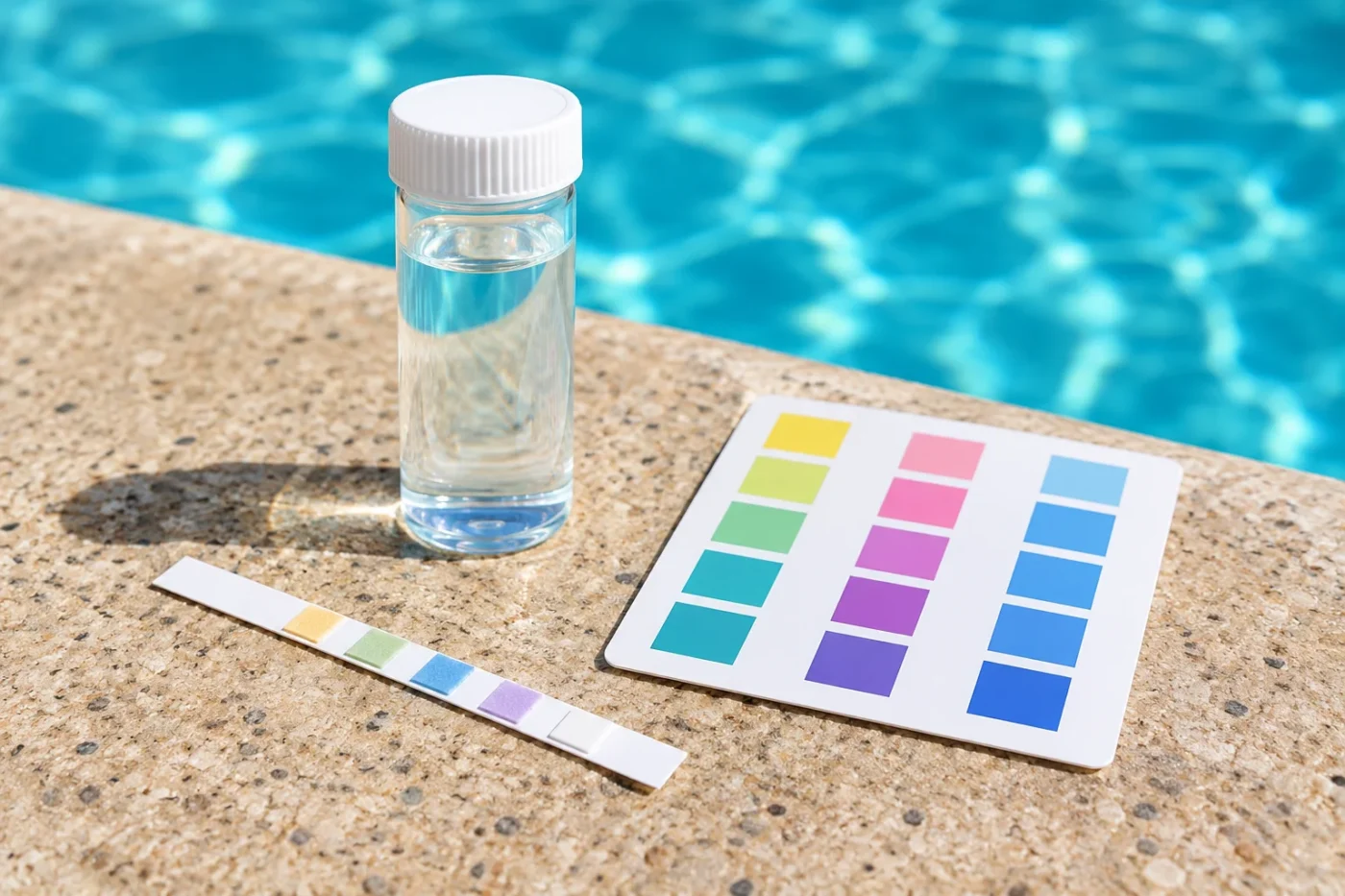
Target levels for chlorine, pH, alkalinity, calcium and stabilizer, how much shock to add, how to lower a high pH from product labels, how long to run the pump, when to backwash the filter by the manuals, and how salt pools compare with chlorine pools.
Set your ZIP to see dates for your area.
Answers: how much salt do I add?
Answers: how many gallons is my pool?
Try removing a season or content type. Or start with one of our most-read guides.
An 18 ft round pool with 4 ft of water holds 7,614 gallons. Chart of 55 round, oval and in-ground sizes in gallons and liters, checked against Intex, Latham and city charts.

Cyanuric acid (stabilizer) shields pool chlorine from sunlight but holds it in a slower form. Labels set 20–60 ppm, CDC’s model code caps public pools at 90 ppm.
Add sodium bicarbonate with the pump running at your label’s rate: 1.5 lb per 10,000 gallons per 10 ppm on two labels, 1.4 lb in CDC’s model code Annex.

Swim again when a test shows free chlorine at or below your shock label’s limit, 4 ppm on the seven chlorine shock labels we read, with pH back in range.
Backwash sand and DE filters at the pressure rise your manual gives, about 8–10 psi, not by the calendar. Cartridge filters are hosed, not backwashed.
Lower pool pH with muriatic or dry acid at the dose your label gives. Four products’ directions compared for one 15,000-gallon pool, with CDC’s safety rules.
Run the pump for at least one turnover a day. Hours, energy and season cost from the certified flow and watts of approved pool pumps, DOE test points, NOAA normals and EIA prices.
A saltwater pool is a chlorine pool: a salt cell makes the chlorine. Cell electricity and wear per gallon of liquid chlorine replaced, upkeep and corrosion from the manuals, and the stabilizer tablets add in 19 US cities.
One label shock dose adds about 5–10 ppm free chlorine. Label doses for liquid chlorine, cal-hypo, dichlor and non-chlorine shock, SLAM levels by stabilizer, and the CYA that weekly dichlor adds by city.
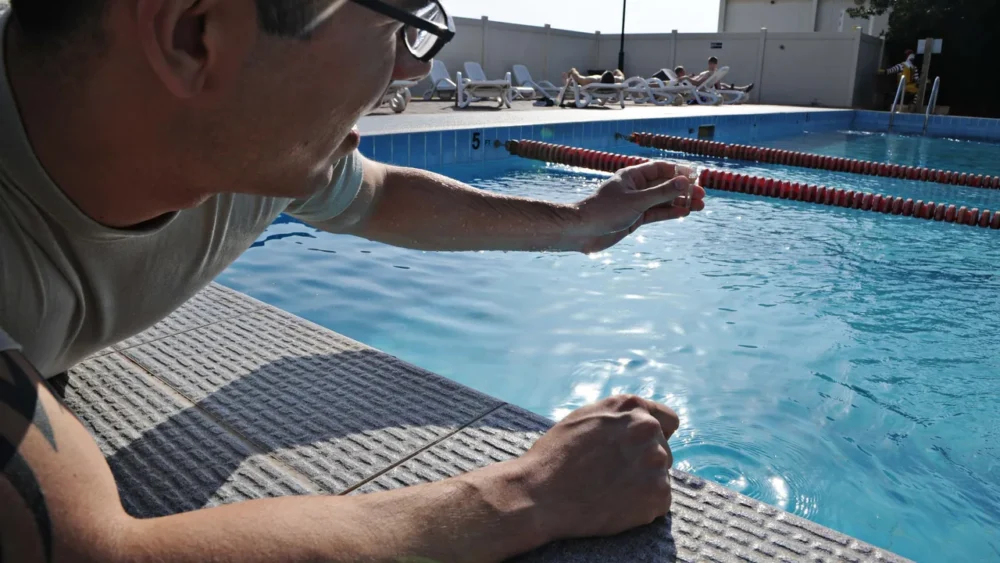
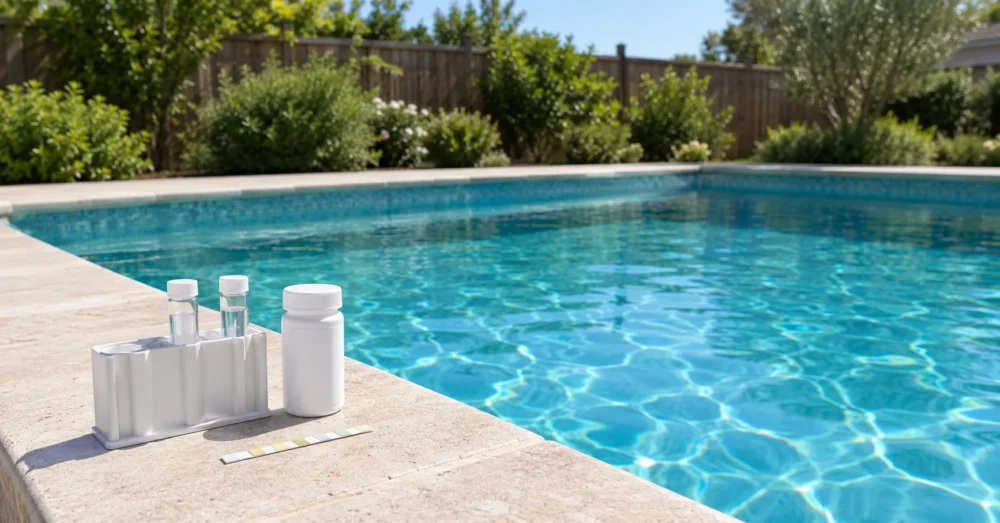
Free chlorine 2–3 ppm, pH 7.4–7.6, alkalinity 80–120 ppm, calcium 200–400 ppm, stabilizer 30–50 ppm: every range tied to CDC or a manufacturer’s manual.
Water chemistry is the part of pool care where a small mistake costs the most, in comfort, equipment and safety. Our guides use CDC rules, the product label and the manufacturers’ own manuals, and they show where those sources disagree.
Ideal pool chemical levels lays out target ranges, and how to lower pool pH and how much shock to add compare label doses for the two most common corrections.
Equipment care is covered by how long to run a pool pump and how often to backwash a pool filter, and saltwater vs chlorine pools compares cost and upkeep. Our pool volume calculator and pool salt calculator handle the arithmetic.
Always follow the product label, never mix chemicals, and add chemicals to water, not water to chemicals. These pages are educational; see our disclaimer.
Four more guides answer the questions that come up between tests. How many gallons is your pool has a chart of 55 round, oval and in-ground sizes, because every dose starts from volume. Cyanuric acid explains what stabilizer does and the 20 to 60 ppm range on labels, how to raise alkalinity gives the label rates for baking soda, and how long to wait to swim after shocking explains why a free chlorine test, not a clock, decides.
Get a short email when it’s time to overseed, start seeds, open the pool or service your furnace, timed to your climate.