

How Much Does It Cost to Run a Gas Fireplace? Costs by State and City
We priced a gas fireplace’s hour, day and month for every state on EIA natural gas and propane prices, then used NOAA degree days to estimate January use in 20 cities.
- 21 cited sources
- 11 min read
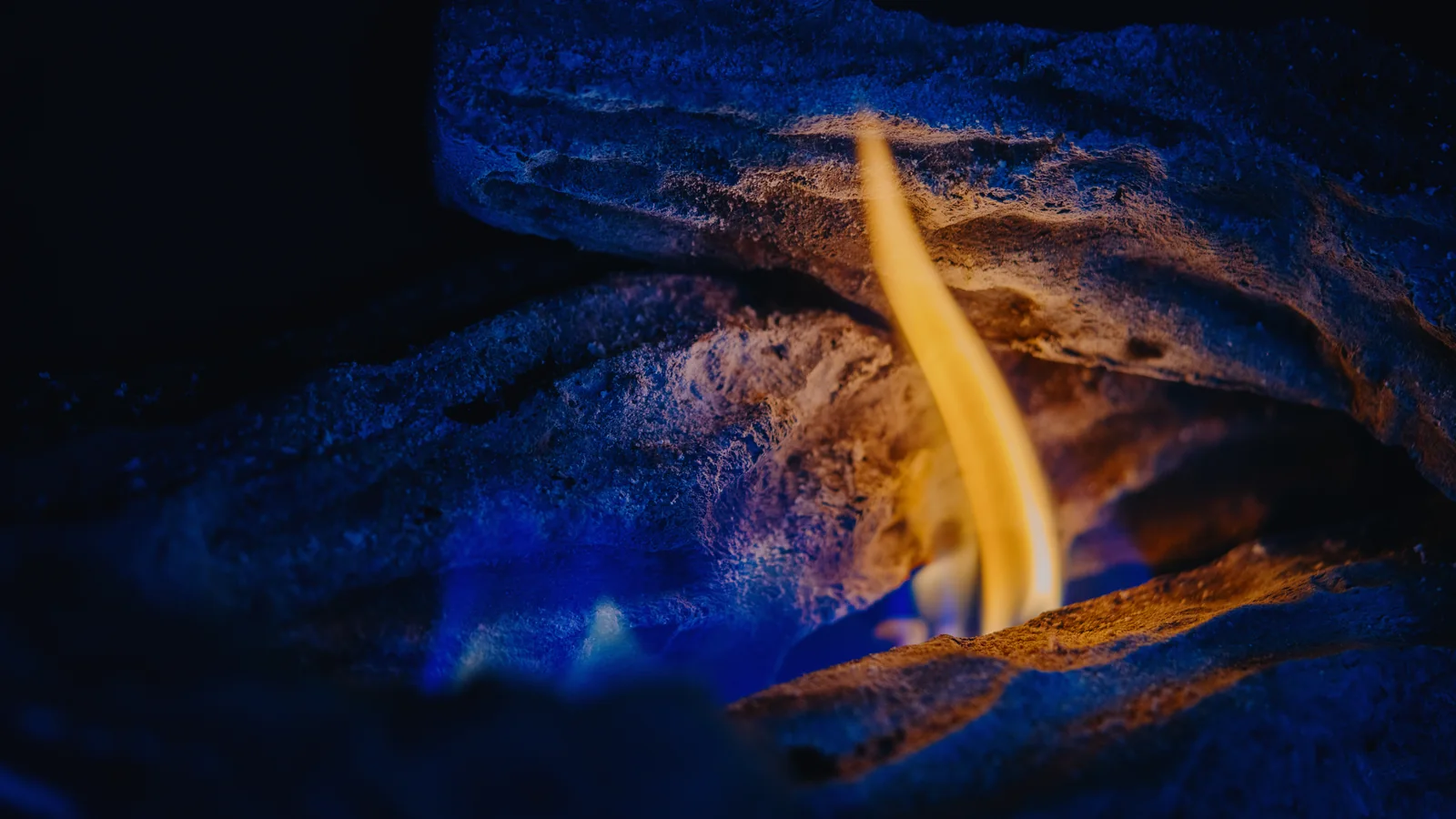

- 1A 30,000 Btu/h fireplace burns 0.3 therm an hour: about 43¢ on natural gas at the US winter average (21¢ in Idaho, 74¢ in Massachusetts) and 88¢ on propane.
- 2Four hours a night for 30 days is about $52 on natural gas or $106 on propane at the US average prices.
- 3The input rating on the label sets the hourly cost; efficiency decides how much heat you get. Manuals print 57 to 63% annual and 76 to 80% steady-state for one direct-vent unit.
- 4The heat costs 1.58 times as much as 95% furnace heat on the same gas, so zone heating pays only while the fireplace averages under 48% of full flame.
- 5A standing pilot adds roughly $5 to $16 a month at 500 to 1,500 Btu an hour at the US average price; vent-free units have strict CPSC and manufacturer limits.
A gas fireplace with a 30,000 Btu/h input burns 0.3 therm of natural gas an hour, which costs about 43¢ at the US heating-season average price and 88¢ on propane at today’s price. Natural gas runs from 21¢ an hour in Idaho to 74¢ in Massachusetts and Florida, and $1.62 in Hawaii; four hours every evening for 30 days is about $52 on natural gas and $106 on propane.
Below: the formula, a cost for every state on natural gas and propane, the pilot light, what the efficiency numbers in manuals really mean, and a January estimate for 20 cities from NOAA heating degree days.
The formula: input Btu/h ÷ fuel Btu × price
Every gas fireplace has an input rating in Btu per hour (Btu/h) on its label and in its manual: the fuel it burns at full flame. Divide it by the Btu in one unit of fuel and multiply by your price. A therm of natural gas holds 100,000 Btu and a gallon of propane 91,452 Btu, EIA says.3 A 30,000 Btu/h fireplace therefore burns 0.3 therm or 0.33 gallon an hour.
Efficiency does not go in this formula. A fireplace burns the same fuel at a given input whatever share reaches the room; efficiency decides how much heat you get for it, so a cost guide that divides the label’s Btu by efficiency overstates the hourly cost when that Btu figure is the input rating. Efficiency matters for the heat you get, not for the hourly bill.
| Input rating | Natural gas, 1 hour | Natural gas, 30 days at 4 h/day | Propane, 1 hour | Propane, 30 days at 4 h/day |
|---|---|---|---|---|
| 20,000 Btu/h | 29¢ | $34 | 59¢ | $71 |
| 30,000 Btu/h | 43¢ | $52 | 88¢ | $106 |
| 40,000 Btu/h | 57¢ | $69 | $1.18 | $141 |
Those are full-flame costs. Many units list a lower minimum input (Table 4), which costs proportionally less, so a month of evenings can cost less than the table; running one nonstop for 24 hours burns $10 of natural gas at the US average ($21 on propane).
Gas fireplace cost per hour in every state
Prices are the average of EIA’s monthly residential natural gas prices for November 2025 through March 2026, the latest complete winter.1 We use winter rather than the newest month because EIA’s July 2026 US price, $26.45 per Mcf, is almost double January’s $13.96, so a single recent month would overstate a winter’s cost. One Mcf is 1,036,000 Btu, or 10.36 therms.3 Table 2 gives each state’s hourly cost at three common inputs.

| State | Price per therm | 20,000 Btu/h | 30,000 Btu/h | 40,000 Btu/h |
|---|---|---|---|---|
| Alabama | $1.67 | 33¢ | 50¢ | 67¢ |
| Alaska | $1.26 | 25¢ | 38¢ | 50¢ |
| Arizona | $1.78 | 36¢ | 54¢ | 71¢ |
| Arkansas | $2.09 | 42¢ | 63¢ | 83¢ |
| California | $2.16 | 43¢ | 65¢ | 87¢ |
| Colorado | $1.05 | 21¢ | 32¢ | 42¢ |
| Connecticut | $1.69 | 34¢ | 51¢ | 68¢ |
| Delaware | $1.65 | 33¢ | 49¢ | 66¢ |
| District of Columbia | $1.58 | 32¢ | 47¢ | 63¢ |
| Florida* | $2.46 | 49¢ | 74¢ | 98¢ |
| Georgia | $1.62 | 32¢ | 49¢ | 65¢ |
| Hawaii | $5.40 | $1.08 | $1.62 | $2.16 |
| Idaho | $0.69 | 14¢ | 21¢ | 28¢ |
| Illinois | $1.03 | 21¢ | 31¢ | 41¢ |
| Indiana | $1.07 | 21¢ | 32¢ | 43¢ |
| Iowa | $0.98 | 20¢ | 30¢ | 39¢ |
| Kansas | $1.34 | 27¢ | 40¢ | 54¢ |
| Kentucky | $1.41 | 28¢ | 42¢ | 56¢ |
| Louisiana† | $1.81 | 36¢ | 54¢ | 72¢ |
| Maine† | $1.74 | 35¢ | 52¢ | 70¢ |
| Maryland† | $1.61 | 32¢ | 48¢ | 64¢ |
| Massachusetts | $2.46 | 49¢ | 74¢ | 98¢ |
| Michigan | $1.03 | 21¢ | 31¢ | 41¢ |
| Minnesota | $1.04 | 21¢ | 31¢ | 42¢ |
| Mississippi | $1.51 | 30¢ | 45¢ | 60¢ |
| Missouri | $1.46 | 29¢ | 44¢ | 58¢ |
| Montana | $0.85 | 17¢ | 25¢ | 34¢ |
| Nebraska | $1.10 | 22¢ | 33¢ | 44¢ |
| Nevada | $0.98 | 20¢ | 29¢ | 39¢ |
| New Hampshire | $1.86 | 37¢ | 56¢ | 75¢ |
| New Jersey | $1.38 | 28¢ | 41¢ | 55¢ |
| New Mexico† | $1.02 | 20¢ | 30¢ | 41¢ |
| New York | $1.65 | 33¢ | 49¢ | 66¢ |
| North Carolina† | $1.78 | 36¢ | 53¢ | 71¢ |
| North Dakota | $0.85 | 17¢ | 25¢ | 34¢ |
| Ohio | $1.20 | 24¢ | 36¢ | 48¢ |
| Oklahoma | $1.38 | 28¢ | 41¢ | 55¢ |
| Oregon | $1.60 | 32¢ | 48¢ | 64¢ |
| Pennsylvania | $1.44 | 29¢ | 43¢ | 58¢ |
| Rhode Island | $2.15 | 43¢ | 64¢ | 86¢ |
| South Carolina† | $1.64 | 33¢ | 49¢ | 65¢ |
| South Dakota | $0.94 | 19¢ | 28¢ | 38¢ |
| Tennessee | $1.24 | 25¢ | 37¢ | 50¢ |
| Texas | $2.02 | 40¢ | 61¢ | 81¢ |
| Utah | $1.05 | 21¢ | 31¢ | 42¢ |
| Vermont | $1.63 | 33¢ | 49¢ | 65¢ |
| Virginia | $1.62 | 32¢ | 49¢ | 65¢ |
| Washington† | $1.62 | 32¢ | 48¢ | 65¢ |
| West Virginia | $1.33 | 27¢ | 40¢ | 53¢ |
| Wisconsin | $1.10 | 22¢ | 33¢ | 44¢ |
| Wyoming | $1.06 | 21¢ | 32¢ | 42¢ |
* Florida: EIA published only two of the five winter months, so we use its 2025 annual average ($25.48 per Mcf).18 † Fewer than five months published: Louisiana, Maine (3 of 5); Maryland, New Mexico, North Carolina, South Carolina, Washington (4 of 5). EIA’s state averages blend suppliers and include fixed charges, so your utility’s bill price can differ; check your own bill for the price per therm.
What a propane fireplace costs per hour
Propane costs more per Btu. At the US price of $2.69 a gallon, one Btu from propane costs 2.1 times what one from natural gas does; a 30,000 Btu/h fireplace costs 88¢ an hour instead of 43¢. EIA’s weekly Heating Oil and Propane Update, week of October 19, 2026, publishes residential prices for 38 states, excluding taxes, so your bill may run higher.2 Twelve states and DC are not in that survey, so they are not in Table 3.
| State | Price per gallon | 20,000 Btu/h | 30,000 Btu/h | 40,000 Btu/h |
|---|---|---|---|---|
| Alabama | $3.57 | 78¢ | $1.17 | $1.56 |
| Arkansas | $2.60 | 57¢ | 85¢ | $1.14 |
| Colorado | $2.36 | 52¢ | 77¢ | $1.03 |
| Connecticut | $4.23 | 92¢ | $1.39 | $1.85 |
| Delaware | $3.75 | 82¢ | $1.23 | $1.64 |
| Florida | $4.93 | $1.08 | $1.62 | $2.16 |
| Georgia | $3.21 | 70¢ | $1.05 | $1.40 |
| Idaho | $2.59 | 57¢ | 85¢ | $1.13 |
| Illinois | $1.94 | 42¢ | 64¢ | 85¢ |
| Indiana | $2.56 | 56¢ | 84¢ | $1.12 |
| Iowa | $1.70 | 37¢ | 56¢ | 75¢ |
| Kansas | $2.07 | 45¢ | 68¢ | 91¢ |
| Kentucky | $2.84 | 62¢ | 93¢ | $1.24 |
| Maine | $3.71 | 81¢ | $1.22 | $1.62 |
| Maryland | $3.80 | 83¢ | $1.25 | $1.66 |
| Massachusetts | $3.66 | 80¢ | $1.20 | $1.60 |
| Michigan | $2.43 | 53¢ | 80¢ | $1.06 |
| Minnesota | $2.01 | 44¢ | 66¢ | 88¢ |
| Mississippi | $3.14 | 69¢ | $1.03 | $1.37 |
| Missouri | $2.18 | 48¢ | 72¢ | 95¢ |
| Montana | $2.17 | 47¢ | 71¢ | 95¢ |
| Nebraska | $1.78 | 39¢ | 58¢ | 78¢ |
| New Hampshire | $3.84 | 84¢ | $1.26 | $1.68 |
| New Jersey | $4.08 | 89¢ | $1.34 | $1.78 |
| New York | $3.73 | 82¢ | $1.22 | $1.63 |
| North Carolina | $3.61 | 79¢ | $1.18 | $1.58 |
| North Dakota | $1.65 | 36¢ | 54¢ | 72¢ |
| Ohio | $2.65 | 58¢ | 87¢ | $1.16 |
| Oklahoma | $2.35 | 51¢ | 77¢ | $1.03 |
| Pennsylvania | $3.16 | 69¢ | $1.04 | $1.38 |
| Rhode Island | $4.17 | 91¢ | $1.37 | $1.82 |
| South Dakota | $1.87 | 41¢ | 61¢ | 82¢ |
| Tennessee | $3.22 | 70¢ | $1.06 | $1.41 |
| Texas | $3.14 | 69¢ | $1.03 | $1.37 |
| Utah | $2.33 | 51¢ | 76¢ | $1.02 |
| Vermont | $3.88 | 85¢ | $1.27 | $1.70 |
| Virginia | $3.76 | 82¢ | $1.23 | $1.64 |
| Wisconsin | $1.94 | 42¢ | 64¢ | 85¢ |

Which input rating to use: vented, direct-vent, vent-free and inserts
Use the number on your own label or manual. For a sense of the range, Table 4 lists the manuals we read: input ratings run from 15,000 to 40,000 Btu/h, which is why Tables 2 and 3 use 20,000, 30,000 and 40,000. A unit with a range prints a maximum and a minimum input; the minimum costs proportionally less.
| Type and model | Max input, Btu/h | Efficiency printed |
|---|---|---|
| Direct-vent fireplace Majestic / Vermont Castings BDVT (33 to 43 in.) | 15,000 to 25,000 min 10,500 to 17,500 | Steady state 76 to 80%; annual (AFUE) 57 to 63%11 |
| Direct-vent fireplace Monessen CDVT36 | 20,000 min not listed | not listed15 |
| B-vent fireplace Monessen SBV400A | 29,000 min not listed | not listed16 |
| Direct-vent insert Regency L390PB | 31,000 min 22,000 | not in manual13 |
| Direct-vent insert Quad DVI-32 (manual dated 11/00) | 32,000 min 20,000 | Steady state 78.8 to 86.9%14 |
| Direct-vent insert Ravenna RDV33 / RDV40 | 33,000 / 40,000 min 24,000 / 28,000 | Annual (P4) 66 to 69%12 |
| Vent-free (unvented) insert allen + roth Lavaglass VFL-GI35D-20 | 35,000 min 20,000 | not stated17 |
Efficiency: how much of the gas becomes room heat
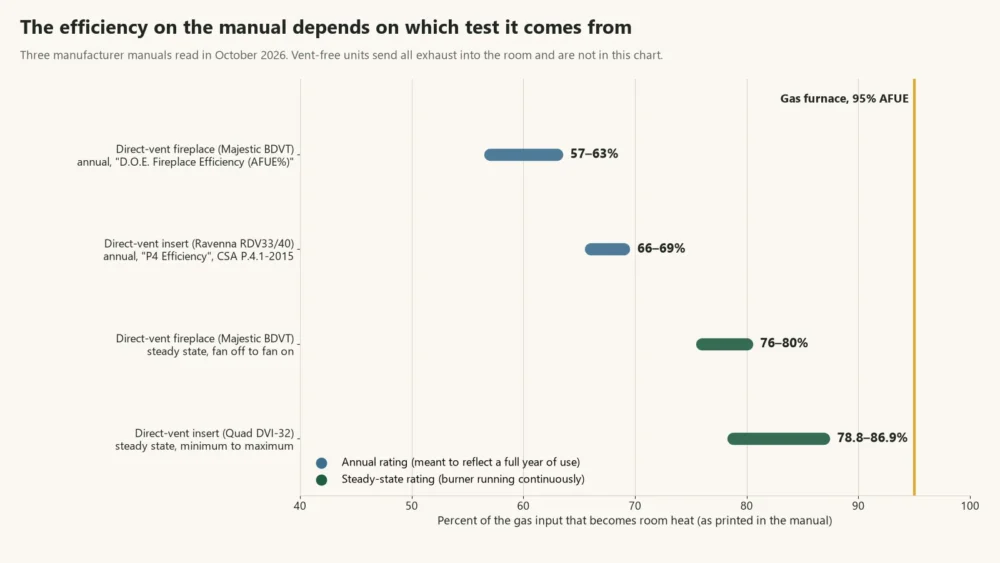
The same fireplace carries two kinds of efficiency in its manual. A steady-state rating measures the burner running continuously: 76 to 80% for the Majestic direct-vent fireplace and 78.8 to 86.9% for the Quad insert.11,14 An annual rating is meant to reflect a year of use rather than a burner that never shuts off: 57 to 63% for that same Majestic, listed as “D.O.E. Fireplace Efficiency (AFUE%),” and 66 to 69% for the Ravenna insert, listed as “P4 Efficiency,” from the CSA P.4.1-2015 test method.11,12 The annual figure is the better guide to what heat costs over a winter.
There is no federal rating to check these against. DOE withdrew its determination that decorative hearth products are covered under the Energy Policy and Conservation Act, effective June 6, 2025, so DOE has no efficiency standard in the works for them.8,9 Vent-free models send all exhaust into the room, so none of their heat goes up a flue; the cost guides we read put them near 99%, and HomeGuide says ventless models operate at “almost 100% efficiency,” but we found no manufacturer table to verify it.19 They also release water vapor and combustion products indoors, which is the reason for the limits below.
To compare fuels, price the heat that reaches the room. In Chicago (gas $1.03 a therm) 100,000 Btu of heat costs $1.08 from a 95% furnace, $1.28 from an 80% fireplace and $1.71 from a 60% fireplace, against $3.54 from a 60% propane fireplace and $5.63 from an electric space heater at 19.22¢ a kWh (the price in our space heater cost guide).

What a pilot light costs
A standing pilot is a small flame that burns all the time. An electronic ignition has none to leave burning: the manual for the Majestic direct-vent fireplace has one section on cleaning its standing pilot control system and another on its electronic gas control valve, and the allen + roth insert uses a battery-powered pulse ignitor with a safety pilot.11,17 Retail cost guides put a standing pilot at 600 to 1,500 Btu an hour;19 we found no rate in the manuals we read, so Table 5 prices three.
| Pilot burns | Idaho ($0.69 per therm) | US average ($1.43) | Massachusetts ($2.46) |
|---|---|---|---|
| 500 Btu/h 3.65 therms a month | $2.52 | $5.23 | $8.97 |
| 1,000 Btu/h 7.30 therms a month | $5.03 | $10 | $18 |
| 1,500 Btu/h 10.95 therms a month | $7.55 | $16 | $27 |
DOE’s 2022 proposal cited a survey of US hearth owners: standing pilots burned an average of 4,593 hours a year, and 35% left them always on, 33% turned them off when the fireplace was off, and 32% turned them off in summer.10 Follow your manual for lighting and shutting the pilot off; it is also where a pilot’s rating is printed.
What a month costs in 20 cities, from heating degree days
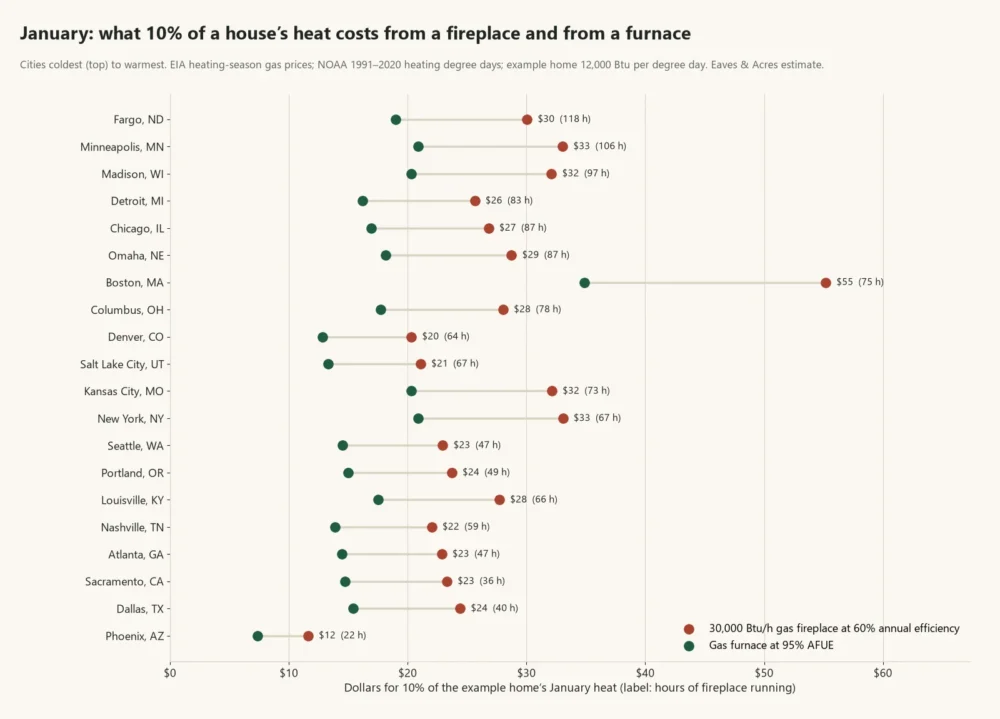
How many hours you need depends on the climate. We use the example home of our heat pump vs. furnace guide, which needs 12,000 Btu per heating degree day, with NOAA 1991–2020 normals for the station nearest each city ZIP code.4 January’s share of each city’s annual degree days is estimated from its monthly mean temperatures. We then ask how long a 30,000 Btu/h fireplace at 60% annual efficiency, delivering 18,000 Btu/h, runs to supply 10% of that home’s January heat, and what a 95% gas furnace would charge for the same heat. Multiply by 3 for 30%.
| City (annual HDD, gas price) | Fireplace hours in January | Fireplace cost | Gas furnace cost |
|---|---|---|---|
| Fargo, ND 8,806 degree days · $0.85 per therm | 118 h | $30 | $19 |
| Minneapolis, MN 7,699 degree days · $1.04 per therm | 106 h | $33 | $21 |
| Madison, WI 7,096 degree days · $1.10 per therm | 97 h | $32 | $20 |
| Detroit, MI 6,106 degree days · $1.03 per therm | 83 h | $26 | $16 |
| Chicago, IL 6,018 degree days · $1.03 per therm | 87 h | $27 | $17 |
| Omaha, NE 5,833 degree days · $1.10 per therm | 87 h | $29 | $18 |
| Boston, MA 5,545 degree days · $2.46 per therm | 75 h | $55 | $35 |
| Columbus, OH 5,417 degree days · $1.20 per therm | 78 h | $28 | $18 |
| Denver, CO 5,262 degree days · $1.05 per therm | 64 h | $20 | $13 |
| Salt Lake City, UT 4,724 degree days · $1.05 per therm | 67 h | $21 | $13 |
| Kansas City, MO 4,613 degree days · $1.46 per therm | 73 h | $32 | $20 |
| New York, NY 4,553 degree days · $1.65 per therm | 67 h | $33 | $21 |
| Seattle, WA 4,340 degree days · $1.62 per therm | 47 h | $23 | $14 |
| Portland, OR 4,167 degree days · $1.60 per therm | 49 h | $24 | $15 |
| Louisville, KY 4,141 degree days · $1.41 per therm | 66 h | $28 | $18 |
| Nashville, TN 3,648 degree days · $1.24 per therm | 59 h | $22 | $14 |
| Atlanta, GA 2,775 degree days · $1.62 per therm | 47 h | $23 | $14 |
| Sacramento, CA 2,138 degree days · $2.16 per therm | 36 h | $23 | $15 |
| Dallas, TX 1,992 degree days · $2.02 per therm | 40 h | $24 | $15 |
| Phoenix, AZ 874 degree days · $1.78 per therm | 22 h | $12 | $7.34 |
Fargo needs the most hours (118) but its cheap gas keeps the cost at $30. Boston needs 75 hours and pays $55, because Massachusetts gas costs about 2.9 times North Dakota’s. In every city the fireplace costs 1.6 times what the furnace would for the same heat. Chicago example: for 30% of January’s heat the fireplace runs 261 hours (about 8.4 hours a day), costing $80 against $51 for the furnace.
Across the 40,789 ZIP codes in our NOAA file, supplying 10% of a winter’s heat takes 329 hours at the median (4,932 degree days), 110 hours at the 10th percentile and 508 at the 90th. 19% of ZIPs have under 2,500 degree days and 31% have over 6,000.

When a gas fireplace saves money: the zone-heating rule
A fireplace’s heat stays in the house and replaces furnace heat, but it costs more per Btu: with a 95% gas furnace and a 60% fireplace on the same gas, 1.58 times as much. It pays only if turning the thermostat down elsewhere saves more than that premium. With the example home (500 Btu/h per °F) and a 10°F setback that is at most 5,000 Btu/h, so the fireplace saves money only while its average heat output stays under 5,000 ÷ (1.58 − 1).
Zone heating with a natural gas fireplace
- Scenario
- The example home with a 95% gas furnace, thermostat down 10°F, and a 30,000 Btu/h fireplace at 60% annual efficiency on the same natural gas.
- Math
- Furnace heat saved by the setback: 500 × 10 = 5,000 Btu/h. Break-even heat from the fireplace = 5,000 ÷ (1.58 − 1) = 8,600 Btu/h, or 8,600 ÷ 0.60 = 14,300 Btu/h of gas.
- Answer
- That is 48% of the time at 30,000 Btu/h. A propane fireplace against the same gas furnace in Chicago breaks even at only about 12% of the time.
It is an upper limit, since the heated room stays warm, the same caveat as for electric space heaters. Our winter thermostat guide estimates what setbacks save by city, and the same fuel-cost logic applies to a heat pump (see our break-even COP). Run nonstop, a 30,000 Btu/h fireplace at 60% would supply about 85% of the example home’s average January heat in Chicago and 63% in Fargo, which is why manuals treat them as supplemental.
recommended as a supplemental heater (a room) rather than a primary heat source
Vent-free fireplaces: what CPSC, EPA and manufacturers say
CPSC says unvented gas space heaters require oxygen depletion sensors “to help prevent carbon monoxide production from inefficient combustion,” and advises keeping doors open to the rest of the house when you use one.5 The same release gives the sizing warning that matters most for cost:
An oversized heater could deplete the available oxygen, causing excess carbon monoxide to be produced.
The allen + roth manual says its unvented insert may not be installed in a bedroom or bathroom, that it has an oxygen depletion sensor that shuts it down if not enough fresh air is available, that it makes about one ounce of water per 1,000 Btu of gas input an hour, and that state and local codes in some areas prohibit vent-free heaters.17 EPA, writing about gas stoves, says some models do not require outside venting but
EPA does not support their use due to indoor air quality concerns
and notes that installing unvented gas stoves is illegal in some jurisdictions.7 CPSC’s January 2026 release adds that fuel-burning heating systems, including fireplaces, can produce CO if installed incorrectly, poorly maintained, blocked or misused, and that a professional should inspect them every year.6 Check local rules and your manual before choosing or running any vent-free unit.
 Related guideWhat Humidity Should a House Be in Winter? 30–40%, Lower on Cold Nights
Your next step
Read the input rating off your label, pick your state in Table 2 or 3, and multiply by your hours. To compare with other ways of heating a room, see our electric space heater costs, and for the hot tub’s heater what a hot tub costs to run. Planning for a power outage? Our generator size calculator lists the running watts of common loads; your fireplace manual says whether it has an igniter or fan that needs power.
Frequently asked questions
At full flame a 30,000 Btu/h fireplace costs about 43¢ on natural gas at the US heating-season average of $1.43 a therm, 21¢ in Idaho and 74¢ in Massachusetts. Propane costs about 88¢.
Twenty-four hours at 30,000 Btu/h burns 7.2 therms: about $10 on natural gas at the US average or $21 on propane, if it runs at full flame the whole time.
The furnace, per unit of heat: with a 60% annual-efficiency fireplace and a 95% furnace on the same gas, fireplace heat costs 1.58 times as much. It saves money only for one room with the rest of the house turned down.
Natural gas. At the US average prices a Btu from propane costs 2.1 times a Btu from natural gas: 88¢ against 43¢ an hour for a 30,000 Btu/h unit.
Not per hour: the input rating sets that. Per unit of heat it can, because no exhaust leaves the house, but vent-free units are limited by codes, CPSC advice and manufacturers, and EPA does not support unvented gas stoves.
At 500 to 1,500 Btu an hour, a pilot burning all month uses 3.65 to 10.95 therms: about $5.23 to $16 at the US average price. Retail guides quote 600 to 1,500 Btu an hour; check your manual.
Not as a rule. Run nonstop, a 30,000 Btu/h fireplace at 60% efficiency would supply about 85% of our example home’s average January heat in Chicago, and manuals we read call vent-free units supplemental heat.
It depends on the model. The manuals we read describe both a standing pilot control and electronic or battery-powered ignition; the manual and label for your unit say which, and CPSC warns that heating systems can produce carbon monoxide when misused.
Sources
Sources labeled Compared are popular pages we checked our answer against. They are not extension, government, standards or manufacturer sources. How we choose sources
- 1.Natural Gas Prices: average residential price by state, monthly (dollars per thousand cubic feet), Feb to Jul 2026 and history. U.S. Energy Information Administration, 2026. Used for: state residential gas prices, November 2025 to March 2026 (per-state history pages); July 2026 US $26.45 vs January $13.96 Back to text
- 2.Heating Oil and Propane Update: Residential Propane, weekly by state (dollars per gallon excluding taxes), week of 10/19/2026, release 10/21/2026. U.S. Energy Information Administration, 2026. Used for: 38 state propane prices; US $2.689 Back to text
- 3.Units and calculators explained: British thermal units (Btu). U.S. Energy Information Administration, accessed 2026-10-27. Used for: 1 therm = 100,000 Btu; 1 cubic foot of gas = 1,036 Btu; 1 gallon of propane = 91,452 Btu Back to text
- 4.U.S. Climate Normals 1991–2020. NOAA National Centers for Environmental Information, 2021. Used for: heating degree days and monthly mean temperatures, station nearest each ZIP code Back to text
- 5.CPSC Warns of Hazards from Heaters and Fireplaces. U.S. Consumer Product Safety Commission, 2005. Used for: oxygen depletion sensors on unvented gas heaters; doors open; correctly rated heater; CO alarm outside sleeping areas Back to text
- 6.Keep Warm and Safe This Winter: Tips for Using Generators, Furnaces and Space Heaters. U.S. Consumer Product Safety Commission, 2026 (January 23). Used for: fuel-burning heating systems including fireplaces can produce CO; professional inspection each year Back to text
- 7.Choosing Wood-Burning Appliances (gas stoves section; updated February 18, 2026). U.S. Environmental Protection Agency, 2026. Used for: EPA does not support unvented gas stoves; illegal to install in some jurisdictions Back to text
- 8.Energy Department Lifts Regulations on Miscellaneous Gas Products. U.S. Department of Energy, 2025 (May 2). Used for: withdrawal of coverage for decorative hearths and outdoor heaters Back to text
- 9.Energy Conservation Program: Final Withdrawal of Determination of Miscellaneous Gas Products as a Covered Consumer Product (90 FR, 2025-07950). Federal Register, U.S. Department of Energy, 2025 (May 7). Used for: effective date June 6, 2025 Back to text
- 10.Energy Conservation Standards for Miscellaneous Gas Products (proposed rule, 2022-24925). Federal Register, U.S. Department of Energy, 2022 (November 17). Used for: standing pilot survey: 4,593 hours a year; 35% always on, 33% off when hearth off, 32% off in summer Back to text
- 11.BDVT Series Direct Vent Gas Fireplace, Installation & Operating Instructions (33BDVT / 36BDVT / 39BDVT / 43BDVT). CFM Specialty Home Products (Majestic, Vermont Castings), copy hosted by Stove Parts Unlimited, undated. Used for: max/min input Btu/h; steady-state and D.O.E. fireplace efficiency (AFUE %); standing pilot and electronic controls Back to text
- 12.Direct-Vent Ravenna IPI / TCC RDV33/40 gas fireplace insert, P/N 900125-00 Rev. E 11/2021. Innovative Hearth Products, 2021. Used for: max/min input 40,000/28,000 and 33,000/24,000; P4 efficiency 66 to 69% (CSA P.4.1-2015) Back to text
- 13.L390PB-2 / HZI390PB-2 Direct Vent Gas Insert owner’s and installation manual. Regency Fireplace Products, 2014. Used for: max 31,000 and min 22,000 Btu/h natural gas Back to text
- 14.Direct Vent Gas Insert (DVI-32) installation, operation, venting and maintenance instructions (revised 11/00). Aladdin Hearth Products (Quad), copy hosted by Stove Parts Unlimited, 2000. Used for: input 32,000/20,000 Btu/h; output; minimum and maximum steady-state efficiency 78.8 to 86.9% Back to text
- 15.Monessen Hearth Direct Vent Gas Fireplace CDVT36 (technical information). Monessen Hearth, copy hosted by ManualsDir, undated. Used for: max input 20,000 Btu/h Back to text
- 16.Monessen Hearth SBV400A B-Vent gas fireplace (technical information). Monessen Hearth, copy hosted by ManualsDir, undated. Used for: max input 29,000 Btu/h; B-vent Back to text
- 17.Compared Lavaglass Gas Fireplace Insert, model VFL-GI35D-20, use and care manual (item 5228492). allen + roth (Lowe’s), 2023. Used for: unvented insert: 35,000/20,000 Btu/h; supplemental heat; not for bedrooms or bathrooms; ODS; one ounce of water per 1,000 Btu; ignitor battery Back to text
- 18.Natural Gas Prices: average residential price by state, annual 2020 to 2025. U.S. Energy Information Administration, 2026. Used for: Florida 2025 annual price used where fewer than three winter months were published Back to text
- 19.Compared How Much Does It Cost to Run a Gas Fireplace? (2026). HomeGuide (cost guide; competitor read for Phase 1), 2026 (January 2). Used for: pilot 600 to 1,500 Btu/h and ventless 99% / almost 100% efficiency are its claims, not verified by us Back to text
- 20.Flame in Gas Fireplace - Pilot Light (photo). Tony Webster, Wikimedia Commons, CC BY 4.0, 2026. Used for: hero photo, cropped
- 21.NT typical gas log fireplace (photo). Virginia State Parks staff, Wikimedia Commons, CC BY 2.0, 2006. Used for: photo, cropped


How this guide was made
- Written by the Home Systems Desk and reviewed by the Data & Methodology Desk.
- Data: natural gas: average of EIA monthly residential state prices for November 2025 to March 2026 (Florida: EIA 2025 annual), 1 Mcf = 10.36 therms; propane: EIA weekly residential price for October 19, 2026, excluding taxes, 1 gallon = 91,452 Btu. Costs assume full input the whole time; a month is 30 days. City estimates use the example home of our heat pump vs. furnace guide (12,000 Btu per heating degree day, 95% AFUE) with NOAA NCEI 1991–2020 normals for the station nearest each city ZIP code; January’s share of annual degree days is estimated from monthly mean temperatures; the 60% fireplace efficiency is our reference, inside the 57 to 69% annual ratings printed in two manuals. The zone-heating break-even is our estimate and an upper limit. See our methodology.
- AI use: AI tools help us research, draft and check this guide. Every figure is checked against the source cited for it, and calculated figures come from our own code, described on the methodology page.
- Spotted an error? Tell us and the form opens with this page’s address filled in.
Change log
- Nov 27, 2026Published.
- Oct 27, 2026Draft written. Gas fireplace running cost from input Btu/h × EIA residential natural gas (monthly, Nov 2025 to Mar 2026) and propane (weekly, Oct 19, 2026) prices for every state, a 20-city January estimate from NOAA 1991–2020 degree days on the example home of our heat pump vs. furnace guide, efficiency and pilot-light figures from manufacturer manuals, and safety statements from CPSC and EPA.
Covers heating, cooling, generators and water heaters. We maintain the generator sizing calculator and write the guides that explain what a number means before you call a contractor.
Keep reading
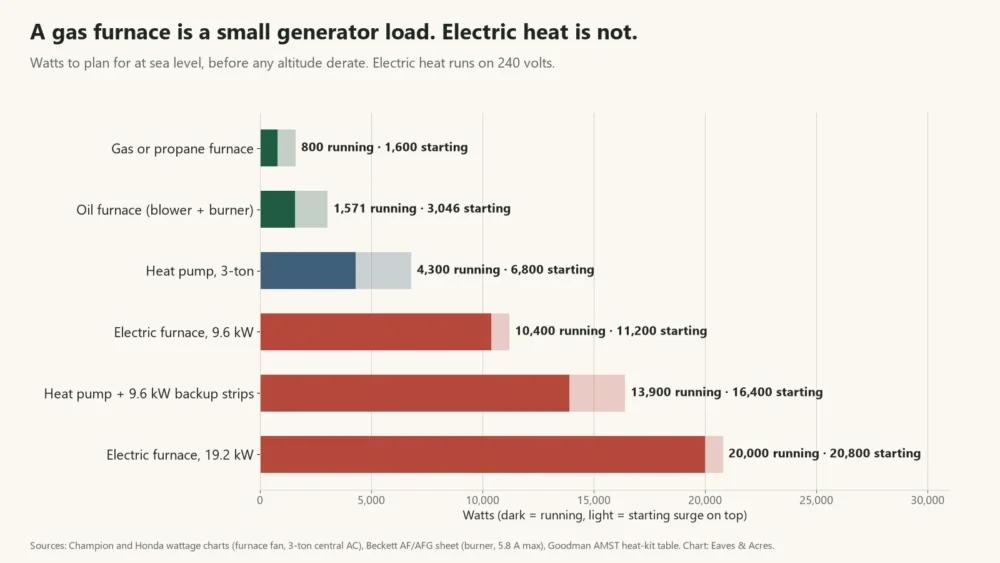
What Size Generator to Run a Furnace? Watts for Gas, Oil and Electric Heat
A gas or propane furnace needs about 300–875 running and 1,600–2,350 starting watts. What oil furnaces, electric furnaces and heat pumps draw, from generator charts and furnace spec sheets, with the altitude derate for 15 cold-winter cities.
What Temperature Should a Water Heater Be Set At? 120°F, and When to Go Higher
Most homes should run a water heater at 120°F. What DOE, CDC, CPSC, EPA and OSHA each say, how fast hotter water burns, and what a lower setting really saves.
Portable Generator Safety: The Rules and the CPSC Data Behind Them
Outdoors only, 20 feet from the house, exhaust away, CO alarms on every level. CPSC records of 789 generator CO deaths show why each rule exists.
Seasonal reminders for your ZIP
Get a short email when it’s time to overseed, start seeds, open the pool or service your furnace, timed to your climate.