

How to Prevent Ice Dams: Seal and Insulate the Attic First
Ice dams start with heat from the house, so the fix is air sealing first, then insulation. See where in the US January brings ice-dam weather, and what Minnesota’s Commerce Department and the Army’s cold-regions lab say about cables, salt and vents.
- Last reviewed Oct 13, 2026
- 11 cited sources
- 7 min read


- 1Ice dams form when house heat warms the upper roof above 32°F, snow melts and refreezes at the cold eave; the Army’s cold-regions lab found building heat, not the sun, is the primary cause.
- 2Fix in order: seal air leaks into the attic, then add insulation (ENERGY STAR lists R60 for an uninsulated attic in climate zones 4–8; Minnesota Commerce says at least R-50 where space allows).
- 3By our analysis of NOAA normals, 27.6% of US ZIP codes get ice-dam weather in a typical January, two-thirds of them where the average January day never thaws.
- 4Minnesota Commerce says not to install heat cables, remove ice with chippers, chemicals or heat, or add roof vents; sources disagree on how much venting a sealed, insulated roof needs.
- 5Stay off the roof: UMN Extension warns that anyone on a roof in winter risks injury. Hire a weatherization contractor for leaks and a pro for removal.
To prevent ice dams, stop house heat from reaching the roof: seal the air leaks into the attic first, then add attic insulation, and keep the attic vented if your roof needs it. Ice dams form when heat from below melts roof snow that refreezes at the cold eave, so gutters, heat cables and salt do not fix the cause.1,2
What actually causes an ice dam
University of Minnesota Extension lists three conditions at once: snow on the roof, outdoor air below freezing, and an upper roof surface above 32°F while the eave stays below it. The snow melts on the warm part, runs down and refreezes at the edge. Water then backs up behind the ridge of ice and leaks through gaps in the roofing.1
The warmth comes from the house, not the sun. The U.S. Army’s cold-regions lab photographed two identically built roofs near Watertown, New York: the heated one had large ice dams and icicles, the unheated one was ice-free.3
building heat–not the sun–is the primary cause of ice dams and icicles on roofs

UMN calls air leakage through the ceiling the major source in many homes.1
Prevent ice dams in order: seal, insulate, then vent
1. Seal the air leaks into the attic
Minnesota’s Department of Commerce puts it bluntly:
The real problem is a home that is leaking warm air.
ENERGY STAR says the biggest leaks tend to be where walls meet the attic floor, in dropped soffits and behind knee walls; its attic guide also covers the hatch, plumbing holes and recessed lights.5 UMN gives the same order.1 A weatherization contractor can find the leaks with a blower door test and an infrared camera.1,2
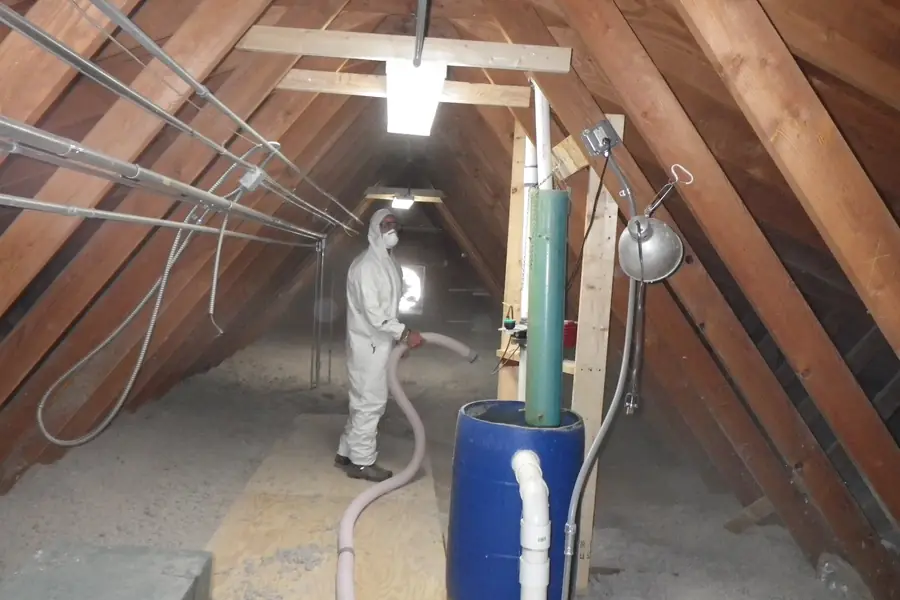
2. Bring attic insulation up to today’s level
Google’s AI Overview repeats “R-30 or R-38”, the figure on a National Weather Service office page.6 ENERGY STAR’s current table, based on the 2021 energy code, recommends adding R60 to an uninsulated attic in climate zones 4 through 8, or R49 on top of the 3–4 inches already there (zones 2–3: R49 uninsulated, R38 with 3–4 inches).4 Minnesota Commerce asks for at least R-50 where space allows.2

3. Ventilation: the sources disagree
The Army lab’s field study found a combination of insulation and roof ventilation most reliable. Fixes based on its 22°F rule essentially ended chronic icing on 57 Fort Drum buildings.3 UMN says only small amounts of ventilation are needed once leaks and insulation are fixed, and that mechanical attic ventilation is not recommended in Minnesota.1 Commerce says not to add roof vents at all.2 All three agree that sealing comes first. CRREL ties vents to snow load: where snowstorms are infrequent, midwinter thaws are common and roof snow stays shallow, venting a well-insulated roof is not essential.3
Where January brings ice-dam weather
CRREL found that above 22°F outdoors, meltwater is unlikely to refreeze at the eave.3 So we counted both ingredients for every ZIP code in NOAA’s 1991–2020 normals: January days with at least an inch of snow on the ground, and nights at or below 20°F, NOAA’s nearest threshold.8 Our cut-off for “ice-dam weather” is at least 15 snow-cover days and 10 such nights.

Of the 39,623 ZIP codes with snow-depth normals within 25 miles, 27.6% get ice-dam weather in a typical January: 18.3% where the normal January high stays at or below 32°F and 9.3% in a freeze–thaw band where it rises above. So in two of every three ice-dam ZIP codes (66.4%), the average January day never thaws, and the melt comes from the house. Every ZIP code in Maine, Minnesota, New Hampshire, North Dakota, Vermont and Wisconsin qualifies, and 81% in Alaska; none in Texas, Virginia, North Carolina, Kentucky or Tennessee, even though 74.0% of all US ZIP codes average a January low at or below freezing.
| City (ZIP) | Normal high / low | Days with 1 in.+ snow on the ground | Nights at or below 20°F | Freeze–thaw days | Ice-dam weather? |
|---|---|---|---|---|---|
| Anchorage, AK (99501) | 23°F / 8°F | 30.5 | 24.2 | 6.3 | Yes, sustained cold |
| Fargo, ND (58102) | 18°F / 0°F | 28.8 | 27.2 | 5.1 | Yes, sustained cold |
| Burlington, VT (05401) | 29°F / 13°F | 25.3 | 22.1 | 9.3 | Yes, sustained cold |
| Madison, WI (53703) | 28°F / 11°F | 24.2 | 22.6 | 10.6 | Yes, sustained cold |
| Portland, ME (04101) | 32°F / 16°F | 23.3 | 20.5 | 13.4 | Yes, freeze–thaw |
| Buffalo, NY (14202) | 32°F / 19°F | 21.3 | 17.0 | 10.7 | Yes, freeze–thaw |
| Minneapolis, MN (55401) | 22°F / 8°F | 19.6 | 24.7 | 7.7 | Yes, sustained cold |
| Detroit, MI (48226) | 32°F / 20°F | 17.9 | 15.6 | 11.1 | Yes, freeze–thaw |
| Chicago, IL (60602) | 33°F / 19°F | 17.5 | 15.3 | 11.7 | Yes, freeze–thaw |
| Boston, MA (02108) | 37°F / 23°F | 16.8 | 11.8 | 15.1 | Yes, freeze–thaw |
| Salt Lake City, UT (84101) | 40°F / 28°F | 16.1 | 6.3 | 15.7 | Some years |
| Omaha, NE (68102) | 34°F / 15°F | 13.8 | 20.0 | 15.6 | Some years |
| Columbus, OH (43215) | 36°F / 21°F | 10.7 | 13.5 | 15.0 | Some years |
| New York, NY (10001) | 40°F / 28°F | 7.9 | 7.9 | 13.1 | Some years |
| Kansas City, MO (64106) | 40°F / 22°F | 7.6 | 12.1 | 17.6 | Some years |
| Denver, CO (80202) | 48°F / 21°F | 7.5 | 14.6 | 26.6 | Some years |
| Louisville, KY (40202) | 43°F / 26°F | 4.6 | 8.9 | 16.3 | Some years |
| Nashville, TN (37201) | 48°F / 28°F | 1.4 | 7.7 | 16.2 | Rare |
| Portland, OR (97204) | 47°F / 37°F | 0.6 | 0.3 | 4.6 | Rare |
| Seattle, WA (98101) | 49°F / 37°F | 0.5 | 0.3 | 6.8 | Rare |
| Atlanta, GA (30303) | 54°F / 34°F | 0.3 | 3.1 | 15.9 | Rare |
| Sacramento, CA (95814) | 56°F / 41°F | 0.0 | 0.0 | 1.6 | Rare |
| Dallas, TX (75201) | 58°F / 38°F | 0.0 | 0.8 | 8.2 | Rare |
| Phoenix, AZ (85004) | 68°F / 46°F | 0.0 | 0.0 | 0.4 | Rare |
Chicago (60602): freeze–thaw ice-dam weather
- Scenario
- NOAA's January normals for Chicago Midway Airport: high 32.7°F, low 19.4°F. Snow depth is counted at Chicago Midway Airport 3SW, 12.6 miles from the ZIP.
- Math
- Snow cover: 17.5 days with 1 inch or more on the ground (at least 15: yes). Cold nights: 15.3 at or below 20°F (at least 10: yes). Normal high 32.7°F is above 32°F, so the band is freeze–thaw, with 11.7 freeze–thaw days.
- Answer
- Ice-dam weather in a typical January. Daytime thaws add melt, but most of it starts with heat from the house.
Freeze–thaw alone is not enough. Denver averages 26.6 freeze–thaw days in January, the most of the 24 cities, but only 7.5 days of snow cover. The cities are the 20 from our winter thermostat guide plus four snow-belt cities.
Gutters, valleys and the ice barrier
The National Weather Service advises clearing leaves from gutters and downspouts before winter.6 Commerce says ice dams are not caused by gutter problems.2 CRREL says roofs with dormers and valleys are prone to ice dams near those features, and UMN lists complex roof designs among the risks in new homes.3,1 Where eaves have a history of icing, the building codes require an ice barrier under the roofing: a self-adhering membrane or two layers of cemented felt, installed to the roofing maker’s instructions and local code.7
Heat cables, salt and roof rakes
| Remedy | What the sources say |
|---|---|
| Roof rake | NWS: pull snow off from the ground to cut the odds of a dam.6 UMN: may damage roofing.1 Commerce: hire a pro if it takes a ladder or the roof.2 |
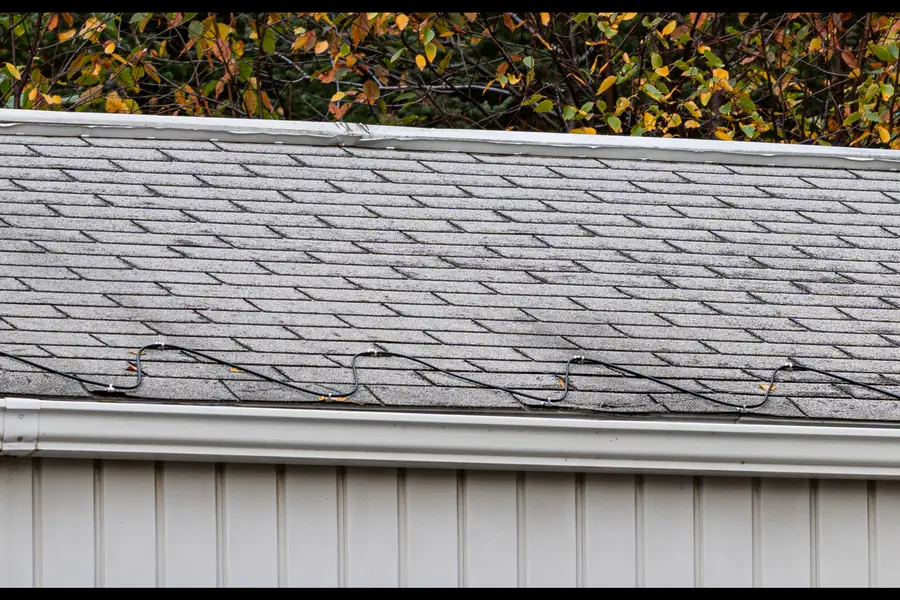
| Heat cables | Commerce: do not install; they shorten roof life and add energy costs.2 |
| Salt, calcium chloride, chipping | Commerce: do not remove ice with chippers, chemicals or heat; they damage shingles and gutters.2 |
| Powered attic vents | Commerce: do not add; UMN: not recommended in Minnesota.2,1 |
| Gutter cleaning | NWS: clear gutters so meltwater drains.6 Commerce: gutters are not the cause.2 |
| Air sealing + insulation | UMN, Commerce, ENERGY STAR and CRREL all name heat loss as the cause to fix.1,2,5,3 |

If an ice dam is already leaking
Commerce advises hiring an ice dam removal service that uses steamers.2 UMN says to dry wet areas right away to prevent mold, and not to repair ceilings and walls until they are dry. Fix the heat loss at the same time, or the damage will come back.1
Next step
Book an energy assessment before winter and ask for air sealing first, then work through the fall winterizing checklist. Attic pipes face the same cold: see when pipes freeze. Warm, moist air is what leaks into the attic, so keep winter indoor humidity in range. If a storm cuts power, the generator size calculator totals what you need to keep the heat on.
Frequently asked questions
Heat from the house. UMN Extension says ice dams need snow, freezing outdoor air and an upper roof surface above 32°F, and that the heat mostly comes from the house, often through air leaks. The Army’s cold-regions lab found building heat, not the sun, is the primary cause.
Minnesota’s Commerce Department says to hire a professional ice dam removal service that uses steamers, and not to remove ice with chippers, chemicals or heat, which damage shingles and gutters. UMN Extension warns that anyone on a roof in winter risks injury. This guide gives no removal steps.
Air-sealing materials and attic insulation, installed by or with a weatherization contractor, are what the sources name. Minnesota Commerce advises against heating cables and extra roof vents. Where eaves have a history of ice, building codes require an ice barrier under the roofing, usually a self-adhering membrane.
It can lower the odds. The National Weather Service says keeping snow off the roof from the ground reduces the chance of a dam. UMN Extension adds that a roof rake may damage roofing, and Commerce advises a professional if it takes a ladder or getting on the roof.
Minnesota’s Commerce Department says not to: they shorten the life of the roof and add to energy costs. They also do nothing about the heat loss that causes the dam. If you install them anyway, use a licensed electrician.
Not according to Minnesota Commerce, which says ice dams are not caused by roofing, ventilation or gutter problems. The National Weather Service still advises clearing gutters so meltwater can drain.
The sources disagree. The Army’s cold-regions lab found insulation plus ventilation the most reliable combination; UMN says only small amounts are needed once leaks and insulation are fixed and that mechanical attic ventilation is not recommended in Minnesota; Commerce says not to add roof vents. All three put air sealing first.
ENERGY STAR’s table, based on the 2021 energy code, lists R60 for an uninsulated attic in climate zones 4–8 (R49 in zones 2–3); with 3–4 inches already there it lists R49 in zones 4–8 and R38 in zones 2–3. Minnesota Commerce asks for at least R-50 where space allows. The National Weather Service tip of R-30 to R-38 is older.
Rarely. In our NOAA analysis no ZIP code in Texas, Virginia, North Carolina, Kentucky or Tennessee meets the January ice-dam-weather test, and Atlanta, Nashville and Dallas fall in the rare class. Ice dams need snow cover plus cold nights.
Sources
- 1.Dealing with and preventing ice dams. University of Minnesota Extension (Huelman, Stone, Larson, Hendricks), reviewed 2022. Used for: three conditions for a dam, air leakage as the major heat source, seal then insulate, mechanical attic ventilation not recommended, roof and ladder warning Back to text
- 2.Got ice dams? Learn what to do and how to prevent them to save energy. Minnesota Department of Commerce, Minnesota Energy Tips, 2019. Used for: no heating cables, no chippers/chemicals/heat, no added roof vents, seal air leaks, R-50, hire a steamer service and a professional snow remover Back to text
- 3.Guidelines for Ventilating Attics and Cathedral Ceilings to Avoid Icings at Their Eaves. U.S. Army Corps of Engineers CRREL (Tobiasson, Buska, Greatorex), Buildings VIII, 2001. Used for: building heat not the sun; 22°F design temperature; Fort Drum 57 buildings; dormers and valleys Back to text
- 4.Recommended Home Insulation R-Values. ENERGY STAR (U.S. EPA/DOE), checked 2026-10-13. Used for: attic R-values by climate zone, 2021 IECC basis Back to text
- 5.Attic Air Sealing Project. ENERGY STAR (U.S. EPA/DOE), checked 2026-10-13. Used for: air sealing plus insulation helps prevent ice dams; where the biggest leaks are; combustion safety Back to text
- 6.Preventing Roof Ice Dams. National Weather Service, Grand Rapids, checked 2026-10-13. Used for: melt-freeze cycle, roof rake from the ground, clear gutters, R-30 / R-38 tip Back to text
- 7.Protecting Against Damage from Ice Dams. Asphalt Roofing Manufacturers Association, 2024 (modified 2025-04-08). Used for: building-code ice barrier at eaves with a history of ice: self-adhering membrane or two cemented felt layers Back to text
- 8.U.S. Climate Normals 1991–2020 (monthly normals). NOAA National Centers for Environmental Information, 2021. Used for: January days with 1+ inch snow depth, nights at or below 20°F and 32°F, days with highs at or below 32°F, January normal highs and lows, for 39,623 ZIP codes Back to text
- 9.Berkeley Heights library large icicles hanging from roof (photo). Tomwsulcer, Wikimedia Commons, CC0, 2014. Used for: photo, cropped
- 10.Insulating attic (photo). Rob Holm, U.S. Fish and Wildlife Service, Wikimedia Commons, public domain, photo, cropped.
- 11.Heat Cables on Roof - Ice Dam Prevention (photo). Tony Webster, Wikimedia Commons, CC BY 2.0, 2020. Used for: photo, cropped
How this guide was made
- Written by the Home Systems Desk and reviewed by the Data & Methodology Desk.
- Data: ice-dam weather is an Eaves & Acres definition, not an official index: at least 15 January days with 1 inch or more of snow on the ground and at least 10 January nights at or below 20°F (NOAA’s threshold nearest CRREL’s 22°F design temperature). Source: NOAA NCEI U.S. Climate Normals 1991–2020 (monthly): MLY-SNWD-AVGNDS-GE001WI, MLY-TMIN-AVGNDS-LSTH020, MLY-TMIN/TMAX-AVGNDS-LSTH032, January normal high and low. Snow-depth normals exist at 4,749 stations; where the ZIP’s temperature station has none, the nearest snow station within 25 miles is used (16,675 ZIPs; 1,283 ZIPs with none are left out). Freeze–thaw days = days with a low at or below 32°F minus days with a high at or below 32°F. Averages, not a forecast: a roof can dam on a single storm, and heat loss from the house decides whether it does. See our methodology.
- AI use: AI tools help us research, draft and check this guide. Every figure is checked against the source cited for it, and calculated figures come from our own code, described on the methodology page.
- Spotted an error? Tell us — the form opens with this page’s address filled in.
Change log
- Oct 13, 2026Published. UMN Extension, Minnesota Commerce, the CRREL ventilation paper, ENERGY STAR (R-values and attic air sealing), the National Weather Service and ARMA checked on the live pages; January ice-dam weather computed from NOAA 1991–2020 monthly normals for 24 cities and 39,623 ZIP codes.
Covers heating, cooling, generators and water heaters. We maintain the sizing calculators and the guides that explain what a number means before you call a contractor.
Keep reading

How Long Does a Furnace Last? DOE, NAHB and Manufacturer Figures Compared
Sources put furnace life at 15 to 22 years: NAHB says gas 18, Minnesota 15 to 20, DOE 21.4. We show why they differ and estimate run hours for 20 cities from NOAA data.

How to Winterize Your House: A Fall Checklist With Dates
The typical US ZIP code gets its first freeze around October 25. A deadline-ordered fall checklist for caulk, hoses, gutters, attic, furnace and alarms, with dates for 24 cities and what labels, CPSC and extension services say.
When to Turn On the Heat in Fall: City and State Dates
In the typical US ZIP code the average day falls below 60°F around October 5. Dates for 24 cities and every state, seven landlord heat rules, and what a furnace manual says to check first.
Seasonal reminders for your ZIP
Get a short email when it’s time to overseed, start seeds, open the pool or service your furnace — timed to your climate.