
When to Turn On the Heat in Fall: City and State Dates
NOAA normals for 40,749 ZIP codes and 24 cities show when the average day cools to 60°F, beside seven landlord heat rules and what a furnace manual asks you to check first.
- Last reviewed Oct 22, 2026
- 18 cited sources
- 13 min read
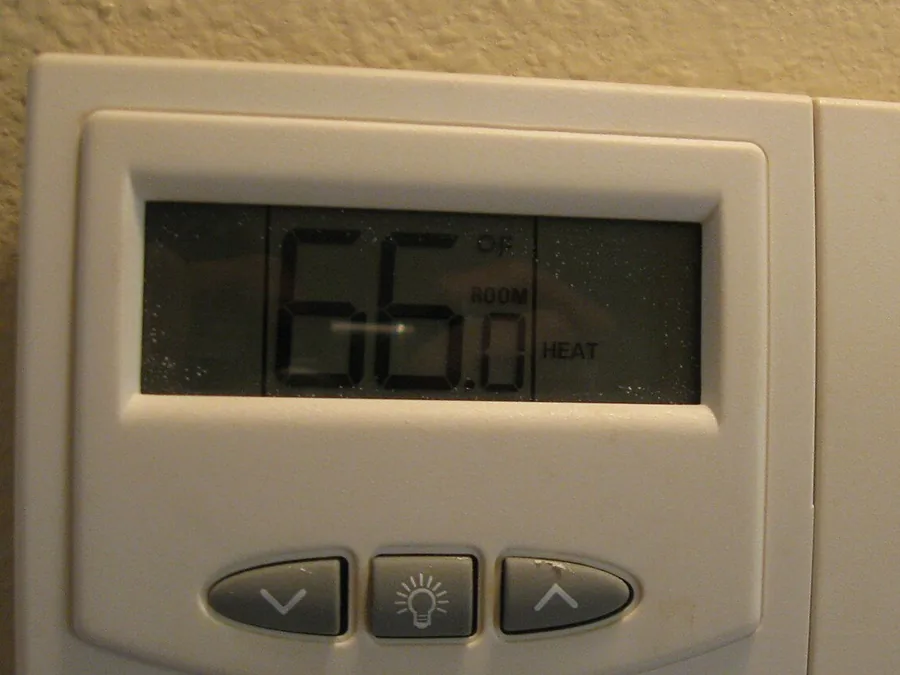
- 1Go by the indoor temperature: WHO proposes 18°C (64°F) as a safe indoor minimum for general populations and says some people need a higher one.
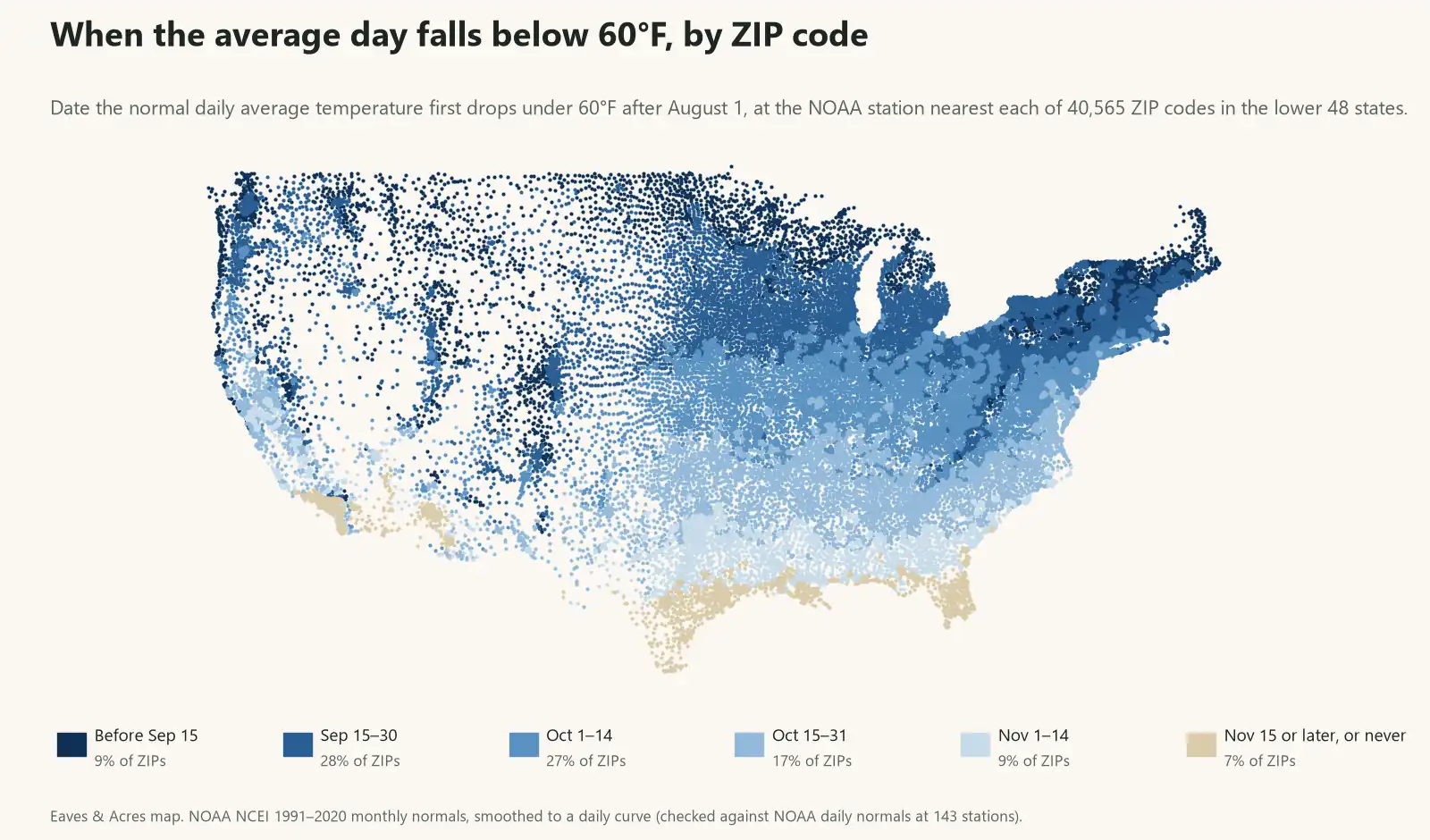
- 2In NOAA’s 1991–2020 normals the typical US ZIP code’s average day falls below 60°F around October 5; the middle 80% of ZIP codes range from September 15 to November 8.
- 3Fargo’s average day is below 60°F on September 17, Chicago’s on October 2, Atlanta’s on October 24 and Phoenix’s on November 28.
- 4Landlord heat seasons we read start September 15 (Chicago, Massachusetts) or October 1 (Minnesota, New York City, New Jersey, Philadelphia, Washington, DC); no source sets a date for a home you own.
- 5Before the first start, a furnace manual says to have a filter in place, keep combustibles clear and have it inspected yearly; CPSC says to put CO alarms on every level.
Turn the heat on when your home stays below about 64°F, not on a set date. That 18°C (64°F) figure traces to the World Health Organization, which calls it a proposed minimum and says some people need more.1 Outdoors, the normal day averages below 60°F from about October 5 in the typical US ZIP code, and for the middle 80% of ZIP codes that date falls anywhere from September 15 to November 8.2
That spread of nearly eight weeks is why one date fits almost no one. We turned NOAA’s 1991–2020 normals into first-cool dates for 40,749 ZIP codes and 24 cities, read the heat-season rules of seven cities and states on their own official pages, and checked what a furnace manual asks you to do before the first start. Once the heat is on, our winter thermostat guide covers what to set it to.
Start with your indoor temperature, not the calendar
The guides at the top of Google’s results agree on one rule: turn the heat on when the house drops below 64°F, and they credit it to the WHO.13,14 WHO’s guideline is more hedged than that. For countries with temperate or colder climates it says:
18 °C has been proposed as a safe and well-balanced indoor temperature
It adds that current evidence cannot pinpoint the temperature below which harm begins, calls a minimum of 18°C “widely accepted,” and says a higher minimum may be necessary for older people, children and people with chronic illness, particularly cardiorespiratory (heart and lung) disease.1 It gives no higher number. Our thermostat guide has the 68°F figure the National Institute on Aging gives for older adults, and our frozen-pipe guide covers the 55°F floor for an empty house.

Outdoor rules of thumb are everywhere too. Good Housekeeping’s search snippet puts the outdoor trigger at consistently below 60°F (and indoors at consistently below 65°F), Better Homes & Gardens’ snippet also says outdoors below 60°F, and One Hour Heating says to turn it on when the average outdoor temperature stays below 64°F for several days.15,13 Those are averages, which is what NOAA’s daily normals measure, so we can turn them into dates.
When the average day cools to 65, 60, 55 and 50°F
NOAA publishes a smoothed normal for every calendar day, built from 30 years of weather. For each city we took the station behind its ZIP code in our data and found the first date after August 1 when the normal daily average falls below each level. We also found when the normal overnight low first falls below 50°F, the “nights in the 40s” some guides mention. That is October 10 in Chicago, September 26 in Minneapolis and October 20 in New York.2 Table 1 sorts the 24 cities by the 60°F date. Normals describe a typical year; any single fall can run weeks earlier or later.
| City | Below 65°F | Below 60°F | Below 55°F | Below 50°F | First frost |
|---|---|---|---|---|---|
| Fargo, ND ZIP 58102 | Sep 3 | Sep 17 | Sep 28 | Oct 8 | Sep 30 |
| Minneapolis, MN ZIP 55401 | Sep 11 | Sep 23 | Oct 3 | Oct 13 | Oct 16 |
| Madison, WI ZIP 53703 | Sep 9 | Sep 23 | Oct 5 | Oct 17 | Oct 9 |
| Seattle, WA ZIP 98101 | Sep 8 | Sep 27 | Oct 12 | Oct 30 | Nov 17 |
| Detroit, MI ZIP 48226 | Sep 17 | Sep 29 | Oct 12 | Oct 24 | Oct 31 |
| Denver, CO ZIP 80202 | Sep 19 | Sep 30 | Oct 10 | Oct 23 | Oct 12 |
| Chicago, IL ZIP 60602 | Sep 21 | Oct 2 | Oct 14 | Oct 28 | Nov 5 |
| Boston, MA ZIP 02108 | Sep 18 | Oct 2 | Oct 16 | Oct 31 | Nov 9 |
| Portland, OR ZIP 97204 | Sep 18 | Oct 3 | Oct 17 | Nov 3 | Dec 1 |
| Columbus, OH ZIP 43215 | Sep 21 | Oct 4 | Oct 16 | Oct 27 | Oct 24 |
| Omaha, NE ZIP 68102 | Sep 23 | Oct 5 | Oct 15 | Oct 26 | Oct 21 |
| Salt Lake City, UT ZIP 84101 | Sep 26 | Oct 8 | Oct 19 | Nov 1 | Nov 8 |
| Newark, NJ ZIP 07102 | Sep 26 | Oct 8 | Oct 20 | Nov 4 | Nov 6 |
| New York, NY ZIP 10001 | Sep 28 | Oct 11 | Oct 25 | Nov 10 | Nov 20 |
| Kansas City, MO ZIP 64106 | Oct 1 | Oct 13 | Oct 25 | Nov 5 | Nov 2 |
| Philadelphia, PA ZIP 19107 | Oct 3 | Oct 15 | Oct 29 | Nov 13 | Nov 17 |
| Washington, DC ZIP 20001 | Oct 3 | Oct 15 | Oct 28 | Nov 12 | Nov 8 |
| Nashville, TN ZIP 37201 | Oct 5 | Oct 17 | Oct 30 | Nov 13 | Oct 31 |
| Louisville, KY ZIP 40202 | Oct 5 | Oct 17 | Oct 28 | Nov 8 | Nov 9 |
| Atlanta, GA ZIP 30303 | Oct 11 | Oct 24 | Nov 7 | Nov 25 | Nov 8 |
| Sacramento, CA ZIP 95814 | Oct 20 | Nov 3 | Nov 17 | Dec 5 | Dec 16 |
| Dallas, TX ZIP 75201 | Oct 27 | Nov 9 | Nov 24 | Dec 13 | Nov 29 |
| Houston, TX ZIP 77002 | Nov 7 | Nov 25 | Dec 20 | Never | Dec 25 |
| Phoenix, AZ ZIP 85004 | Nov 16 | Nov 28 | Dec 18 | Never | Rare |
Fargo’s normal day averages below 60°F on September 17; Phoenix’s waits until November 28, ten weeks later. Chicago crosses 65°F on September 21 and 60°F on October 2. Houston and Phoenix never average below 50°F.
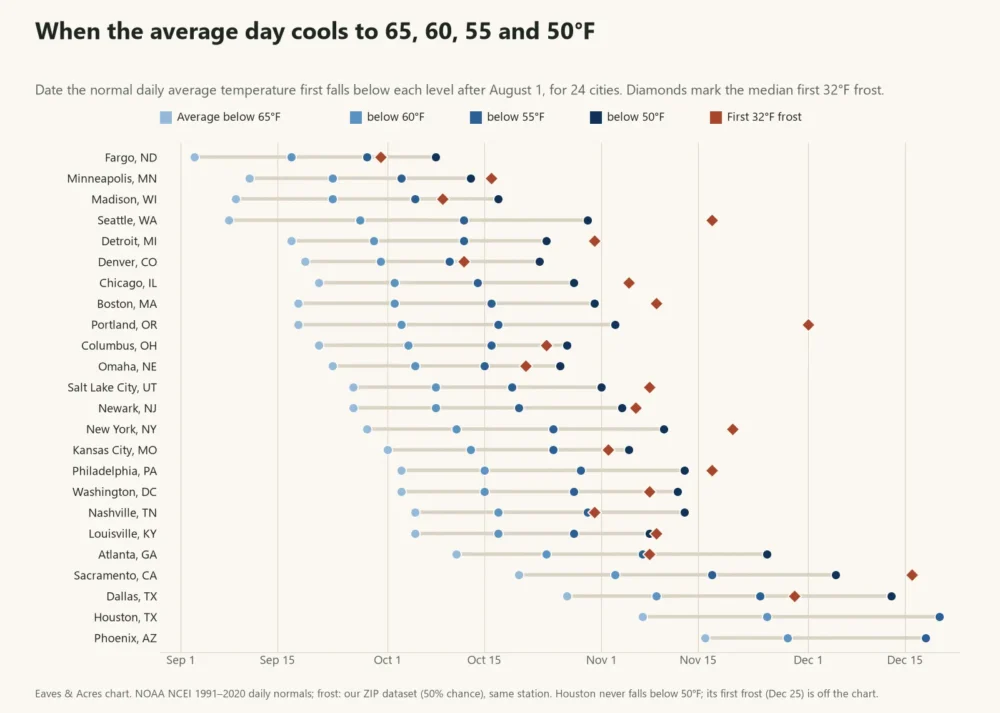
First frost is a poor trigger. In 23 of the 24 cities (Phoenix has no median first frost because 32°F frost is rare there) the median first frost comes after the average day has fallen below 60°F: by 24 days at the median, from 12 days in Denver to 59 days in Portland, Oregon. New York’s average day is under 60°F on October 11, but its median first frost is November 20. Our frost vs. freeze guide explains why a frost date marks the garden, not the house.
The national picture, by ZIP code and by state
The map above shows the 60°F date for 40,565 ZIP codes in the lower 48 states. Across all 40,749 ZIP codes we could map, including Alaska’s, the normal day is under 65°F before October 1 in 63% of them and under 60°F before October 15 in 64%. Before November 1, 82% are under 60°F, 69% under 55°F and half under 50°F.2 The other 2.5%, 1,030 ZIP codes, never average below 60°F; 989 of them are in Florida and 41 in Texas.
The ZIP-level dates come from a smoothed curve through NOAA’s twelve monthly normals. We checked that method against NOAA’s own daily normals at 143 stations: the dates agreed within 3 days at 98% of stations for the 65°F date and at every station for the 60, 55 and 50°F dates, with an average error of about one day or less.2 Table 2 gives each state’s median ZIP code. Montana (September 9), Wyoming and North Dakota reach 60°F first; Louisiana (November 11) and Arizona (November 18) come last; Alaska’s median ZIP is already below 60°F on August 1, and Florida’s never is.
| State | Below 65°F | Below 60°F | Below 55°F | ZIP codes |
|---|---|---|---|---|
| Alabama | Oct 16 | Oct 29 | Nov 13 | 811 |
| Alaska | By Aug 1 | By Aug 1 | Aug 17 | 184 |
| Arizona | Nov 5 | Nov 18 | Dec 2 | 529 |
| Arkansas | Oct 9 | Oct 22 | Nov 3 | 706 |
| California | Oct 18 | Nov 2 | Nov 21 | 2,592 |
| Colorado | Sep 10 | Sep 23 | Oct 5 | 645 |
| Connecticut | Sep 15 | Sep 29 | Oct 11 | 429 |
| Delaware | Sep 27 | Oct 9 | Oct 23 | 96 |
| District of Columbia | Oct 3 | Oct 15 | Oct 28 | 277 |
| Florida | Dec 8 | Not reached | Not reached | 1,473 |
| Georgia | Oct 13 | Oct 26 | Nov 10 | 952 |
| Idaho | Aug 29 | Sep 13 | Sep 26 | 320 |
| Illinois | Sep 21 | Oct 4 | Oct 16 | 1,575 |
| Indiana | Sep 19 | Oct 2 | Oct 14 | 968 |
| Iowa | Sep 13 | Sep 26 | Oct 8 | 1,055 |
| Kansas | Sep 27 | Oct 9 | Oct 20 | 748 |
| Kentucky | Sep 27 | Oct 10 | Oct 23 | 946 |
| Louisiana | Oct 27 | Nov 11 | Dec 3 | 719 |
| Maine | Aug 26 | Sep 13 | Sep 28 | 485 |
| Maryland | Sep 28 | Oct 10 | Oct 23 | 605 |
| Massachusetts | Sep 10 | Sep 25 | Oct 8 | 685 |
| Michigan | Sep 6 | Sep 22 | Oct 5 | 1,159 |
| Minnesota | Sep 2 | Sep 17 | Sep 30 | 992 |
| Mississippi | Oct 18 | Oct 31 | Nov 13 | 531 |
| Missouri | Sep 26 | Oct 10 | Oct 22 | 1,157 |
| Montana | Aug 25 | Sep 9 | Sep 21 | 404 |
| Nebraska | Sep 17 | Sep 29 | Oct 10 | 620 |
| Nevada | Oct 11 | Oct 22 | Nov 3 | 254 |
| New Hampshire | Aug 31 | Sep 17 | Oct 1 | 281 |
| New Jersey | Sep 23 | Oct 5 | Oct 18 | 723 |
| New Mexico | Sep 21 | Oct 5 | Oct 18 | 427 |
| New York | Sep 8 | Sep 24 | Oct 7 | 2,154 |
| North Carolina | Oct 6 | Oct 19 | Nov 2 | 1,081 |
| North Dakota | Aug 28 | Sep 12 | Sep 24 | 407 |
| Ohio | Sep 18 | Oct 2 | Oct 14 | 1,416 |
| Oklahoma | Oct 9 | Oct 22 | Nov 4 | 765 |
| Oregon | Sep 6 | Sep 25 | Oct 11 | 481 |
| Pennsylvania | Sep 15 | Sep 29 | Oct 12 | 2,176 |
| Rhode Island | Sep 16 | Sep 30 | Oct 13 | 90 |
| South Carolina | Oct 15 | Oct 28 | Nov 12 | 534 |
| South Dakota | Sep 7 | Sep 21 | Oct 1 | 385 |
| Tennessee | Oct 3 | Oct 16 | Oct 29 | 785 |
| Texas | Oct 24 | Nov 7 | Nov 22 | 2,600 |
| Utah | Sep 14 | Sep 26 | Oct 8 | 347 |
| Vermont | Aug 24 | Sep 13 | Sep 27 | 308 |
| Virginia | Sep 28 | Oct 10 | Oct 24 | 1,214 |
| Washington | Aug 28 | Sep 18 | Oct 5 | 716 |
| West Virginia | Sep 20 | Oct 4 | Oct 17 | 851 |
| Wisconsin | Sep 3 | Sep 19 | Oct 1 | 896 |
| Wyoming | Aug 27 | Sep 11 | Sep 23 | 195 |
Inside a state the range is wide. Mountain ZIP codes cool weeks before valley ones, and ZIP codes far from their weather station are matched to the nearest one, so use your state’s date as a guide and your own thermostat as the trigger. Our methodology page explains how ZIP codes are matched to NOAA stations.
How much heating you skip by waiting
In cold climates, early-fall days add little heating need. A heating degree day (HDD) is one degree that a day’s average falls below 65°F; our heating degree days guide explains the count. NOAA’s daily HDD normals put 6.8% of Chicago’s yearly heating need between July 1 and October 31, 5.9% of New York’s, 9.7% of Fargo’s and 11.3% of Seattle’s, the highest of the 24 cities. Phoenix has 0.6%.2

The stretch between “average below 60°F” and “average below 50°F” is where most waiting happens. It holds about 3% of Fargo’s yearly heating degree days, 5% of Chicago’s, 7% of New York’s, 13% of Atlanta’s and 35% of Phoenix’s, where the yearly total is small.2 These are shares of heating need for a house that needs heat below 65°F outdoors, not dollars; a drafty house, or a cold-sensitive household, shifts the picture.
At what outdoor temperature should you turn the heat on?
None of the official sources we read gives an outdoor number. The rules of thumb above, 60°F outdoors or a 64°F average for several days, land in the same place in the data: for the typical ZIP code the normal day passes 60°F on October 5 and 55°F on October 17, and half of ZIP codes reach 50°F by about October 28.2 If you are waiting for the average day to reach 50°F, you will be heating after November 1 in about half the country. The indoor temperature is the better trigger, and the table is your calendar for being ready.
What landlord heat rules say
Where a rule names a date, it applies to rentals where the landlord controls the heat, not to a home you own. Table 3 lists the seven we read on city and state sites.
| Place | Heat season | Minimum indoor temperatures | Stated by |
|---|---|---|---|
| Chicago | Sep 15 to Jun 1 | 68°F from 8:30 a.m. to 10:30 p.m. and 66°F from 10:30 p.m. to 8:30 a.m. in buildings with central heat and no central cooling; units with their own heating equipment must be able to hold 68°F4 | City of Chicago Department of Buildings, Heat Ordinance page |
| Massachusetts | Sep 15 to May 31; a board of health may alter the dates | 68°F by day and 64°F at night; no more than 78°F5 | 105 CMR 410.180, as summarized by the Massachusetts Trial Court Law Libraries |
| Minnesota | Oct 1 to Apr 30 | 68°F in all places intended for habitation, including kitchens and bathrooms, unless a utility requires the heat be reduced7 | Minnesota Statutes 504B.161 |
| New York City | Oct 1 to May 31 | 68°F from 6 a.m. to 10 p.m. when it is below 55°F outside; 62°F from 10 p.m. to 6 a.m. regardless of the outside temperature3 | NYC Housing Preservation and Development |
| New Jersey | Oct 1 to May 15 | 68°F from 6 a.m. to 11 p.m. and 65°F from 11 p.m. to 6 a.m.8 | N.J.A.C. 5:10-14.4, amended 2023 |
| Philadelphia | Oct 1 to Apr 30 | Systems must be able to heat habitable rooms, bathrooms and toilet rooms to at least 68°; two-family, multi-family and rooming houses, not single-family homes6 | Philadelphia Department of Licenses and Inspections, Jan 2026 |
| Washington, DC | Oct 1 to May 1 | 68°F from 6:30 a.m. to 11 p.m. and 65°F from 11 p.m. to 6:30 a.m. in habitable rooms, bathrooms and toilet rooms9 | DC Office of the Attorney General, Feb 2022 |
Chicago adds a rule for buildings with a single system for heating and cooling: from September 15 until the first date the nighttime outdoor temperature falls below 45°F, or October 15, whichever comes first, the indoor minimum is 64°F at all hours. The city also says its ordinance does not stop a building from running air conditioning during the heat season if the required temperatures are kept.4
The Heat Ordinance applies from September 15 until June 1.
Philadelphia’s rule is about equipment: systems must be able to heat habitable rooms, bathrooms and toilet rooms to at least 68°, and single-family homes are exempt, whether owner- or tenant-occupied.6 New York’s daytime duty has an outdoor trigger: heat is required between 6 a.m. and 10 p.m. when it is below 55°F outside, while the 62°F overnight minimum applies whatever the weather.3
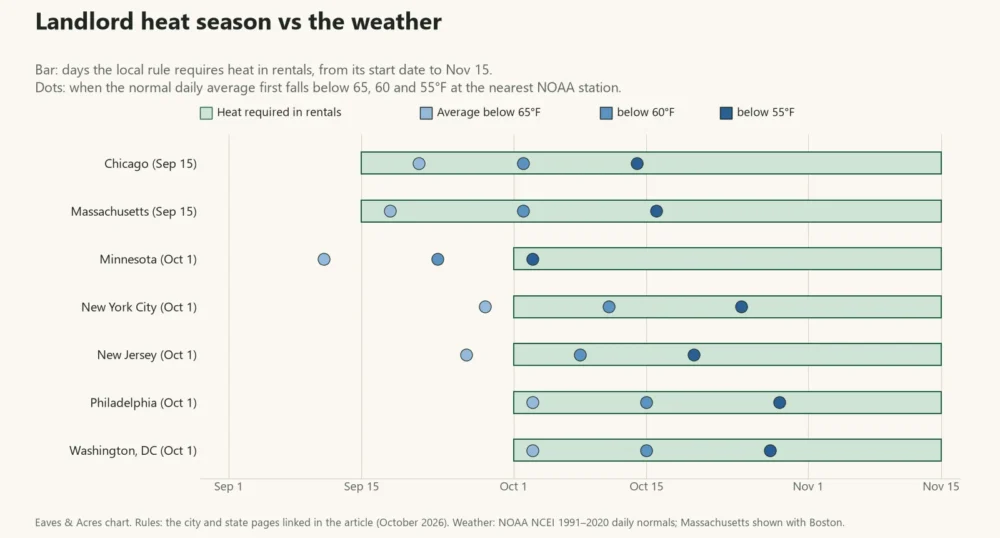
The legal dates sit near the weather but not on it. Chicago’s and Massachusetts’ September 15 start comes before the average day has fallen below 60°F in Chicago or Boston (October 2 in both). Minnesota’s October 1 comes eight days after Minneapolis’ average day went under 60°F, on September 23. In New York and Newark the average day is below 60°F on October 11 and October 8; in Philadelphia and Washington, DC it is October 15, two weeks after the October 1 start.

These rules cover only the places we read; for your city, check its housing or buildings department. Utilities use dates too: Massachusetts bars shutting off gas or electric service used for heating because of financial hardship between November 15 and March 15, according to the state’s law library.5
Before you turn the system on
A furnace manual answers what to check, not when to start. Table 4 collects what one manufacturer’s owner manual, CPSC and the U.S. Fire Administration say. Manuals vary by model, so read yours.
| Check | What the source says | Source |
|---|---|---|
| Filter | Do not run the furnace without a filter in place. Check a disposable media filter or replace it before each heating and cooling season; the filter should be checked every four weeks and cleaned or replaced if necessary10 | Furnace owner’s manual |
| Clearances and airflow | Keep the furnace free and clear of combustible material and do not block its air openings10. Keep anything that can burn at least 3 feet from all heat sources12 | Manual; U.S. Fire Administration |
| Inspection | Have the furnace and vent system inspected annually by a qualified service technician. Monthly maintenance items may be done by the homeowner; all other service must be done by qualified technicians10. Heating equipment and chimneys should be cleaned and inspected each year by a professional12 | Manual; U.S. Fire Administration |
| Thermostat | If the furnace is not running, check whether the thermostat is set above room temperature and the HEAT mode is selected10 | Manual, “before you request a service call” |
| Carbon monoxide alarms | Install battery-operated or battery-backup CO alarms on every level of the home and outside sleeping areas; if you suspect CO poisoning, get outside to fresh air and call 91111 | CPSC |
| Gas smell | Do not try to light any appliance or touch a switch, leave the building immediately, and call your gas supplier from a neighbor’s phone10 | Furnace owner’s manual |
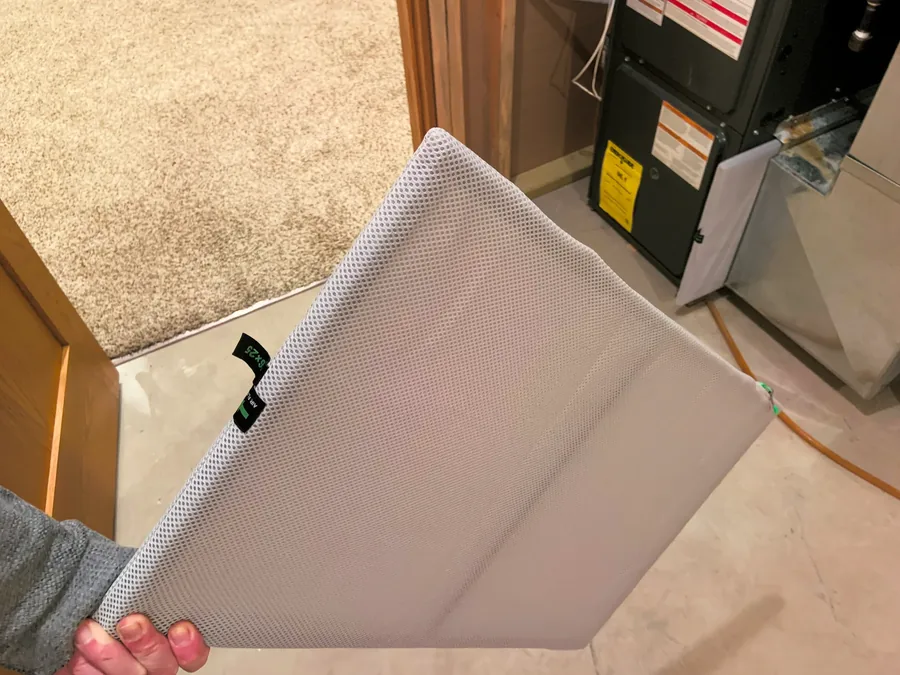
The manual puts the filter point in one line:
Do not run the furnace without a filter in place.
Our furnace filter guide covers how often to change it, manual first.

Many guides call a faint burning smell normal at the season’s first start. The manual we read mentions minor smoke and odor only after a new installation, so we cannot confirm the seasonal claim; what it does cover is a gas smell, and then you follow its steps rather than waiting to see.10 Another snippet says to test the system on a mild day for 10 to 20 minutes.15 The manual we read gives no run time, though its yearly professional check-up list includes an operational checkout.10 If an outage worries you, see what size generator runs a furnace and our generator size calculator.
Next step
Look up your state in Table 2 to know roughly when to be ready, and use the thermostat as your trigger: 64°F indoors for most households, higher where someone older, young or ill lives there. If you rent, check your city’s heat-season date. Then change the filter and test your carbon monoxide alarms before the first cold week. The rest of the fall jobs are in our fall winterizing checklist. More in heating and cooling, including heat pump vs. furnace running costs.
Frequently asked questions
Not in most places. In the typical US ZIP code the average day is below 60°F by October 5, and 64% of ZIP codes are under 60°F before October 15. Go by how cold the house gets, not the month; WHO proposes 18°C (64°F) as a safe indoor minimum.
It depends where you live. The median ZIP code reaches 60°F in September in Montana (September 9), Wyoming, North Dakota and Minnesota, in October for most of the country, and in November in Louisiana (November 11), Texas and Arizona (November 18). Table 2 lists every state.
None of the official sources we read gives an outdoor number. Guides say outdoors below 60°F, or an average below 64°F for several days; in NOAA’s normals the typical ZIP code reaches 60°F on October 5 and 55°F on October 17.
It is above what our thermostat guide found: DOE’s last web wording said 68–70°F for when you are home and awake, and ENERGY STAR’s schedule says below 70°F. A higher setting can suit an older adult; see that guide.
In the seven places we read, yes: September 15 in Chicago and Massachusetts, October 1 in Minnesota, New York City, New Jersey, Philadelphia and Washington, DC. Philadelphia exempts single-family homes. Check your own city’s rule.
The furnace manual we read lists two checks if the furnace does not run: the thermostat is set above room temperature and the HEAT mode is selected. It sets no outdoor temperature for the switch.
One search snippet advises 10 to 20 minutes, but the manual we read gives no run time. It does call for a professional check-up each year that includes an operational checkout.
Guides call a faint burning smell normal at the season’s first start. The manual we read mentions minor smoke and odor only after a new installation. For a gas smell, its steps say not to light anything or touch a switch, leave the building and call your gas supplier.
A cold house is a health risk for some people: WHO says a higher minimum than 18°C may be necessary for older people, children and people with chronic illness. Pipes in unheated spaces are a separate risk; see our frozen-pipe guide.
Sources
- 1.WHO Housing and health guidelines (chapter 4, Low indoor temperatures and insulation). World Health Organization, 2018. Used for: 18 °C proposed as a safe and well-balanced indoor temperature; evidence cannot pinpoint the threshold; higher minimum may be needed for vulnerable groups Back to text
- 2.U.S. Climate Normals 1991–2020: daily and monthly station normals. NOAA National Centers for Environmental Information, 2021. Used for: daily mean and minimum temperature and heating degree day normals; monthly mean temperature normals Back to text
- 3.Heat and Hot Water Information. NYC Housing Preservation and Development, read 2026-10-22. Used for: heat season Oct 1 to May 31; 68°F when outside is below 55°F, 6 a.m. to 10 p.m.; 62°F overnight Back to text
- 4.Chicago Heat Ordinance. City of Chicago Department of Buildings, read 2026-10-22. Used for: Sep 15 to Jun 1; 68°F and 66°F schedule; two-pipe building rule; air conditioning allowed if minimums are kept Back to text
- 5.Massachusetts law about winter heating. Massachusetts Trial Court Law Libraries (Mass.gov), read 2026-10-22 (page updated July 17, 2026). Used for: 105 CMR 410.180 Sep 15 to May 31, 68°F and 64°F, 78°F maximum, board of health may alter; MGL c. 164 § 124F shutoff protection Nov 15 to Mar 15 Back to text
- 6.Know Your Heat Rights: Staying Safe and Warm During Philadelphia’s Cold Months. City of Philadelphia Department of Licenses and Inspections, 2026. Used for: Heat Season Oct 1 to Apr 30; 68° capability; single-family exempt Back to text
- 7.Minnesota Statutes section 504B.161, Covenants of landlord or licensor. Minnesota Office of the Revisor of Statutes, 2025. Used for: 68°F in all places intended for habitation from Oct 1 through Apr 30 unless a utility requires a reduction Back to text
- 8.N.J.A.C. 5:10-14.4, Minimum temperature. Legal Information Institute, Cornell Law School (New Jersey Administrative Code, amended 2023), read 2026-10-22. Used for: Oct 1 to May 15; 68°F 6 a.m.–11 p.m., 65°F 11 p.m.–6 a.m. Back to text
- 9.Tenant Alert: You have a right to stay warm in your apartment. Office of the Attorney General for the District of Columbia, 2022. Used for: 68°F 6:30 a.m.–11 p.m., 65°F 11 p.m.–6:30 a.m., Oct 1 to May 1 Back to text
- 10.Home Owner’s Information, High Efficiency Ultra Low NOx Condensing Gas Furnace (part 440 02 4100 00, 9/6/2019; Tempstar N95ESU series per the manufacturer’s file name). Tempstar (Gemaire resource library), 2019. Used for: filter in place; annual inspection by qualified technician; combustibles and air openings; thermostat HEAT mode check; gas smell steps; CO alarm; check-up checklist Back to text
- 11.Carbon Monoxide. U.S. Consumer Product Safety Commission, read 2026-10-22. Used for: CO alarms on every level and outside sleeping areas; get outside and call 911 Back to text
- 12.Heating Fire Safety. U.S. Fire Administration (FEMA), page reviewed 2023-05-04. Used for: 3 feet from heat sources; equipment and chimneys cleaned and inspected each year by a professional Back to text
- 13.When Should I Turn My Heat on for the Season?. One Hour Heating & Air Conditioning, updated 2025-12-05. Used for: 64°F indoor rule credited to WHO; outdoor average below 64°F for several days Back to text
- 14.When to Turn On the Heat: Temperature Rules and a First-Startup Checklist. Filterbuy, updated 2026-10-07. Used for: turn on below about 64°F; credits WHO; no landlord or legal rules Back to text
- 15.Google search results pages for “when to turn on heat” and “when to turn on the heat in fall” (gl=us, hl=en, pws=0). Google Search (snippets from Good Housekeeping, Better Homes & Gardens, Farmers’ Almanac), read 2026-10-22. Used for: outdoor below 60°F and indoor below 65°F snippets; 10 to 20 minute test run snippet; AI Overview text Back to text
- 16.Robertshaw Non-Programmable Digital Thermostat (photo). Ente75, Wikimedia Commons, CC0, 2011. Used for: thermostat photo, cropped
- 17.Radiator - Arlington, MA (photo). Daderot, Wikimedia Commons, CC0, 2025. Used for: radiator photo, cropped
- 18.HVAC air filter (photo). Wikideas1, Wikimedia Commons, CC0, 2024. Used for: furnace filter photo
How this guide was made
- Written by the Home Systems Desk and reviewed by the Data & Methodology Desk.
- Data: dates are NOAA NCEI 1991–2020 normals at the station nearest each ZIP code. City dates use NOAA’s daily normals (first date after August 1 below each level). State and ZIP dates use a smoothed curve through the twelve monthly normals, checked against NOAA daily normals at 143 stations (98% to 100% within 3 days). Hawaii, territories and ZIP codes without monthly normals are left out. Landlord rules were read on official pages on 2026-10-22; they change, so check your city. See our methodology.
- AI use: AI tools help us research, draft and check this guide. Every figure is checked against the source cited for it, and calculated figures come from our own code, described on the methodology page.
- Spotted an error? Tell us — the form opens with this page’s address filled in.
Change log
- Oct 22, 2026Published. NOAA 1991–2020 daily and monthly normals turned into first-cool dates for 24 cities and 40,749 ZIP codes; seven landlord heat rules read on official city and state pages; WHO indoor-temperature guideline, a furnace owner’s manual, CPSC and U.S. Fire Administration pages read.
Covers heating, cooling, generators and water heaters. We maintain the sizing calculators and the guides that explain what a number means before you call a contractor.
Keep reading
How Many BTU to Heat a Room? Rules of Thumb Tested Against Design Temperatures
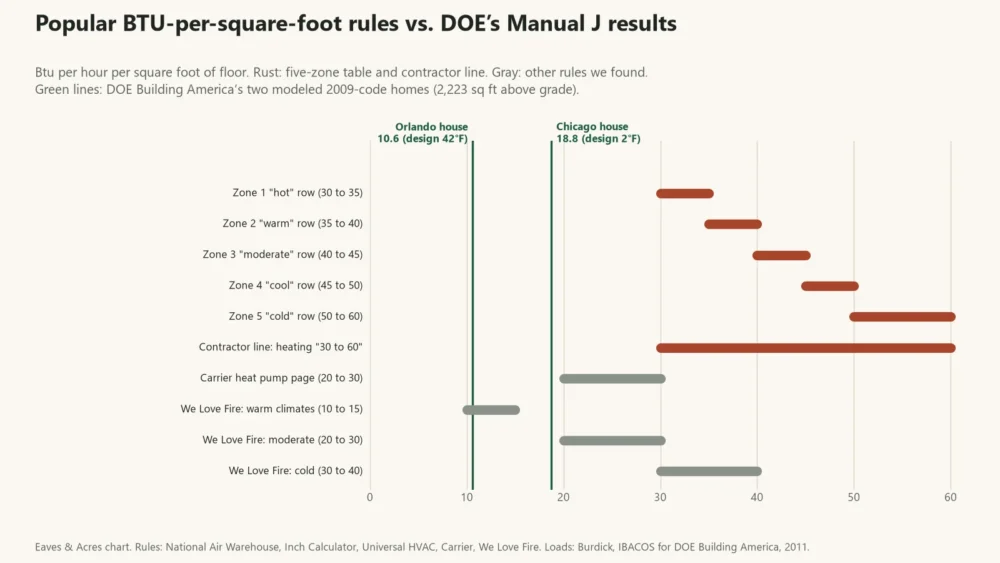
Popular tables say 30 to 60 BTU per square foot; DOE's modeled homes need 10.6 to 18.8. We convert BTU to watts and test the rules against design temperatures for 39 cities and 40,565 ZIP codes.

How Long Does a Furnace Last? DOE, NAHB and Manufacturer Figures Compared
Sources put furnace life at 15 to 22 years: NAHB says gas 18, Minnesota 15 to 20, DOE 21.4. We show why they differ and estimate run hours for 20 cities from NOAA data.

How to Winterize Your House: A Fall Checklist With Dates
The typical US ZIP code gets its first freeze around October 25. A deadline-ordered fall checklist for caulk, hoses, gutters, attic, furnace and alarms, with dates for 24 cities and what labels, CPSC and extension services say.
Seasonal reminders for your ZIP
Get a short email when it’s time to overseed, start seeds, open the pool or service your furnace — timed to your climate.