




Tankless vs Tank Water Heater: Real Savings and Winter Flow Where You Live
A tankless heater’s savings depend on the tank you compare it with, and its flow depends on how cold your tap water gets. Here are both, worked out for 22 US cities.
- Last reviewed Oct 4, 2026
- 22 cited sources
- 11 min read
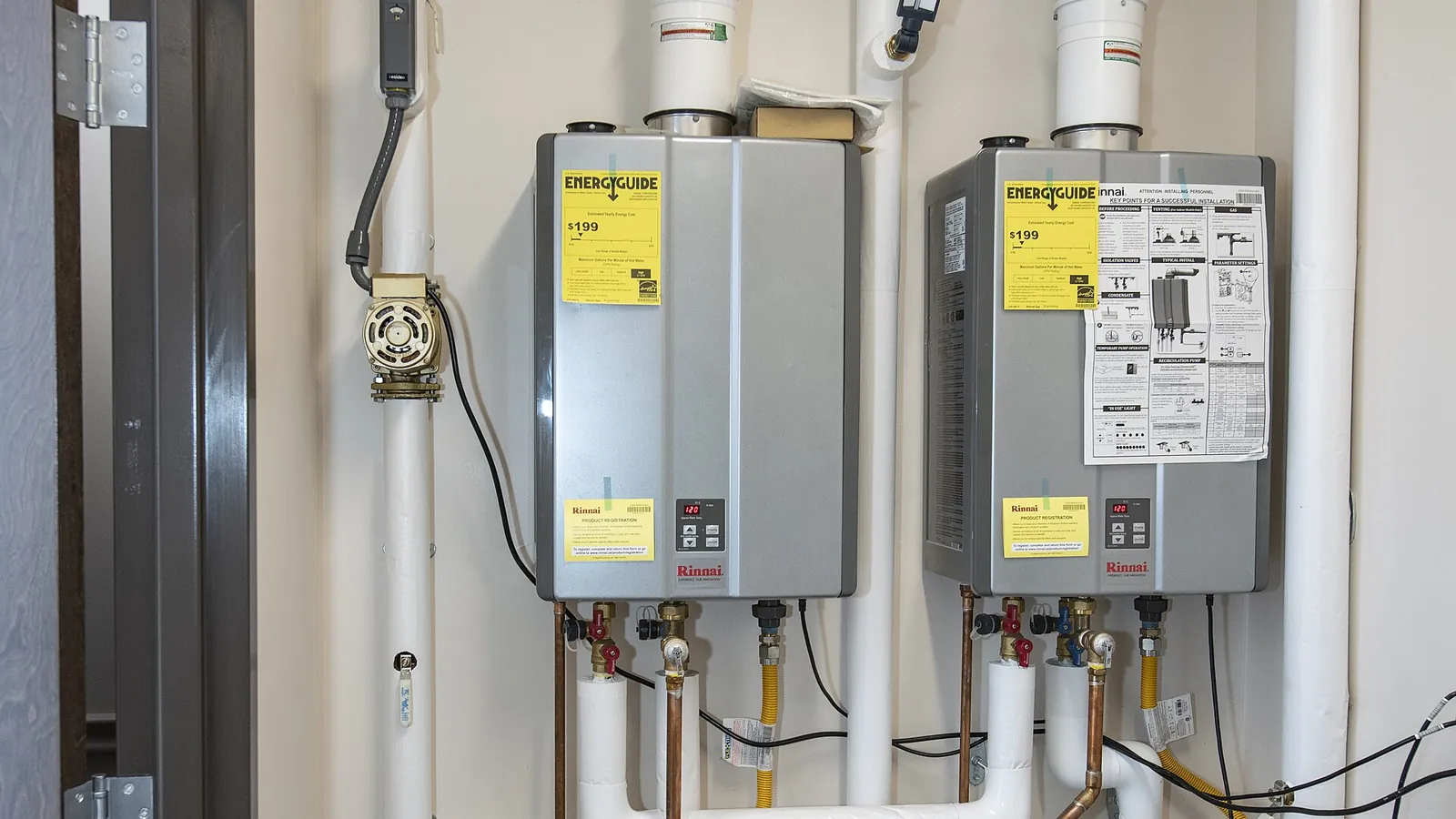
- 1A gas tankless heater (UEF 0.95) uses about a third less gas than a federal-minimum 50-gallon gas tank: about $90–$210 a year less in the 12 cities we priced.
- 2Against an ENERGY STAR gas tank (UEF 0.86), the saving drops to about $18–$42 a year.
- 3Tankless flow ratings assume a 67°F rise. A typical 199,000 Btu/h gas unit gives about 4.8 gpm at 120°F in Minneapolis in February, but 7.4 gpm in Phoenix in January.
- 4For electric homes, tankless and tank have almost the same efficiency; a heat pump water heater (median UEF 3.8) cuts the bill by about three quarters.
- 5The federal 25C credit ended for installations after December 31, 2025. Gas units of either type need CO alarms and a yearly inspection.
A gas tankless water heater uses about a third less gas than a federal-minimum gas tank, roughly $90–$210 a year in the 12 cities we priced, but only about $18–$42 a year less than an ENERGY STAR tank. Its hot water flow also depends on how cold your tap water is: the same 199,000 Btu/h unit delivers about 4.8 gallons per minute in Minneapolis in February and 7.4 in Phoenix in January. For electric homes, a tankless heater saves almost nothing over an electric tank; a heat pump water heater is the efficient electric choice.
Below: how both are rated, winter flow for 22 cities, yearly cost, and when each type makes sense.
Tankless vs. tank at a glance
A tank water heater keeps a tank of water hot and ready, and loses some heat while it waits. A tankless (instantaneous) heater fires only when a tap opens, so it has no stored water to lose heat from, but it can heat only so many gallons per minute. Both are rated with the Department of Energy’s Uniform Energy Factor (UEF): the higher the number, the less energy per gallon of hot water.4
| Type | Capacity rating | Federal minimum UEF* | ENERGY STAR UEF | Yearly energy, DOE test* |
|---|---|---|---|---|
| Gas tank (50 gal) | First-hour rating (gallons) | 0.63 | 0.86 | 270 therms (min.) / 197 (ENERGY STAR) |
| Gas tankless | Max gpm at a 67°F rise | 0.81 | 0.95 | 178 therms |
| Electric tank (50 gal) | First-hour rating | 0.93 | none (heat pump only) | 5,335 kWh |
| Electric tankless | Max gpm at a 67°F rise | 0.92 | none | 5,392 kWh |
| Heat pump water heater | First-hour rating | (electric tank class) | 3.30; median certified 3.8 | 1,306 kWh |
*High-usage draw pattern: 84 gallons of hot water a day, the largest household the federal test models. Minimums from 10 CFR 430.32,5 ENERGY STAR levels from its criteria,6 the heat pump median from 316 certified high-usage models.8 Yearly energy is the test’s own formula: 365 days × 84 gallons × 8.24 lb × 67°F ÷ UEF.4 It matches ENERGY STAR’s listed 178 therms for a 0.95 tankless model and comes within 1% of FEMP’s 3,437 kWh for a 0.95 electric unit at 55 gallons a day.7,9
Why tankless flow depends on your tap water
A tankless burner or element adds a fixed amount of heat per minute, so its flow depends on the temperature rise: your setpoint minus the temperature of the incoming water. Box ratings hide this. ENERGY STAR’s criteria define the rated flow plainly:
The GPM is measured over a 67°F temperature rise
The federal test procedure feeds the heater 58°F water and draws it at 125°F.4 At home, DOE’s Federal Energy Management Program suggests a 120°F setpoint for most residential uses,9 and your incoming water is rarely 58°F. With the burner output fixed, flow scales with the rise:
Flow at your rise = rated gpm × 67 ÷ (setpoint − inlet temperature)
For an electric tankless heater: gpm = kW × 3,412 ÷ (8.24 × 60 × rise), using the test’s 3,412 Btu per kWh and 8.24 lb per gallon. A 27 kW unit makes 2.8 gpm at a 67°F rise.4
Among 320 ENERGY STAR natural-gas tankless models, those rated at 199,000 Btu/h (the most common size on the list; ENERGY STAR’s residential tankless category stops below 200,000 Btu/h) list a median of 5.8 gpm at a 67°F rise, with a range of 5.4 to 6.0.7,6
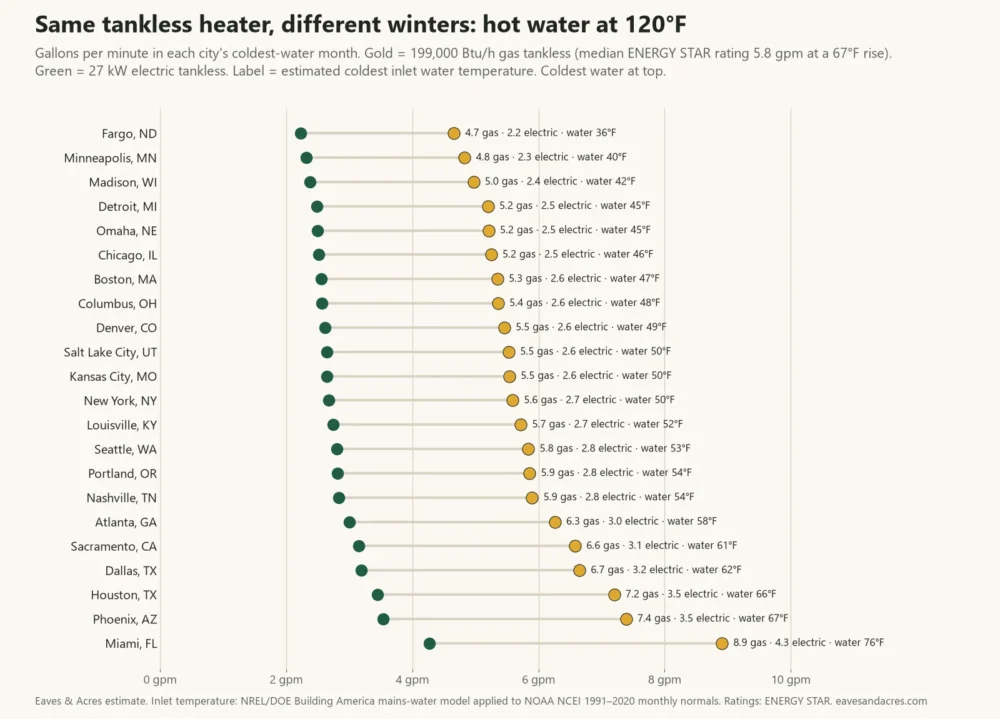
Winter flow by city: our 22-city estimate
We estimated each city’s incoming water temperature month by month with the mains-water model (Equation 29) in the Department of Energy’s Building America House Simulation Protocols, written by the National Renewable Energy Laboratory.2 It needs only the annual average air temperature and the gap between the warmest and coldest months, taken from NOAA’s 1991–2020 normals for the station nearest each ZIP code, the same climate normals behind our climate guides.1 Because buried pipes lag the air, the coldest water arrives in February across most of the country, a few weeks after the coldest air.
| City (ZIP) | Coldest inlet water | Rise to 120°F | Gas tankless, gpm | Electric 27 kW, gpm | 2.0 gpm showers at once (gas) |
|---|---|---|---|---|---|
| Fargo, ND (58102) | 36°F (Feb) | 84°F | 4.7 | 2.2 | 2.6 |
| Minneapolis, MN (55401) | 40°F (Feb) | 80°F | 4.8 | 2.3 | 2.8 |
| Madison, WI (53703) | 42°F (Feb) | 78°F | 5.0 | 2.4 | 2.9 |
| Detroit, MI (48226) | 45°F (Feb) | 75°F | 5.2 | 2.5 | 3.0 |
| Omaha, NE (68102) | 45°F (Feb) | 75°F | 5.2 | 2.5 | 3.0 |
| Chicago, IL (60602) | 46°F (Feb) | 74°F | 5.2 | 2.5 | 3.0 |
| Boston, MA (02108) | 47°F (Feb) | 73°F | 5.3 | 2.6 | 3.1 |
| Columbus, OH (43215) | 48°F (Feb) | 72°F | 5.4 | 2.6 | 3.1 |
| Denver, CO (80202) | 49°F (Feb) | 71°F | 5.5 | 2.6 | 3.2 |
| Salt Lake City, UT (84101) | 50°F (Feb) | 70°F | 5.5 | 2.6 | 3.2 |
| Kansas City, MO (64106) | 50°F (Feb) | 70°F | 5.5 | 2.6 | 3.2 |
| New York, NY (10001) | 50°F (Feb) | 70°F | 5.6 | 2.7 | 3.3 |
| Louisville, KY (40202) | 52°F (Feb) | 68°F | 5.7 | 2.7 | 3.4 |
| Seattle, WA (98101) | 53°F (Feb) | 67°F | 5.8 | 2.8 | 3.4 |
| Portland, OR (97204) | 54°F (Feb) | 66°F | 5.9 | 2.8 | 3.5 |
| Nashville, TN (37201) | 54°F (Feb) | 66°F | 5.9 | 2.8 | 3.5 |
| Atlanta, GA (30303) | 58°F (Feb) | 62°F | 6.3 | 3.0 | 3.7 |
| Sacramento, CA (95814) | 61°F (Feb) | 59°F | 6.6 | 3.1 | 4.0 |
| Dallas, TX (75201) | 62°F (Jan) | 58°F | 6.7 | 3.2 | 4.0 |
| Houston, TX (77002) | 66°F (Jan) | 54°F | 7.2 | 3.5 | 4.4 |
| Phoenix, AZ (85004) | 67°F (Jan) | 53°F | 7.4 | 3.5 | 4.6 |
| Miami, FL (33130) | 76°F (Jan) | 44°F | 8.9 | 4.3 | 5.8 |
In Fargo, February water needs an 84°F rise, so a 5.8 gpm gas unit drops to about 4.7 gpm. Electric units are much smaller: a 27 kW model gives 2.2–2.6 gpm through a Northern winter, about one shower plus a sink.
How many showers can run at once?
A shower mixes hot and cold water; the Building America protocols assume 110°F at the showerhead.2 A standard showerhead uses 2.5 gallons per minute, the federal maximum, and a WaterSense model no more than 2.0.5,10 In Minneapolis in February, a 199,000 Btu/h gas unit runs about 2.8 WaterSense showers at once; in Phoenix in January, about 4.6. A 27 kW electric unit runs about 1.3 showers in Minneapolis and 2.2 in Phoenix.
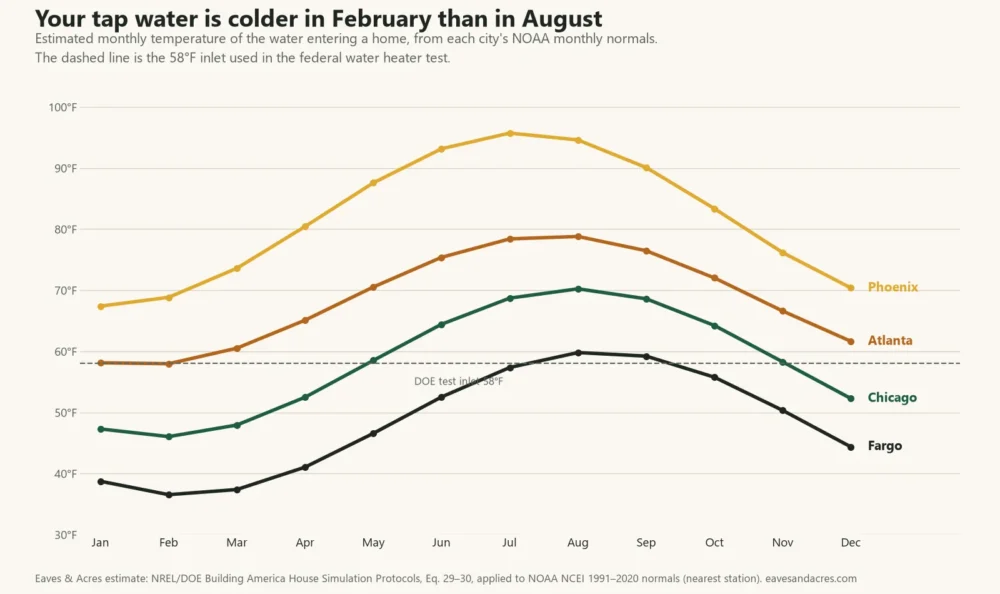
Chicago, Illinois: what a 5.8 gpm tankless delivers in February
- Scenario
- NOAA normals for the Northerly Island station downtown: annual average 52.1°F, with a 50.3°F gap between July and January. The model's ratio is 0.4 + 0.01 × (52.1 − 44) = 0.48, and its lag 35 − (52.1 − 44) = 27 days.
- Math
- February inlet: 52.1 + 6 − 0.48 × 50.3 ÷ 2 ≈ 46°F. Rise to 120°F: 74°F. Flow: 5.8 × 67 ÷ 74 = 5.25 gpm. Showers at 110°F: 5.8 × 67 ÷ (110 − 46) ÷ 2.0 = 3.0.
- Answer
- Plan on about 5.2 gpm in a Chicago winter, not the 5.8 on the label, and nearly 8 gpm in late summer, when the water reaches about 70°F.
The model has limits. Its authors fit it to measured data from several locations and list open questions, including:
Future work includes acquiring quality data sets, testing the model in northern climates
It estimates water from a buried municipal main; we found no comparable source for private wells. For your true number, run cold water for a minute in midwinter and measure it.
Operating cost: what tankless really saves
The saving depends on what you compare against. Many guides repeat a 24–34% efficiency gain for tankless; ABC Plumbing’s comparison gives that range for households with average hot water use and credits it to the U.S. Department of Energy, but DOE’s consumer page on tankless heaters is no longer online, so we could not check the conditions behind it.17 In the federal test, the gap is 34% against a minimum-efficiency gas tank (178 vs. 270 therms a year) but under 10% against an ENERGY STAR gas tank (178 vs. 197).4 At the federal minimum, a 50-gallon gas tank tested on the high-usage pattern needs a UEF of only 0.63; an ENERGY STAR gas tank must reach 0.86, and an ENERGY STAR tankless 0.95.5,6 We priced all three in 12 of our cities at EIA’s state-average residential gas price for 2025, and scaled the test’s 67°F rise to each city’s annual average rise to 120°F.12
| City | Gas/therm | Minimum tank | ENERGY STAR tank | Tankless | Tankless saves vs. min / ENERGY STAR tank | Years to recover $1,000 (vs. min) |
|---|---|---|---|---|---|---|
| Fargo, ND | $0.92 | $265 | $193 | $175 | $90 / $18 | 11.1 |
| Minneapolis, MN | $1.06 | $291 | $212 | $192 | $99 / $20 | 10.1 |
| Chicago, IL | $1.09 | $271 | $197 | $179 | $92 / $19 | 10.9 |
| Boston, MA | $2.42 | $605 | $441 | $400 | $206 / $42 | 4.9 |
| Denver, CO | $1.08 | $264 | $192 | $174 | $90 / $18 | 11.2 |
| New York, NY | $1.70 | $398 | $290 | $263 | $135 / $28 | 7.4 |
| Seattle, WA | $1.70 | $412 | $301 | $272 | $140 / $28 | 7.1 |
| Atlanta, GA | $1.97 | $410 | $299 | $271 | $140 / $28 | 7.2 |
| Sacramento, CA | $2.12 | $433 | $316 | $286 | $147 / $30 | 6.8 |
| Dallas, TX | $1.88 | $347 | $253 | $229 | $118 / $24 | 8.5 |
| Phoenix, AZ | $1.79 | $278 | $202 | $183 | $94 / $19 | 10.6 |
| Miami, FL | $2.46 | $376 | $274 | $248 | $128 / $26 | 7.8 |
Against a minimum-efficiency tank, a tankless unit saves about $90–$210 a year, most where gas is dear: Boston, at $2.42 a therm, saves the most. Against an ENERGY STAR tank, the saving drops to $18–$42. Every $1,000 of extra installed cost takes 5 to 11 years to earn back against a minimum tank, and smaller households save less.
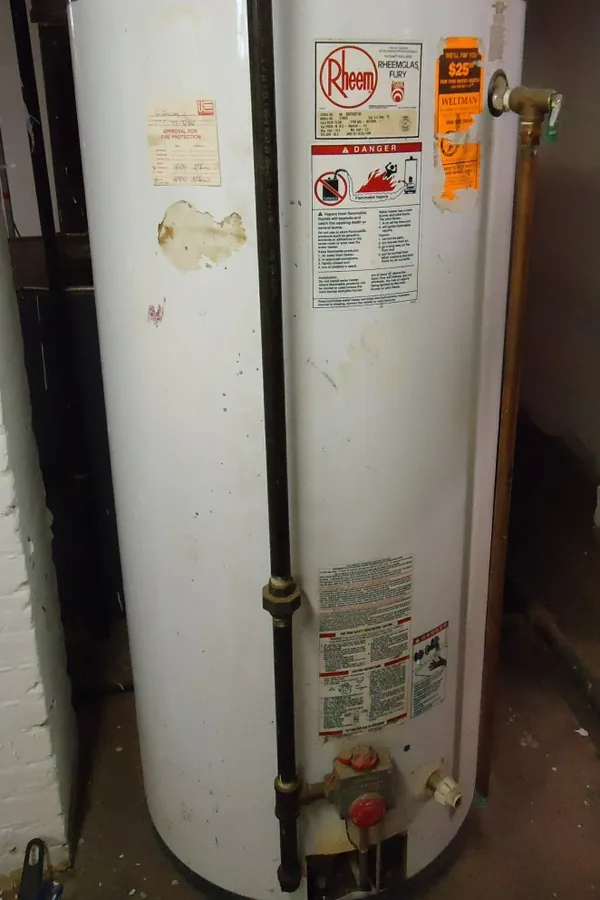
Electric homes: tankless is not the efficient choice
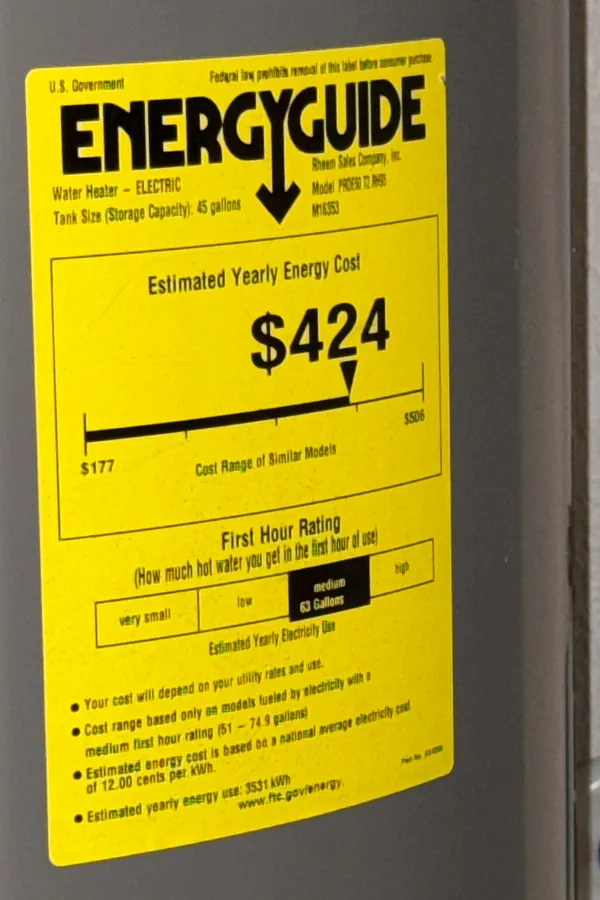
Electric resistance heat turns each kilowatt-hour into 3,412 Btu,4 so a resistance heater cannot rate much above 1.0, tank or tankless. The federal minimums are nearly identical, 0.93 for a 50-gallon electric tank and 0.92 for electric tankless,5 which leaves a tankless model only the tank’s standby loss to save. A heat pump water heater moves heat from the surrounding air instead; certified high-usage models have a median UEF of 3.8.8 At Illinois’s 19.2¢ per kWh, that is about $232 a year against about $950 for a resistance tank or tankless in our Chicago example.11
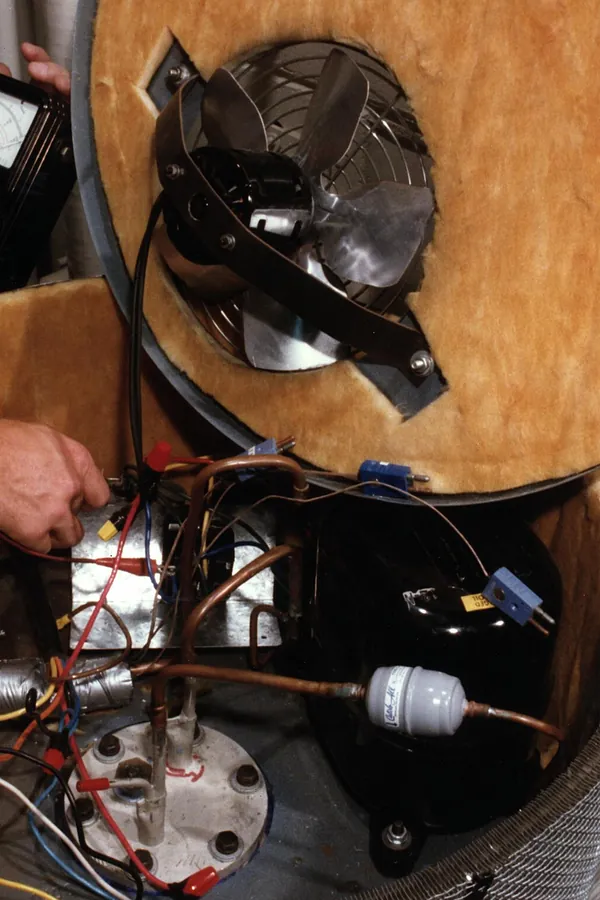
Federal rules are moving the same way. Under the current text of 10 CFR 430.32, electric storage water heaters of 20 to 55 gallons made on or after May 6, 2029 must reach a UEF of 2.30, a level only heat pump models reach; small 20–35 gallon electric tanks keep a resistance-level standard.5 Gas tanks stay on the market with a slightly higher minimum.
Upfront cost, lifespan and payback
We found no government source for installed prices; published ranges disagree. A. O. Smith puts tank units at $300–$2,000 and tankless units at $1,000–$3,000 before installation, and says installation costs more for tankless.16 ABC Plumbing (February 2026) lists $500–$1,200 for a tank and $1,000–$4,250 for a tankless unit, plus $500–$1,000 to install a tank against $1,500–$3,000 for tankless.17
Consumer Reports tested both types in 2019. At that year’s prices it put the payback for replacing a gas tank with gas tankless at 22½ to 27½ years, and 12 to 20 years for electric. Its engineer concluded that with a typical 12- to 15-year warranty,
it doesn’t make financial sense to replace a tank water heater with a tankless
The same review says the math changes in new construction or a major renovation, when there is no retrofit to pay for.15 On lifespan, A. O. Smith says a tank typically lasts around a decade and a tankless unit up to 20 years with proper maintenance.16 FEMP assumes a 13-year life for heat pump water heaters in its cost analysis.9 Treat lifespans as manufacturer claims, not measured averages.
The federal tax credit many guides still mention has ended. The IRS says the Energy Efficient Home Improvement Credit, which covered gas tankless and heat pump water heaters, applies to improvements made through December 31, 2025.13 Check your utility and state energy office for rebates instead.
When each one makes sense
- Gas tankless fits new construction, tight spaces, or a home replacing a minimum-efficiency gas tank. Size it at your winter rise.
- An ENERGY STAR gas tank gets most of the efficiency for the least change when an old tank fails. Consumer Reports cites an ACEEE estimate that 90 percent of installations happen in an emergency.15
- A heat pump water heater is the low-cost-to-run choice in an all-electric home, if it has the room: Consumer Reports notes it needs at least 7 feet of headroom.15
- Electric tankless suits small or point-of-use loads and warm-water regions.
- A tank suits big households running several showers at once in cold-water regions.
Our heat pump vs. furnace running-cost guide uses the same EIA prices if you are weighing gas against electricity for the whole house, and our guide to how heat pumps handle cold weather explains why they lose efficiency as it gets colder.
Installation, maintenance and safety
Switching from a tank to tankless is rarely a straight swap. Consumer Reports notes it can require a plumbing retrofit and an upgrade to the electric service or gas lines.15 A 27 kW electric unit draws about 113 amps at 240 volts, so an electrician has to confirm your service can carry it. Tankless units also need periodic descaling where water is hard; a plumber quoted by Consumer Reports suggests yearly service in poor-water areas, and Consumer Reports puts a plumber’s visit at $300 or more.15 An electric water heater is also one of the biggest loads to cover in an outage; the generator size calculator shows how much it adds.
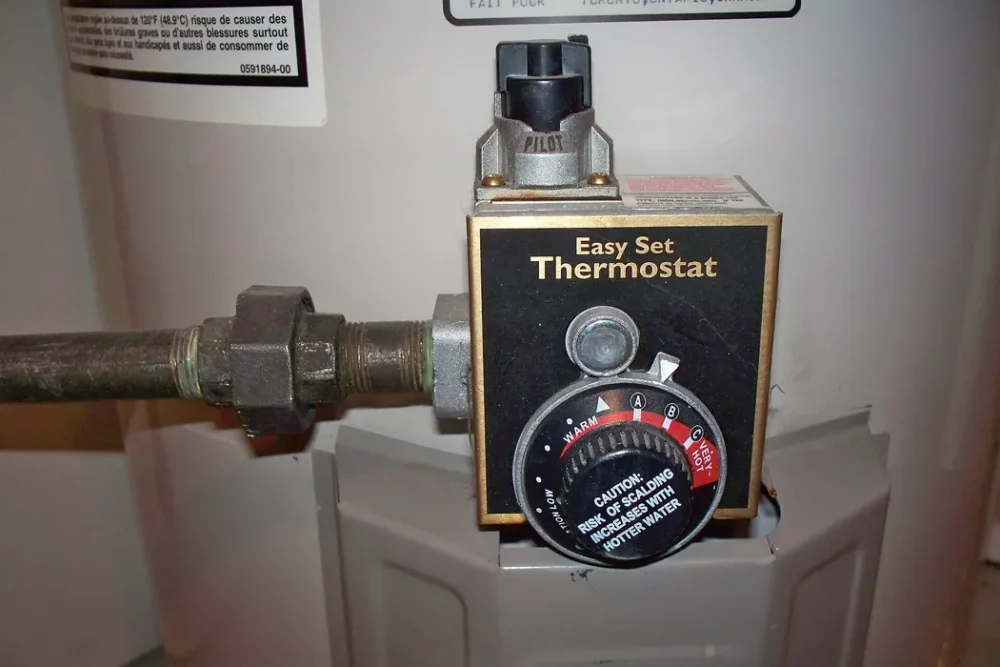
Any gas water heater, tank or tankless, burns fuel in your home. The EPA lists back-drafting from gas water heaters among indoor sources of carbon monoxide and passes on the Consumer Product Safety Commission’s advice: CO alarms on each level outside each sleeping area, and a yearly professional inspection of fuel-burning appliances, water heaters included.14 Our generator safety guide covers CO alarms in more detail.
Next step
Find your city in Table 2 or measure your winter tap water, then ask each installer for the unit’s rated gpm at a 67°F rise and its UEF. More in our water heater guides and the home energy section; our methodology page explains how we match ZIP codes to NOAA stations.
Frequently asked questions
A higher upfront and installation cost, a limited flow that falls as your incoming water gets colder, and periodic descaling where water is hard. A whole-house electric model also needs a large electrical service, about 113 amps for a 27 kW unit.
Mostly cost and retrofit work. Consumer Reports found switching can require new gas lines, venting or electrical service, and estimated a 22½- to 27½-year payback for gas at 2019 prices. In new construction the math is better.
Not tanks as such. Under 10 CFR 430.32, electric storage water heaters of 20 to 55 gallons made from May 6, 2029 must reach a UEF of 2.30, a heat-pump level; small 20–35 gallon electric tanks and gas tanks remain.
A tank costs less to buy and install, replaces an old tank directly, and can supply several showers at once from storage. An ENERGY STAR gas tank also closes most of the efficiency gap.
Add up the flow of fixtures you run at once, then check the unit's gpm at your winter rise, not its 67°F rating: rated gpm × 67 ÷ (120 − inlet temperature). A licensed plumber should confirm the sizing.
Yes, with less flow. Our estimate puts February tap water near 36°F in Fargo and 40°F in Minneapolis, which cuts a 5.8 gpm gas unit to about 4.7–4.8 gpm at 120°F.
Against a minimum-efficiency gas tank, each $1,000 of extra cost takes about 5 to 11 years to recover in our cities. Against an ENERGY STAR tank, rarely on energy savings alone.
Not a federal one for new installations. The IRS says the 25C credit covers improvements made through December 31, 2025. Check utility and state rebates.
Sources
- 1.U.S. Climate Normals 1991–2020. NOAA National Centers for Environmental Information, 2021. Used for: monthly mean air temperatures for every ZIP and city Back to text
- 2.Building America House Simulation Protocols (Hendron and Engebrecht). National Renewable Energy Laboratory for the U.S. Department of Energy, 2010. Used for: mains water temperature model (Eq. 29–30), 110°F mixed shower temperature Back to text
- 3.Towards Development of an Algorithm for Mains Water Temperature (Burch and Christensen). National Renewable Energy Laboratory, via DOE OSTI, 2007. Used for: basis and limits of the mains water model
- 4.10 CFR Part 430, Subpart B, Appendix E: Uniform Test Method for Measuring the Energy Consumption of Water Heaters. eCFR, U.S. Department of Energy, current as of 2026-10-01. Used for: 58°F inlet, 125°F outlet, 67°F rise, maximum GPM test, draw patterns, annual energy formula, 1 kWh = 3,412 Btu Back to text
- 5.10 CFR 430.32: Energy and water conservation standards (water heaters, showerheads). eCFR, U.S. Department of Energy, current as of 2026-10-01. Used for: minimum UEF by type and size, 2029 standards, 2.5 gpm showerhead maximum Back to text
- 6.Residential Water Heaters Key Product Criteria. ENERGY STAR (U.S. EPA), checked 2026-10-03. Used for: ENERGY STAR UEF levels, max GPM measured over a 67°F rise, gas tankless input limit Back to text
- 7.ENERGY STAR Certified Gas (Storage and Tankless) Water Heaters (dataset 6sbi-yuk2). ENERGY STAR (U.S. EPA), updated 2026-10-02. Used for: 320 natural-gas tankless models: input rate, max GPM, UEF, therms per year Back to text
- 8.ENERGY STAR Certified Heat Pump Water Heaters (dataset v7jr-74b4). ENERGY STAR (U.S. EPA), updated 2026-10-02. Used for: median UEF of 316 high-usage models Back to text
- 9.Purchasing Energy-Efficient Residential Water Heaters. U.S. Department of Energy, Federal Energy Management Program, checked 2026-10-03. Used for: 120°F setpoint, annual energy example, 13-year life assumption Back to text
- 10.Showerheads. U.S. EPA WaterSense, checked 2026-10-03. Used for: 2.0 gpm WaterSense maximum, 2.5 gpm standard showerheads Back to text
- 11.Electric Power Monthly, Table 5.6.B: Average Price of Electricity to Ultimate Customers by End-Use Sector, by State, Year-to-Date through July 2026. U.S. Energy Information Administration, 2026. Used for: residential electricity prices by state Back to text
- 12.Natural Gas Prices: Average Residential Price by State, Annual (release 9/30/2026). U.S. Energy Information Administration, 2026. Used for: 2025 residential natural gas prices by state, converted at 10.36 therms per Mcf Back to text
- 13.Energy Efficient Home Improvement Credit. Internal Revenue Service, checked 2026-10-03. Used for: section 25C end date; gas and heat pump water heaters Back to text
- 14.Carbon Monoxide's Impact on Indoor Air Quality. U.S. Environmental Protection Agency, checked 2026-10-03. Used for: back-drafting gas water heaters; CPSC advice on CO alarms and yearly inspection Back to text
- 15.Tankless Water Heaters vs. Storage Tank Water Heaters (Mary H.J. Farrell). Consumer Reports, 2019. Used for: tested payback, retrofit needs, maintenance cost, heat pump headroom Back to text
- 16.Tankless Water Heater vs Standard Tank: Which Is Best for You?. A. O. Smith, accessed 2026-10-03. Used for: unit price ranges, manufacturer lifespan claims Back to text
- 17.Tankless vs. Tank Water Heater: Which One is Right for You?. ABC Plumbing, Heating, Cooling & Electric, 2026. Used for: unit and installation price ranges Back to text
- 18.Infrastructure and Education Facility Upgrades in South Carolina (photo 20220810-RD-LSC-0602). USDA, Wikimedia Commons, public domain, 2022. Used for: photo, cropped
- 19.Hot water heater with pipe (photo). Tomwsulcer, Wikimedia Commons, CC0, n.d. Used for: photo, cropped
- 20.New heat pump water heater that works much like a window air conditioner (photo). U.S. Department of Energy, Wikimedia Commons, public domain, n.d. Used for: photo, cropped
- 21.Electric Water Heater Energy Guide (photo). Tony Webster, Wikimedia Commons, CC BY 2.0, n.d. Used for: photo, cropped
- 22.Water heater dial - Easy Set Thermostat, gas powered (photo). Jason Woodhead, Wikimedia Commons, CC BY 2.0, n.d. Used for: photo, cropped
How this guide was made
- Written by the Home Systems Desk and reviewed by the Data & Methodology Desk.
- Data: monthly mean temperatures from NOAA NCEI U.S. Climate Normals 1991–2020 for the station nearest each ZIP code, turned into incoming (mains) water temperatures with Equations 29–30 of the NREL/DOE Building America House Simulation Protocols (2010); tankless flow from the median rating of 132 ENERGY STAR 199,000 Btu/h natural-gas models (data.energystar.gov, updated 2026-10-02), scaled from the 67°F test rise; yearly energy from the DOE test formula (10 CFR 430 Appendix E) with federal-minimum and ENERGY STAR efficiencies; prices from EIA (electricity January–July 2026, natural gas 2025). Flow and cost figures are estimates, not a sizing calculation or bill forecast. See our methodology.
- AI use: AI tools help us research, draft and check this guide. Every figure is checked against the source cited for it, and calculated figures come from our own code, described on the methodology page.
- Spotted an error? Tell us — the form opens with this page’s address filled in.
Change log
- Oct 4, 2026Review: re-checked the ENERGY STAR, eCFR (10 CFR 430.32), FEMP, EPA, NREL, Consumer Reports, A. O. Smith and ABC Plumbing figures and quotes; noted that the widely repeated 24–34% saving is credited to a DOE page that is no longer online; FAQ now gives Fargo's February tap water as about 36°F, matching Table 2 (was 37°F, a rounding mismatch).
- Oct 3, 2026Published. Winter inlet water temperature and tankless flow for 22 cities from the NREL/DOE Building America mains-water model applied to NOAA 1991–2020 normals; ratings from 320 ENERGY STAR gas tankless models; yearly cost from the DOE test formula and EIA prices (electricity January–July 2026, gas 2025); federal standards checked on eCFR (current as of 2026-10-01).
Covers heating, cooling, generators and water heaters. We maintain the sizing calculators and the guides that explain what a number means before you call a contractor.
.jpg)


Keep reading
What Temperature Should a Water Heater Be Set At? 120°F, and When to Go Higher
Most homes should run a water heater at 120°F. What DOE, CDC, CPSC, EPA and OSHA each say, how fast hotter water burns, and what a lower setting really saves.

What Humidity Should a House Be in Winter? 30–40%, Lower on Cold Nights
About 30–40% relative humidity, inside EPA’s 30–50% range, and lower on the coldest nights. Our NOAA estimate of when windows fog in 20 US cities, plus signs of air that is too dry or too damp.
How Much Does It Cost to Run a Space Heater? Costs by State and City
A 1,500-watt space heater costs about 27¢ an hour at the 2026 US average electricity price. Costs by state and in 20 cities, and how its heat compares with a furnace or heat pump.
Seasonal reminders for your ZIP
Get a short email when it’s time to overseed, start seeds, open the pool or service your furnace — timed to your climate.