

When to Prune Roses: Late Winter for Most, After Bloom for Some
Hybrid teas and shrub roses go in late winter, once-bloomers after flowering. We put extension windows from eight places next to NOAA freeze dates and checked what the fall-pruning rules really say.
- Last reviewed Oct 13, 2026
- 18 cited sources
- 9 min read

Set your ZIP to see dates for your area.
- 1Prune repeat-blooming roses in late winter, once buds swell and hard freezes are over; prune once-blooming old roses, ramblers and spring climbers right after they flower.
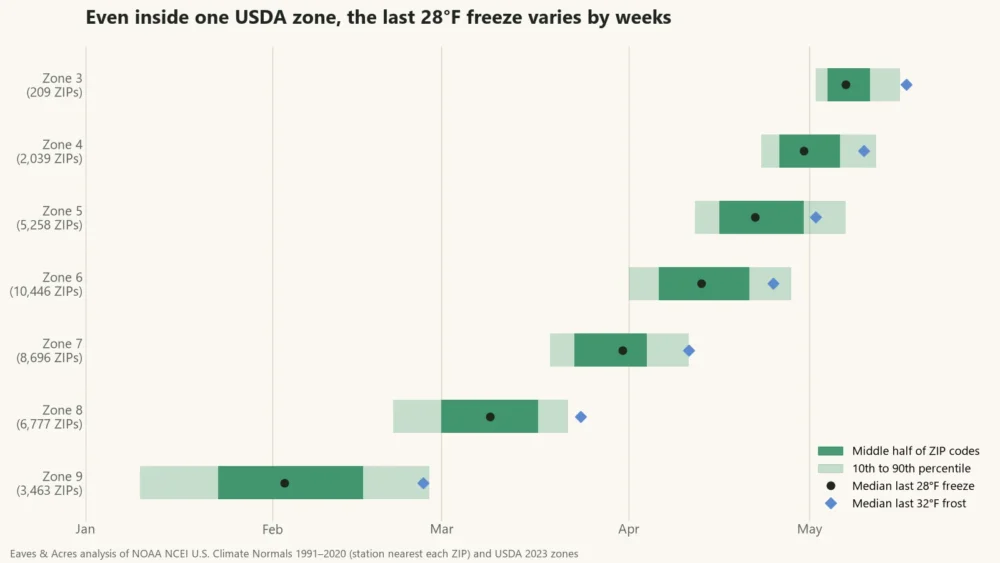
- 2The median last 28°F freeze is Apr 4 across lower-48 ZIP codes but runs Feb 22 to Apr 30 (10th to 90th percentile); the middle half of zone 7 spans Mar 23 to Apr 4.
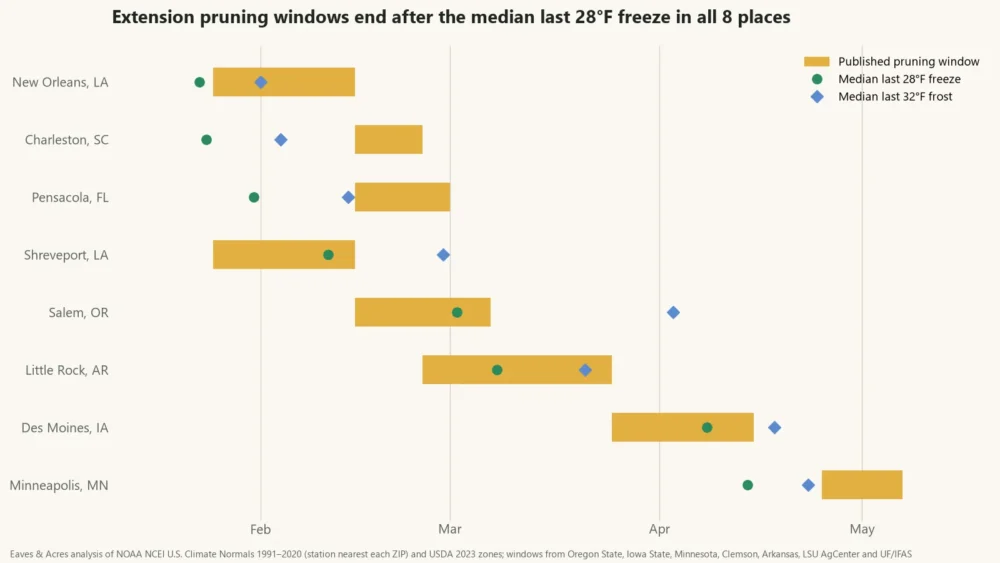
- 3In all eight places we checked, the local extension window closed 4 to 32 days after the median last 28°F freeze, and in three it closed before the last 32°F frost, so do not wait for your last-frost date.
- 4No extension source we read recommends the hard annual prune in fall: Iowa State says not to prune, Minnesota allows a safety trim, and LSU AgCenter prunes by about Sept. 8 for October bloom.
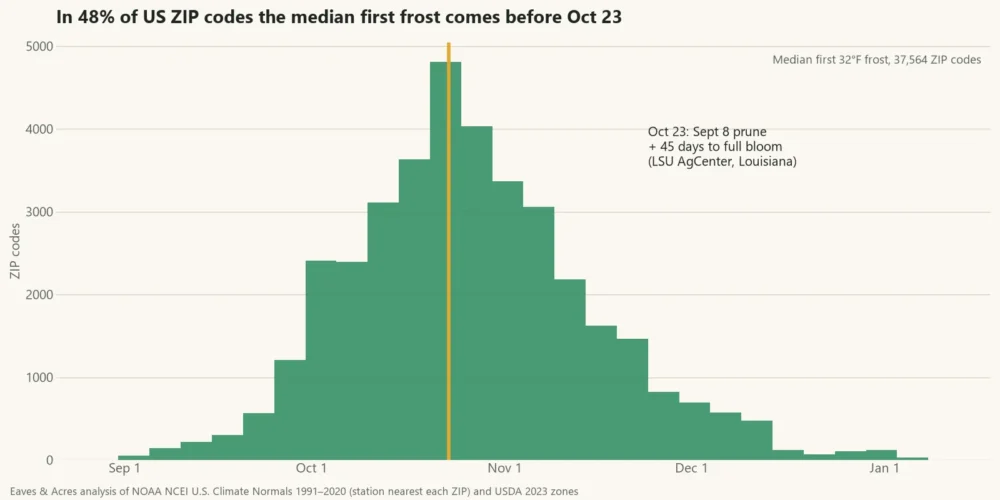
- 5On LSU AgCenter’s timeline (Sept. 8 plus about 45 days), the bloom lands on Oct 23, after the median first frost in 48% of ZIP codes.
Prune repeat-blooming roses, meaning hybrid teas, floribundas, grandifloras and most shrub roses, in late winter or early spring, once the buds swell and the hardest freezes are behind you. Prune once-blooming old garden roses, ramblers and spring-blooming climbers right after they flower instead. Across the lower 48, the median last 28°F freeze falls on Apr 4, but it runs from Feb 22 to Apr 30 between ZIP codes, so your ZIP code tells you more than your zone.
Most pruning guides give one zone-by-month table and stop. We put the published extension windows from seven states next to NOAA freeze dates, measured how far dates spread inside each USDA zone for 37,564 ZIP codes, and read what extension services actually say about fall pruning.
Pick the rose type before the date
The type decides the season, because it decides which wood carries the flowers. Illinois Extension notes that the class of rose and the time of year it blooms set how much to prune and when.4 Modern repeat bloomers flower on new wood, so a hard spring cut is safe. Old once-blooming roses flower on last year’s wood, and Clemson warns against heavy early-spring pruning for them because a spring cut removes that year’s flowers.7
| Rose type | When | How much | Source |
|---|---|---|---|
| Hybrid tea and grandiflora | Late winter to early spring, as buds swell | Keep 3 to 6 strong canes; cut to 12–18 in (Oregon State) or 15–18 in (Clemson, Maryland) | Oregon State, Clemson, Maryland |
| Floribunda | Same as hybrid teas | Keep 3 to 6 canes; cut to 24–36 in (Oregon State) | Oregon State |
| Repeat-blooming shrub and landscape (including Knock Out) | Spring, as buds begin to break; late January to mid-February in Louisiana | Remove one-third of the oldest canes (Illinois); Knock Out no lower than 24 in (LSU) | Illinois, Iowa State, LSU AgCenter |
| Once-blooming old garden (gallica, alba, damask, centifolia, moss) | Right after flowering | Thin old wood; as little or as much as needed; no more than one-third (Clemson) | Illinois, Iowa State, Clemson |
| Repeat-blooming old garden (Bourbon, Portland, hybrid perpetual) | Before flowering in spring | Can be pruned harder without losing blooms | Illinois |
| Repeat-blooming climbers | Early spring | Shorten side shoots to 3–6 in; train main canes horizontally | Illinois, Oregon State |
| Ramblers and once-blooming climbers | Right after flowering, in early summer | Remove the oldest canes; keep 5–7 strong ones (Clemson) | Illinois, Clemson |
Climbers that repeat-bloom are pruned in early spring, Illinois Extension says. Ramblers are the exception: they bloom once, so they are pruned right after flowering in early summer.4
Late winter by ZIP code
Extension services tie the late-winter cut to bud swell and to the end of hard freezes. Oregon State Extension is the clearest about the risk:
Earlier pruning (before the last hard frost or forecasted cold weather) may cause die-back
Its Willamette Valley window is mid-February to early March.3 Other states give different windows, because winters differ. We lined up eight of them against NOAA normals for the nearest station.1
Use your last 28°F freeze as a checkpoint
In all eight places, the published window closes 4 to 32 days after the median last 28°F freeze. It opens anywhere from 17 days before that date (Shreveport) to 22 days after it (Charleston). In three places, Salem, Des Moines and Shreveport, the window ends before the median last 32°F frost. So the last-frost date is not the trigger: it is the safe end of the frost question, not the start of pruning. Treat the 28°F date as the day to begin checking buds, and follow your local window.
| City (ZIP) | USDA zone | Median last 28°F freeze | Median last 32°F frost | Published window | Window vs. 28°F date | Median first 28°F (fall) |
|---|---|---|---|---|---|---|
| Minneapolis, MN (55401) | 5a | Apr 14 | Apr 23 | Apr 25 – May 7 | +11 to +23 days | Oct 27 |
| Des Moines, IA (50309) | 5b | Apr 8 | Apr 18 | Mar 25 – Apr 15 | -14 to +7 days | Oct 30 |
| Chicago, IL (60601) | 6b | Apr 1 | Apr 10 | None read | — | Nov 15 |
| Denver, CO (80202) | 6a | Apr 18 | Apr 30 | None read | — | Oct 21 |
| New York, NY (10001) | 7b | Mar 19 | Mar 30 | None read | — | Dec 1 |
| College Park, MD (20742) | 7b | Mar 29 | Apr 10 | None read | — | Nov 11 |
| Nashville, TN (37201) | 7b | Mar 20 | Apr 1 | None read | — | Nov 9 |
| Salem, OR (97301) | 8b | Mar 2 | Apr 3 | Feb 15 – Mar 7 | -15 to +5 days | Nov 22 |
| Seattle, WA (98101) | 9a | Feb 18 | Mar 13 | None read | — | Dec 2 |
| Raleigh, NC (27601) | 8a | Mar 14 | Mar 28 | None read | — | Nov 23 |
| Atlanta, GA (30303) | 8a | Mar 9 | Mar 24 | None read | — | Nov 20 |
| Little Rock, AR (72201) | 8a | Mar 8 | Mar 21 | Feb 25 – Mar 25 | -11 to +17 days | Nov 21 |
| Dallas, TX (75201) | 8b | Feb 18 | Mar 2 | None read | — | Dec 12 |
| Charleston, SC (29401) | 9a | Jan 24 | Feb 4 | Feb 15 – Feb 25 | +22 to +32 days | Jan 8 |
| Shreveport, LA (71101) | 8b | Feb 11 | Feb 28 | Jan 25 – Feb 15 | -17 to +4 days | Dec 10 |
| Pensacola, FL (32502) | 9a | Jan 31 | Feb 14 | Feb 15 – Mar 1 | +15 to +29 days | Jan 1 |
| New Orleans, LA (70112) | 9b | Jan 23 | Feb 1 | Jan 25 – Feb 15 | +2 to +23 days | Jan 8 |
| Houston, TX (77002) | 9b | Jan 23 | Feb 2 | None read | — | Jan 5 |
The median date is a coin flip: half of years bring a later 28°F freeze. Look up your ZIP code’s 28°F date and its odds with our frost date lookup, and read our guide to what a last frost date means if the percentages are new.
Zones narrow it down, but not by much
USDA zones measure the coldest winter night, not when spring arrives. Within one zone, the median last 28°F freeze moves by weeks: the middle half of zone 7 ZIP codes runs from Mar 23 to Apr 4, and zone 9 stretches from Jan 10 to Feb 27 between the 10th and 90th percentiles. Find your zone with our planting zone lookup, then use your ZIP code’s own dates.
| USDA zone | ZIP codes | Median last 28°F freeze | Middle half of ZIP codes | 10th to 90th percentile | Median last 32°F frost |
|---|---|---|---|---|---|
| Zone 3 | 209 | May 7 | May 4 – May 11 | May 2 – May 16 | May 17 |
| Zone 4 | 2,039 | Apr 30 | Apr 26 – May 6 | Apr 23 – May 12 | May 10 |
| Zone 5 | 5,258 | Apr 22 | Apr 16 – Apr 30 | Apr 12 – May 7 | May 2 |
| Zone 6 | 10,446 | Apr 13 | Apr 6 – Apr 21 | Apr 1 – Apr 28 | Apr 25 |
| Zone 7 | 8,696 | Mar 31 | Mar 23 – Apr 4 | Mar 19 – Apr 11 | Apr 11 |
| Zone 8 | 6,777 | Mar 9 | Mar 1 – Mar 17 | Feb 21 – Mar 22 | Mar 24 |
| Zone 9 | 3,463 | Feb 3 | Jan 23 – Feb 16 | Jan 10 – Feb 27 | Feb 26 |
Let the buds and the forecast decide
Clemson’s test is simple: when the buds begin to swell, prune.7 Illinois Extension and NC State Extension both mention pruning when forsythia blooms,4,15 the same plant cue our pre-emergent timing guide uses. If a cold snap follows, Arkansas Extension’s advice to a gardener who had already pruned was to water before the freeze and pile extra mulch at the base, and that roses should be fine unless temperatures fall below the mid-20s.12 For tender growth in general, see our guide on when to cover plants for frost.
Warm winters and almost frost-free ZIP codes
UF/IFAS recommends one major pruning in January or February, and in South Florida possibly twice a year.14 In the Florida Panhandle its agents give February 15 to March 1.13 About 4% of ZIP codes have a median last 28°F freeze before Feb 1, and 3.8% have frost too rare for NOAA dates, so follow your extension calendar there.
Fall pruning: what extension services say
Online answers either ban fall pruning or allow a light trim. Extension sources split three ways, and the split follows winter severity.
| Source | Place | Fall advice |
|---|---|---|
| Iowa State Extension | Iowa | Do not prune; leave stems in case of a mild winter |
| University of Minnesota Extension | Minnesota | Safety only: dead, diseased or damaged canes and very tall hybrid teas; cut hybrid teas to 24–30 in after hard frosts |
| University of Maryland Extension | Maryland | Cut tall canes to about 30 in (not climbers) |
| Clemson Extension | South Carolina | In late fall, cut hybrid teas and floribundas back by about one-third |
| Arkansas Extension | Arkansas | Head bush roses back to 4–5 ft; heavy pruning waits for late February |
| Oregon State Extension | Oregon | Take several inches off hybrid teas, floribundas and grandifloras |
| LSU AgCenter | Louisiana | Prune everblooming roses by about Sept. 8 for an October bloom; not once-bloomers or climbers |
Do not prune roses in the fall.
Iowa State’s reason: pruning stimulates growth that will not harden off before winter.5 Minnesota Extension agrees on shaping but allows a trim for safety:
Fall pruning is about safety, not shaping.
The wind-rock trim
Minnesota, Maryland, Clemson, Arkansas and Oregon State all describe shortening tall canes so winter wind does not loosen the crown. Minnesota times it after hard frosts.6 The median first 28°F freeze across lower-48 ZIP codes is Nov 4, and the middle half falls between Oct 25 and Nov 19. This is a tidy-up, not the real prune, and the hard cut still waits for spring.

The Gulf South exception
LSU AgCenter tells Louisiana gardeners to prune everblooming roses by about Sept. 8, taking off up to one-third of the height, because about 45 days later the plants are in full bloom and mid-October is when roses look their best.9 It keeps the heavy cut for January and February. Run that arithmetic elsewhere and it breaks: Sept. 8 plus 45 days is Oct 23, and in 48% of lower-48 ZIP codes the median first 32°F frost arrives earlier. Only in 26% does Oct 23 come before even the early-frost (10% odds) date. That is our calculation on LSU’s Louisiana timeline, not LSU’s advice for other states.
When to stop deadheading
Fall deadheading advice is consistent: Iowa State stops hybrid teas in late August or September,5 Minnesota in mid-September,6 and Illinois cuts no flowers after October 1 so the plant can start hardening off.4 Leaving flowers also lets hips form on roses grown for them.
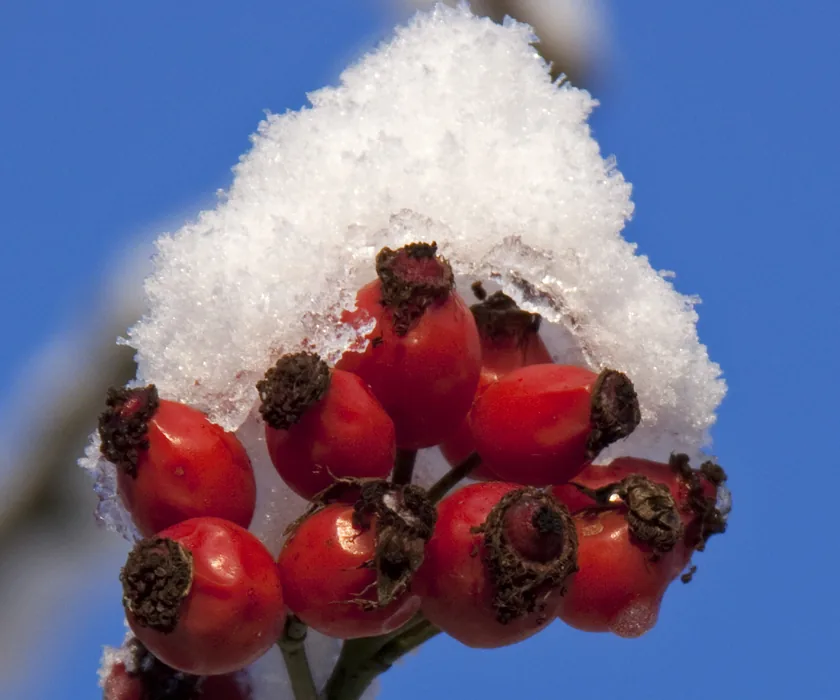

After-bloom pruning and young plants
Once-blooming roses and ramblers get their pruning on the bloom calendar, not the frost calendar: right after flowering, removing no more than one-third of an old garden rose and mostly its oldest stems.7 Iowa State removes unwanted suckers once new growth is done, in early to mid-summer.5 Clemson prunes first-year plants lightly so they put energy into roots.7
Making the cut
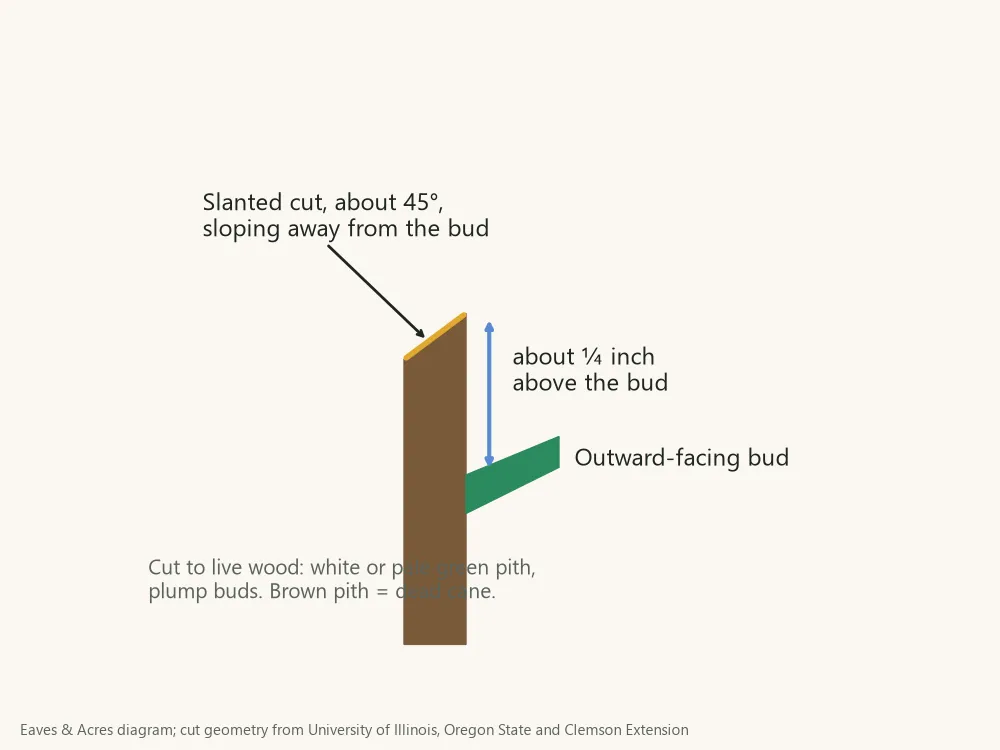
Cut about a quarter inch above an outward-facing bud, slanting away from it, back to white or pale green live pith.3,4 Use clean, sharp bypass pruners. Texas A&M adds that rose rosette disease can travel on contaminated pruning tools, so it suggests rotating two sets of pruners and sterilizing between plants.11 Illinois and Clemson seal fresh cane ends on thicker canes with white glue or nail polish to keep cane borers out.4,7
Your next step
Look up your ZIP code’s 28°F freeze date, check your local extension window, and put a bud check on the calendar for that week. Our guides to when to plant tulip bulbs and daffodil bulbs use the same frost data for fall planting.
Frequently asked questions
For most repeat-blooming roses, late winter to early spring: January to March in Texas (Texas A&M), mid-February to early March in Oregon’s Willamette Valley, late March to mid-April in Iowa and late April or early May in Minnesota. Once-blooming roses wait until after they flower.
For the main prune, yes in most places: Iowa State says not to prune in fall. A light trim of tall canes for wind is the most extension sources allow, and Minnesota times it after hard frosts. Keep structural pruning for spring.
Only on the Gulf Coast. LSU AgCenter prunes everblooming roses by about Sept. 8 in Louisiana to get an October bloom. Elsewhere, Minnesota Extension stops deadheading by mid-September to help roses go dormant.
Not before the last hard freeze, because Oregon State warns it may cause die-back. Not in spring for once-blooming old garden roses, ramblers and spring climbers, which bloom on last year’s wood. And not in early fall, when growth will not harden off.
Hybrid teas go to 12–18 inches (Oregon State) or 15–18 inches (Clemson, Maryland), floribundas to 24–36 inches (Oregon State). Shrub roses lose about one-third of their oldest canes (Illinois), and Clemson removes no more than one-third of an old garden rose.
Oregon State calls underpruning the most common cause of an unproductive rose. Illinois adds that the plant can become a tangled mess of poor-flowering canes with less air circulation. Old once-bloomers may not need yearly pruning if no wood is dead or damaged.
Late winter, but zone 7 is wide: the middle half of zone 7 ZIP codes have a median last 28°F freeze between Mar 23 and Apr 4. Pruning in February would come before that freeze in most places. Check your ZIP code’s date, then prune as buds swell.
In spring, as buds break. LSU AgCenter says late January to mid-February in Louisiana and no lower than 24 inches; Arkansas says late February; Iowa State says early to mid-April. Louisiana adds a light trim in late August or early September.
Repeat-blooming climbers, yes: early spring, shortening side shoots to 3–6 inches (Illinois). Ramblers and once-blooming climbers should be pruned right after flowering. In cold climates, remove winter-killed canes in spring and mostly train the rest.
Sources
- 1.U.S. Climate Normals 1991–2020. NOAA National Centers for Environmental Information, 2021. Used for: median last 32°F frost, 28°F hard-freeze and first-frost dates for every ZIP Back to text
- 2.USDA Plant Hardiness Zone Map. USDA Agricultural Research Service, 2023. Used for: what zones measure; zone for each ZIP code
- 3.Pruning roses, Barbara McMullen. Oregon State University Extension Service, 2024. Used for: Willamette Valley window; die-back before the last hard frost; heights; fall trim; cut geometry Back to text
- 4.Pruning (Roses). University of Illinois Extension, n.d. Used for: pruning by rose class; one-third method; climbers and ramblers; forsythia cue; deadheading stop date; sealing cane ends Back to text
- 5.How to Prune Roses, Aaron Steil. Iowa State University Extension and Outreach, 2025. Used for: late March to mid-April; no fall pruning; deadheading stop dates; suckers Back to text
- 6.Autumn rose care in Minnesota, Robin Trott. University of Minnesota Extension, 2026. Used for: fall pruning is for safety; cut hybrid teas to 24–30 in after hard frosts; structural pruning late April or early May Back to text
- 7.Pruning Roses (HGIC 1173), Karen Russ and Robert Polomski. Clemson Cooperative Extension Home & Garden Information Center, 1999. Used for: prune when buds swell; once-bloomers after flowering; late-fall one-third trim; first-year plants; sealing cuts Back to text
- 8.Guide to Pruning Roses, Raymond Bosmans. University of Maryland Extension, 2023. Used for: fall cut to about 30 in; hybrid tea 15–18 in
- 9.Prune roses soon to reinvigorate plants and promote fall blooms, Olivia McClure. LSU AgCenter, 2024. Used for: prune by about Sept. 8; full bloom about 45 days later; up to one-third of height Back to text
- 10.Knock Out Roses Pruning Schedule, Dan Gill. LSU AgCenter, 2015. Used for: heavier pruning late January to mid-February; light pruning late August or early September; not below 24 in
- 11.Rose pruning tips for stronger, more vibrant flowers. Texas A&M AgriLife Today, 2025. Used for: prune January to March before dormancy breaks; sterilize tools against rose rosette Back to text
- 12.Pruning (Roses reference desk). University of Arkansas Cooperative Extension Service, n.d. Used for: late February; fall head-back to 4–5 ft; cold snap after pruning Back to text
- 13.How to Prune Roses in North Florida, Larry Williams. UF/IFAS Extension Okaloosa County, 2023. Used for: February 15 to March 1 in the Panhandle Back to text
- 14.Roses. UF/IFAS Gardening Solutions, n.d. Used for: one major pruning in January or February; South Florida twice Back to text
- 15.When to Prune Roses, Minda Daughtry (adapted from Shawn Banks). N.C. Cooperative Extension, Jackson County, 2026. Used for: forsythia phenology cue; roses resume growth early Back to text
- 16.Photo: Rosa Fourth of July climber pruned as a large shrub, cultivar413 (CC BY 2.0). Wikimedia Commons, 2017. Used for: hero photo
- 17.Photo: Roses are ready for Winter, Ryan Snyder (CC BY 2.0). Wikimedia Commons, 2008. Used for: cut-back rose bed photo
- 18.Photo: Winter Rose Hips, Tony Hisgett (CC BY 2.0). Wikimedia Commons, 2010. Used for: rose hips photo

How this guide was made
- Written by the Yard & Garden Desk and reviewed by the Data & Methodology Desk.
- Data: median last 32°F frost, 28°F hard-freeze and first-frost dates from NOAA NCEI U.S. Climate Normals 1991–2020 for the station nearest each ZIP code; USDA 2023 hardiness zones; window dates read as early = 7th, mid = 15th and late = 25th of the month; pruning windows and heights from Oregon State, Iowa State, University of Minnesota, University of Illinois, Clemson, University of Maryland, Texas A&M, LSU AgCenter, University of Arkansas and UF/IFAS extension publications. See our methodology.
- AI use: AI tools help us research, draft and check this guide. Every figure is checked against the source cited for it, and calculated figures come from our own code, described on the methodology page.
- Spotted an error? Tell us — the form opens with this page’s address filled in.
Change log
- Oct 13, 2026Published. Extension pruning windows for eight places set against NOAA 1991–2020 freeze dates, the spread of freeze dates inside each USDA zone for 37,564 ZIP codes, and a read of extension sources on fall pruning.
Covers lawns, gardens, frost and planting. We write the guides and maintain the tools that tell you when to seed, feed and plant for your ZIP.
Keep reading

When to Cut Back Perennials: Fall, Winter or Spring Dates by City
Cut diseased perennials after several hard frosts and leave healthy stems until spring. Hard-freeze, last-frost and 50°F-night dates for 25 cities and 39,017 ZIP codes from NOAA normals.
When to Divide Perennials: Fall Dates Counted Back From Your Freeze
Divide spring and summer bloomers in fall, 4 to 6 weeks before the ground freezes, and fall bloomers in spring. Dates for 25 cities and 37,563 ZIP codes from NOAA normals.
When to Prune Hydrangeas: Old Wood, New Wood and Local Dates
Prune new-wood hydrangeas in late winter and old-wood types right after bloom. NOAA freeze and frost dates by ZIP and zone, the August 1 cutoff tested, and where extension sources disagree.
Seasonal reminders for your ZIP
Get a short email when it’s time to overseed, start seeds, open the pool or service your furnace — timed to your climate.