




When to Apply Pre-Emergent: Soil Temperature and Dates Where You Live
Crabgrass preventer works only if it is down before the soil warms. Typical windows for 22 cities, checked against extension dates, plus Southern timing.
- Last reviewed Oct 4, 2026
- 15 cited sources
- 9 min read
Set your ZIP to see dates for your area.
- 1Apply crabgrass pre-emergent when the top 2 inches of soil hold about 50–55°F and are still warming, before crabgrass sprouts at about 55°F.
- 2Normal-year windows: Mar 15–31 in Philadelphia, Mar 30–Apr 15 in Indianapolis, Apr 19–May 3 in Minneapolis (NOAA normals + Michigan State’s degree-day rule).
- 3Those dates match Purdue’s and Penn State’s published windows; Illinois and Nebraska advise about two weeks later.
- 4In the South, apply mid-February to mid-March, and again in late summer or fall (soil cooling to about 70°F) for winter weeds.
- 5Most pre-emergents also stop grass seed: wait the label interval (often 3–4 months) or use a product labeled for seeding. The label is the law.
Apply a crabgrass pre-emergent in spring when the top two inches of soil stay around 50–55°F for several days, just before crabgrass starts to germinate. In a normal year that is about mid-March in Philadelphia, St. Louis and Washington, late March or early April in Columbus, Indianapolis and Chicago, and mid- to late April in Detroit, Madison and Minneapolis. In the South, apply between mid-February and mid-March, and again in late summer or fall for winter weeds.
Below are typical dates for 22 cities, estimated from NOAA climate normals with Michigan State University’s crabgrass model and checked against Purdue, Penn State, Illinois and Nebraska.
The trigger is soil temperature, not the calendar
A pre-emergent does not kill weeds you can see; it stops seedlings as they sprout,11 so it must be down before crabgrass germinates. Germination follows soil warmth, so extension services time the job by soil temperature.
| Source | Soil temperature | Depth and duration |
|---|---|---|
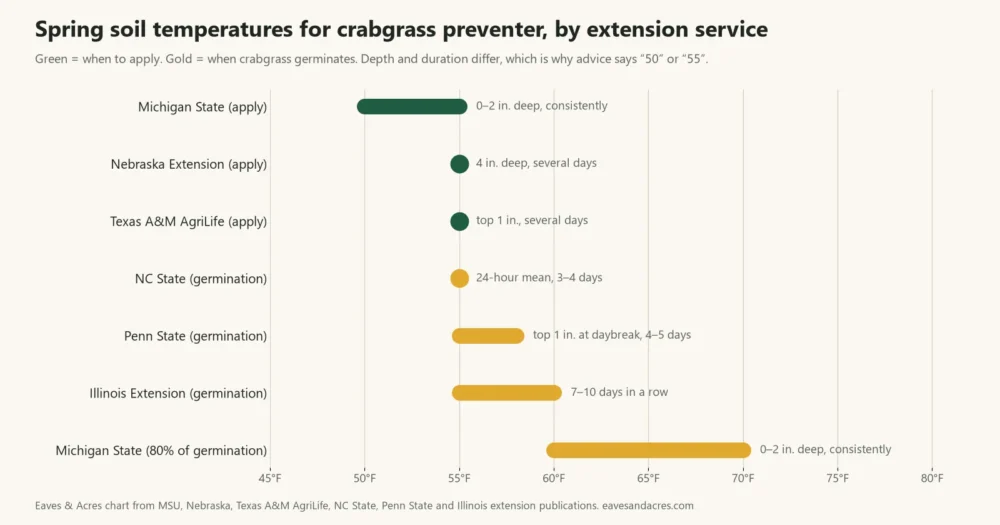
| Michigan State: apply | 50–55°F | 0–2 inches, consistently |
| Nebraska Extension: apply | 55°F | 4 inches, several days |
| Texas A&M AgriLife: apply | About 55°F | Top 1 inch, several days |
| NC State: crabgrass germinates | About 55°F | 24-hour mean, 3–4 days |
| Penn State: germination begins | 55–58°F | Upper inch at daybreak, 4–5 days |
| Illinois Extension: crabgrass germinates | 55–60°F and up | 7–10 days in a row |
| Michigan State: 80% of germination | 60–70°F | 0–2 inches, consistently |
Sources: Michigan State,2 Nebraska,8 Texas A&M,11 NC State,9 Penn State6 and Illinois.7
Why some say 50°F and others say 55°F
They describe two different moments. Michigan State’s 50–55°F is when to apply, leaving time to water the product in; the 55°F-and-up figures from Penn State, NC State and Illinois mark crabgrass already starting to sprout. They also measure at different depths and over different spans. Apply when the top two inches reach about 50°F and are still rising, and you are ahead of every threshold above.
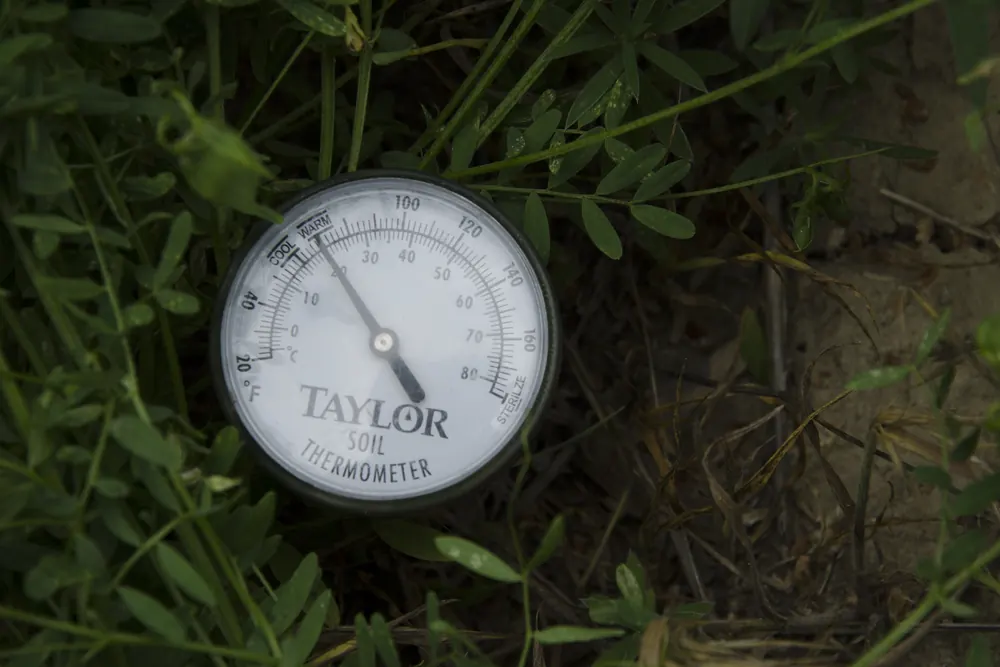
To measure it, push a soil thermometer (or a meat thermometer that reads low enough) into the top inch of soil and check it several days running.11
Typical pre-emergent dates for 22 northern cities
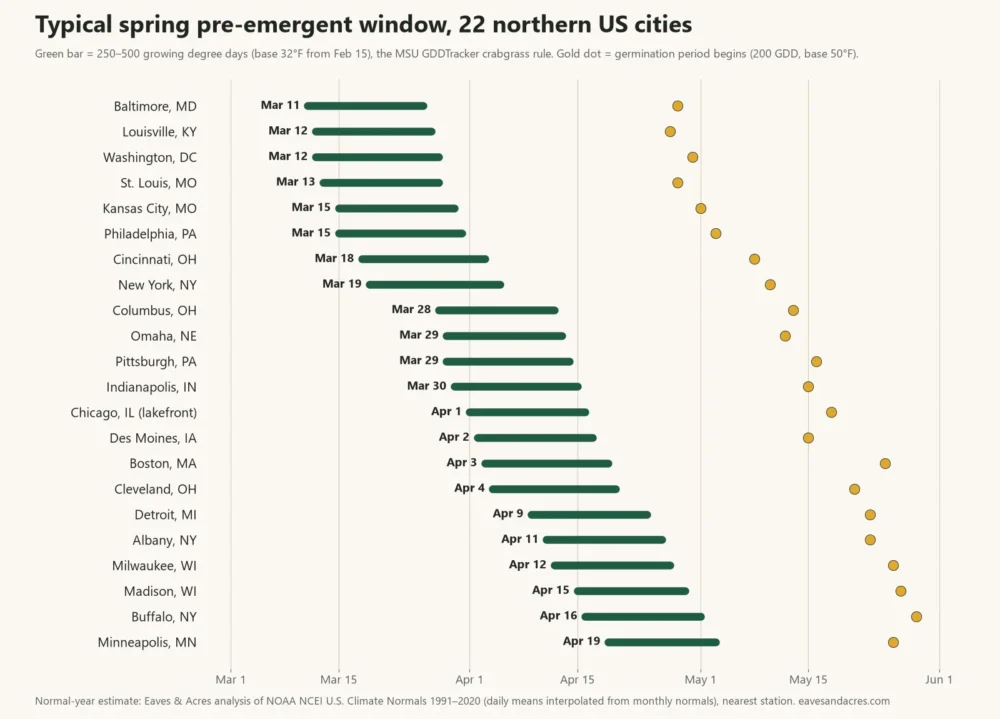
Our NOAA normals cover air temperature, not soil, so we used Michigan State University’s method. Its GDDTracker counts growing degree days (GDD) from February 15 with a base of 32°F, and its crabgrass model treats 250–500 GDD as the best application window, the stretch when the top two inches of soil typically reach 50–55°F.3 We ran that rule on NOAA’s 1991–2020 temperature normals for the station nearest each ZIP code.1 Not sure whether your lawn is cool- or warm-season? See our guide to cool-season vs. warm-season grass.
| City (ZIP) | Window opens | Window closes | Germination begins, about |
|---|---|---|---|
| Baltimore, MD (21202) | Mar 11 | Mar 26 | Apr 28 |
| Louisville, KY (40202) | Mar 12 | Mar 27 | Apr 27 |
| Washington, DC (20001) | Mar 12 | Mar 28 | Apr 30 |
| St. Louis, MO (63101) | Mar 13 | Mar 28 | Apr 28 |
| Kansas City, MO (64105) | Mar 15 | Mar 30 | May 1 |
| Philadelphia, PA (19103) | Mar 15 | Mar 31 | May 3 |
| Cincinnati, OH (45202) | Mar 18 | Apr 3 | May 8 |
| New York, NY (10001) | Mar 19 | Apr 5 | May 10 |
| Columbus, OH (43215) | Mar 28 | Apr 12 | May 13 |
| Omaha, NE (68102) | Mar 29 | Apr 13 | May 12 |
| Pittsburgh, PA (15222) | Mar 29 | Apr 14 | May 16 |
| Indianapolis, IN (46204) | Mar 30 | Apr 15 | May 15 |
| Chicago, IL, lakefront (60601) | Apr 1 | Apr 16 | May 18 |
| Des Moines, IA (50309) | Apr 2 | Apr 17 | May 15 |
| Boston, MA (02108) | Apr 3 | Apr 19 | May 25 |
| Cleveland, OH (44114) | Apr 4 | Apr 20 | May 21 |
| Detroit, MI (48201) | Apr 9 | Apr 24 | May 23 |
| Albany, NY (12207) | Apr 11 | Apr 26 | May 23 |
| Milwaukee, WI (53202) | Apr 12 | Apr 27 | May 26 |
| Madison, WI (53703) | Apr 15 | Apr 29 | May 27 |
| Buffalo, NY (14202) | Apr 16 | May 1 | May 29 |
| Minneapolis, MN (55401) | Apr 19 | May 3 | May 26 |
“Germination begins” is the start of Michigan State’s crabgrass germination timer (200 GDD, base 50°F), its cue to scout for seedlings.3 Your window can differ by a week or more on a warm slope, in a frost pocket or far from the station.
How we estimated these dates
For each day we took the normal daily mean temperature (interpolated between NOAA’s monthly normals), subtracted 32°F and added up the positive values from February 15, GDDTracker’s simple-average method.3 The window opens when the total passes 250 and closes at 500. Michigan State stresses:
the GDD models are meant to serve as guides, not absolutes.
One limitation: a day below 32°F counts as zero, never negative, so a real spring with warm spells gains degree days faster than an average curve. In 2025 and 2026, Michigan State reported East Lansing at over 300 GDD by March 29;2 our normal-year curve reaches 250 only on April 13. Treat the table as a planning date, then confirm with that year’s soil temperature, a live GDD tracker or the forsythia.
Do the dates match extension advice?
We compared our windows with dates that extension programs publish for their states:
| Place | Our window | Extension advice | How they compare |
|---|---|---|---|
| Evansville (southern Indiana) | Mar 10 – Mar 24 | No later than Mar 15 – Apr 1 (Purdue) | Overlaps |
| Indianapolis (central Indiana) | Mar 30 – Apr 15 | No later than Apr 1 – Apr 15 (Purdue) | Matches |
| South Bend (northern Indiana) | Apr 8 – Apr 23 | No later than Apr 10 – Apr 25 (Purdue) | Matches |
| Philadelphia (southeastern Pennsylvania) | Mar 15 – Mar 31 | Mar 15 – Apr 15 (Penn State) | Inside |
| State College (central Pennsylvania) | Apr 7 – Apr 22 | Apr 1 – May 1 (Penn State) | Inside |
| Wellsboro (northern tier, Pennsylvania) | Apr 21 – May 6 | Apr 20 – May 15 (Penn State) | Inside |
| Rockford (northern Illinois) | Apr 7 – Apr 22 | Late April – early May (Illinois) | About 2–3 weeks earlier |
| Champaign (central Illinois) | Mar 29 – Apr 13 | Mid- to late April (Illinois) | About 2 weeks earlier |
| Carbondale (southern Illinois) | Mar 15 – Mar 31 | Early to mid-April (Illinois) | About 2 weeks earlier |
| Lincoln, Nebraska | Mar 29 – Apr 13 | Apr 15 – first week of May (Nebraska) | About 2 weeks earlier |
Sources: Purdue’s preemergence timing note,4 Penn State’s crabgrass guidance,6 Illinois Extension7 and Nebraska Extension.8 Purdue and Penn State line up with our dates. Illinois and Nebraska wait closer to germination: Nebraska notes the product starts breaking down once applied, so going early shortens its useful life,8 and Illinois delays to the end of its window in a cold spring.7 Purdue leans the other way, because these herbicides break down very slowly in cool soil:
it’s better to error on the side of being early than too late.
If your state extension service publishes a window, use it; if not, ours is a reasonable middle.
Use the forsythia, and watch the sidewalk edges
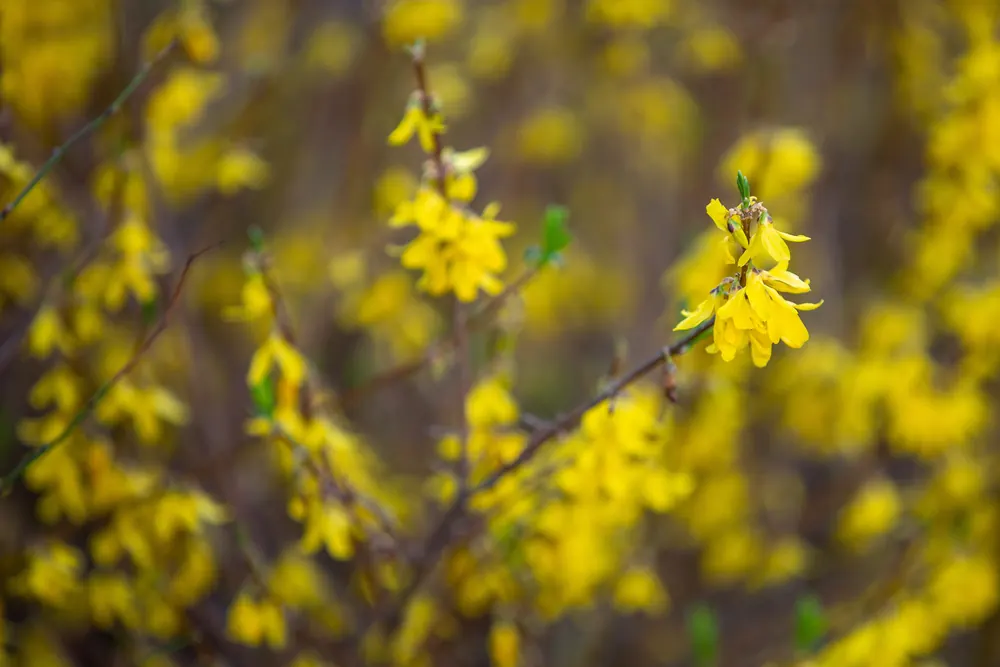
Penn State calls forsythia in full bloom a good indicator, though it can bloom early or late in some years.6 Purdue calls it the “traditional” timing,5 and Michigan State finds its GDD window matches forsythia bloom in many years, but not always: in March 2026 bloom seemed to lag the model.2
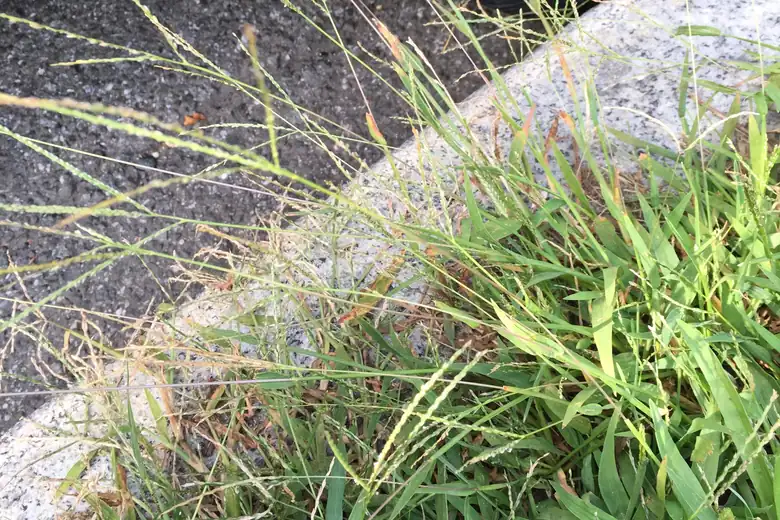
Purdue points to “hotspots” along walks as the first places crabgrass may germinate,5 so treat strips beside driveways and sidewalks early in your window.
Southern lawns: earlier in spring, plus a fall application
Winter annuals such as annual bluegrass (Poa annua), chickweed and henbit sprout in late summer and fall, so UGA Extension10 and Texas A&M11 recommend two applications a year. Michigan State’s model was built for the Midwest and Northeast, so for the South we list published windows:
| Area | Spring (summer weeds) | Fall (winter weeds) | Source |
|---|---|---|---|
| Eastern North Carolina (east of Raleigh) | About mid-February | Not covered | NC State |
| Central North Carolina | By the end of February | Not covered | NC State |
| Central and western Piedmont, NC | Very early March | Not covered | NC State |
| North Georgia | Late February to mid-March | Late August to the end of September | UGA Extension |
| Texas | Soil about 55°F for several days | Soil down to about 70°F for several days | Texas A&M AgriLife |
NC State’s Fred Yelverton moved his advice earlier around 2020 after finding crabgrass germinating in North Carolina in February in four of five recent years.9 Our model gives Raleigh March 4–18, later than that advice, so use the published dates in the South. Texas A&M says timing there varies by several weeks by region.11
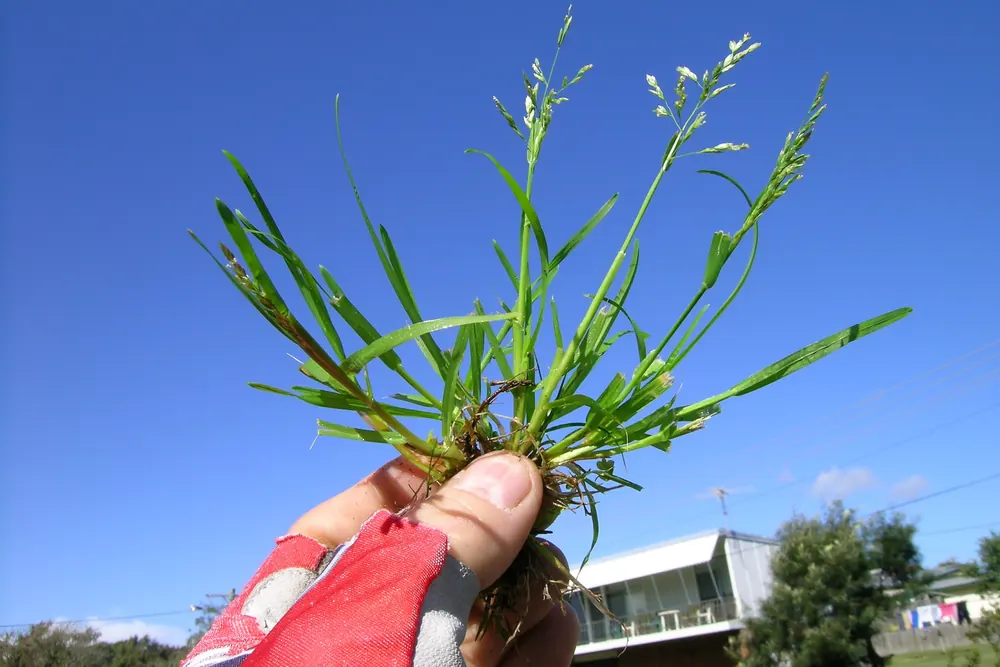
In the North, a fall application clashes with early-fall seeding, the best time to thicken a cool-season lawn. Our guide on when to overseed your lawn has the last safe seeding day for your area.
Split applications and how long protection lasts
Crabgrass keeps germinating into summer, after the first barrier wears thin. Nebraska Extension recommends a second application, as the label directs, about mid-June for season-long control. White grubs need different products on a different calendar; see when to apply grub control.8 Penn State says some products may need a second application within 60 days,6 and UGA Extension says a second application 8 to 10 weeks after the first is permitted for some products.10 The label decides whether you can split, and how much goes into each application.
Planning the season in Indianapolis
- Scenario
- A bluegrass lawn treated with a prodiamine product. Our window: March 30 to April 15; Purdue’s: April 1 to 15.
- Math
- Apply about April 5. Nebraska Extension gives prodiamine a 16-week residual: April 5 + 16 weeks = about July 26.
- Answer
- Protection runs well past the start of germination (about May 15). If the label allows a split, a mid-June second application carries it through late summer.
Pre-emergent and grass seed do not mix
Illinois Extension notes that, except for siduron, preemergence crabgrass products also damage germinating grass seed.7 Penn State advises waiting the time on the label before seeding, usually three to four months,6 and Nebraska Extension calls siduron (Tupersan) the only homeowner option for new seedings.8 Mesotrione (Tenacity) is also labeled at seeding for tolerant grasses, per the Pacific Northwest Weed Management Handbook.13
So seed in early fall and skip the fall pre-emergent, or treat in spring and seed in fall; to seed in spring, use a product labeled for seeding. See the seeding section.
Read the label first
Pre-emergents are pesticides, and the label sets how, how much and how often you may use them. As the US Environmental Protection Agency puts it:
In other words, the label is the law.
- Water it in. Michigan State’s window leaves time to water the product in before germination;2 Texas A&M warns benefin can be lost if not watered in.11
- Count weed-and-feed products. Many already contain a pre-emergent, so adding another can over-apply it.11 Illinois does not recommend early spring fertilizing;7 see when to fertilize your lawn.
- Healthy turf only. Texas A&M advises against use on lawns under moderate to severe stress.11
Missed the window?
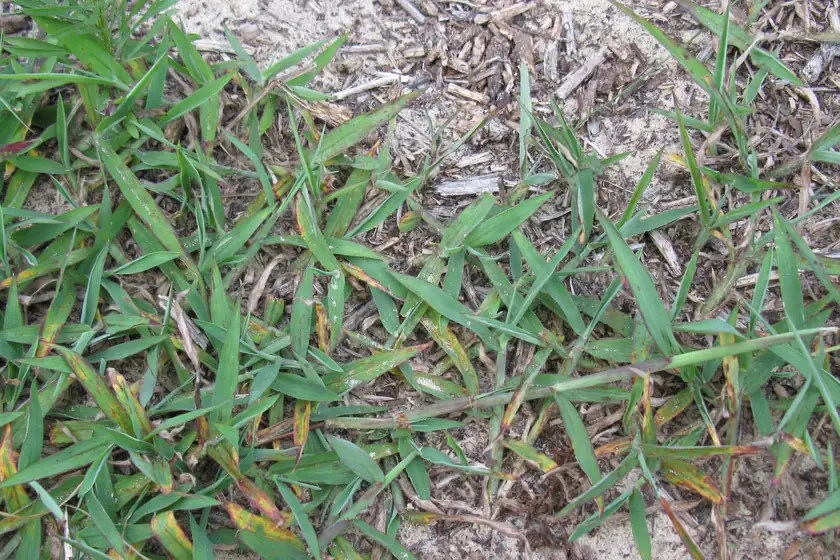
Nebraska Extension says prodiamine and pendimethalin control one-leaf crabgrass if watered in right away, and dithiopyr at the full label rate kills seedlings before they tiller.8 Once most seedlings are up (80% germinate at 60–70°F soil, says Michigan State2), wait for next spring.
The cheapest fix is mowing height. In Nebraska turf research, raising the mowing height of Kentucky bluegrass from 1.5 to 2.5 inches cut crabgrass infestation from 80% to under 15%.8 Our mowing and watering guides explain the rest.
 Related guideWhen to Overseed Your Lawn: The Last Safe Day Where You Live
Your next step
Put your window-open date in your calendar, then check the soil or the forsythia. Find your ZIP code’s spring frost dates with our frost date lookup, browse the weed control guides and other lawn care guides, or read our methodology.
Frequently asked questions
Yes, but early is the smaller mistake. Nebraska Extension notes the product starts breaking down once applied, so a very early application leaves less protection later. Purdue, noting slow breakdown in cool soil, advises erring early.
Mostly no; it stops seedlings as they emerge. Nebraska Extension says dithiopyr at the full label rate kills seedlings before they tiller.
About 50–55°F in the top two inches, holding and still rising, according to Michigan State. Crabgrass germination starts at about 55°F, and most of it happens at 60–70°F.
It depends on the product and label rate. Nebraska Extension gives prodiamine a 16-week residual, and Penn State notes some products need a second application within 60 days.
In the South, yes, for winter weeds such as annual bluegrass: Texas A&M AgriLife says to apply when soil cools to about 70°F for several days, and UGA puts North Georgia’s window at late August to the end of September. In the North, early fall is seeding season, and most pre-emergents also stop grass seed.
Not for a while: Penn State advises waiting the period on the label, usually three to four months. Siduron allows seeding, and mesotrione is labeled at seeding for tolerant grasses.
Sources
- 1.U.S. Climate Normals 1991–2020. NOAA National Centers for Environmental Information, 2021. Used for: daily mean temperatures (from monthly normals) for every ZIP and city Back to text
- 2.Timing crabgrass preemergence applications in spring (Kevin Frank). Michigan State University Extension, 2026. Used for: GDD model, 50–55°F target, 80% germination at 60–70°F, forsythia, 2025–2026 GDD counts Back to text
- 3.About GDDTracker 4.0: Crabgrass Preemergence Timer (GDD32) and Germination Timer (GDD50). Michigan State University, accessed 2026. Used for: GDD method, Feb 15 start, 250–500 GDD window, germination timer Back to text
- 4.For Professionals: Timing of Preemergence Herbicides (Zac Reicher). Purdue University Turfgrass Science, 2008. Used for: Indiana application dates, apply early rather than late Back to text
- 5.Timing of Preemergence Herbicides: Part 2 (Zac Reicher). Purdue University Turfgrass Science, 2007. Used for: forsythia cue, hotspots along walks Back to text
- 6.Crabgrass is top weed in Pennsylvania, so tackle it early (Peter Landschoot). Penn State College of Agricultural Sciences, 2010. Used for: germination soil temperature, Pennsylvania dates, forsythia, reapplication, seeding wait Back to text
- 7.Managing Crabgrass in Lawns. University of Illinois Extension, accessed 2026. Used for: germination temperature, Illinois dates, siduron, weed-and-feed timing Back to text
- 8.Soil Temperatures and Spring Preemergence Herbicide Applications (Sarah Browning). Nebraska Extension in Lancaster County, 2019. Used for: 55°F at 4 inches, Lincoln dates, second application, prodiamine residual, siduron, mowing-height research Back to text
- 9.When to Apply Preemergent Herbicides for Turfgrasses (Fred Yelverton). NC State Extension (TurfFiles), 2024. Used for: North Carolina dates, February germination Back to text
- 10.Winter Weed Identification and Control (Heather N. Kolich). UGA Extension Forsyth County, 2022. Used for: two applications a year, North Georgia spring and fall windows, second application Back to text
- 11.Preemergence Herbicides for Warm-Season Turfgrass Lawns (SCSC-PU-232, Becky Bowling). Texas A&M AgriLife Extension, 2021. Used for: how preemergents work, 55°F spring and 70°F fall, measuring soil temperature, label cautions Back to text
- 12.Introduction to Pesticide Labels. U.S. Environmental Protection Agency, accessed 2026. Used for: the label is the law
- 13.Annual Grass Weeds (turfgrass): mesotrione at seeding. Pacific Northwest Weed Management Handbook (Oregon State, Washington State, University of Idaho), accessed 2026. Used for: mesotrione labeled at seeding of tolerant turfgrasses Back to text
- 14.Large crabgrass (photo). Harry Rose, Wikimedia Commons, CC BY 2.0, 2011. Used for: photo, cropped and resized
- 15.Annual bluegrass (photo). Harry Rose, Wikimedia Commons, CC BY 2.0, 2006. Used for: photo, cropped and resized
.jpg)
.jpg)
How this guide was made
- Written by the Yard & Garden Desk and reviewed by the Data & Methodology Desk.
- Data: application windows are estimates for a normal year: daily mean temperatures interpolated from NOAA NCEI U.S. Climate Normals 1991–2020 for the station nearest each ZIP code, run through Michigan State University’s GDDTracker crabgrass model (250–500 GDD, base 32°F, from Feb 15). Soil-temperature thresholds and regional dates come from Michigan State, Purdue, Penn State, Illinois, Nebraska, NC State, UGA and Texas A&M extension publications. See our methodology.
- AI use: AI tools help us research, draft and check this guide. Every figure is checked against the source cited for it, and calculated figures come from our own code, described on the methodology page.
- Spotted an error? Tell us — the form opens with this page’s address filled in.
Change log
- Oct 4, 2026Re-checked against today’s search results and sources (Michigan State, Purdue, Penn State, Illinois, Nebraska, NC State, UGA, Texas A&M, EPA). Added a FAQ on fall applications; updated the NC State link to its current address; grass-type link now points to our cool-season vs. warm-season guide.
- Oct 2, 2026Published. Soil-temperature thresholds from six extension services; normal-year application windows for 22 cities estimated from NOAA 1991–2020 normals with Michigan State’s GDDTracker crabgrass model and checked against Purdue, Penn State, Illinois and Nebraska dates; Southern windows from NC State, UGA and Texas A&M.
Covers lawns, gardens, frost and planting. We write the guides and maintain the tools that tell you when to seed, feed and plant for your ZIP.
Keep reading
When to Apply Grub Control: Preventive and Curative Dates Where You Live
Put preventive grub control down as Japanese beetles lay eggs, usually mid-June to mid-July, and curatives in August. Normal-year beetle flight and preventive target dates for 29 US cities from NOAA normals, checked against extension advice.
Should You Rake Leaves? When to Mulch, Rake or Leave Them
Usually not. Mow a light or moderate layer of leaves into the lawn until your last mow, and remove only what hides the grass. Extension thresholds, the research, and leaf deadlines for 20 US cities from NOAA normals.
When to Apply Lime to Your Lawn: Test First, Then Fall or Winter
Lime a lawn only when a soil test shows low pH, and spread it in fall or winter on dry, unfrozen turf so it has months to work. pH targets by grass, extension rates, NOAA freeze data for 22 cities, and where the West can skip it.
Seasonal reminders for your ZIP
Get a short email when it’s time to overseed, start seeds, open the pool or service your furnace — timed to your climate.