




Dormant Seeding Your Lawn: When to Start Where You Live
Sow cool-season grass seed in winter and let it sprout in spring. Here is when the window opens and closes in 23 Northern cities, from NOAA climate normals and the University of Minnesota’s 40°F rule, checked against four extension services.
- Last reviewed Oct 7, 2026
- 12 cited sources
- 9 min read
Set your ZIP to see dates for your area.
- 1Dormant seeding means spreading cool-season grass seed in late fall or winter, when it is too cold to sprout, so it germinates in spring.
- 2Start when afternoon highs fall to about 40°F (University of Minnesota: highs of 35–40°F): in a normal year about Nov 16 in Minneapolis, Dec 10 in Chicago and Dec 29 in Boston. The window closes when highs climb back to 40°F, from early February to late March.
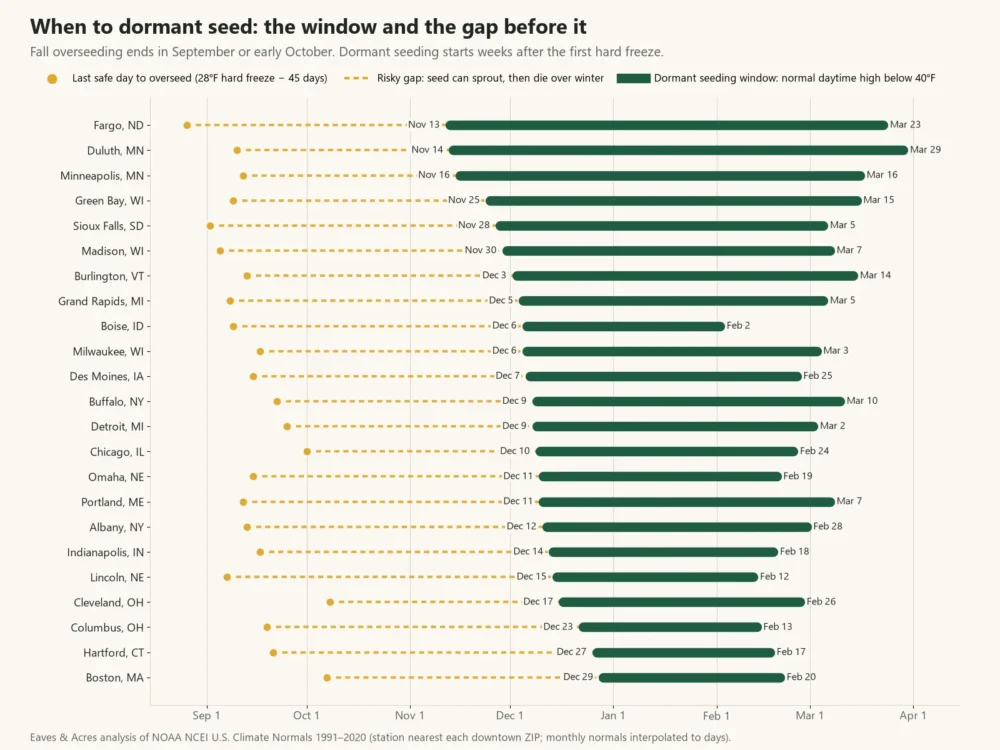
- 3Don’t seed in the weeks before that. The window opens a median 88 days after the last safe fall overseeding day and 43 days after the first hard freeze; seed sown in between can sprout and die over winter.
- 4It is a Northern practice: only 40% of US ZIP codes get a month or more of sub-40°F afternoons, and Philadelphia, Washington and St. Louis get none.
- 5Skip most spring crabgrass preventers after dormant seeding; they stop grass seed too. Nebraska Extension names siduron as the pre-emergent for new seedings. Follow the label.
Dormant seeding means spreading cool-season grass seed in late fall or winter, when it is too cold for the seed to sprout, so it waits in the soil and germinates in spring. Start once normal afternoon highs drop to about 40°F: mid-November in Minneapolis, early December in Chicago and Detroit, late December in Boston. Finish before highs climb back above 40°F in late winter.
It only works where winters stay cold. By NOAA’s 1991–2020 climate normals, just 40% of US ZIP codes get a month or more of sub-40°F afternoons. Below are the windows for 23 Northern cities, checked against extension advice from Minnesota, Nebraska, Indiana and Kansas.
When to dormant seed: the 40°F signal
The seed must not sprout before winter. University of Minnesota Extension says dormant seeding can be done any time soil temperatures are below 40°F, typically from early November to mid-March in most of Minnesota.2 Few homeowners measure soil temperature, so UMN’s turfgrass program gives an air-temperature cue:3
Wait for high daytime temperatures of 35-40 degrees before seeding.
We used that cue on NOAA’s normals. The window opens on the first day the normal afternoon high falls below 40°F and closes when it climbs back to 40°F, the point at which, as UMN puts it, seed may begin to germinate as air and soil warm.2,1
Loads from YouTube (privacy-enhanced mode) only when you press play.
Dormant seeding dates by city
Each window uses the weather station nearest the ZIP code shown.1 The window closes when the normal high climbs back to 40°F. The last column is the last safe fall overseeding day from our overseeding guide.
| City (ZIP) | Opens (high below 40°F) | Closes | Overseed deadline |
|---|---|---|---|
| Fargo, ND (58102) | Nov 13 | Mar 23 | Aug 26 |
| Duluth, MN (55802) | Nov 14 | Mar 29 | Sep 10 |
| Minneapolis, MN (55401) | Nov 16 | Mar 16 | Sep 12 |
| Green Bay, WI (54301) | Nov 25 | Mar 15 | Sep 9 |
| Sioux Falls, SD (57104) | Nov 28 | Mar 5 | Sep 2 |
| Madison, WI (53703) | Nov 30 | Mar 7 | Sep 5 |
| Burlington, VT (05401) | Dec 3 | Mar 14 | Sep 13 |
| Grand Rapids, MI (49503) | Dec 5 | Mar 5 | Sep 8 |
| Boise, ID (83702) | Dec 6 | Feb 2 | Sep 9 |
| Milwaukee, WI (53202) | Dec 6 | Mar 3 | Sep 17 |
| Des Moines, IA (50309) | Dec 7 | Feb 25 | Sep 15 |
| Buffalo, NY (14202) | Dec 9 | Mar 10 | Sep 22 |
| Detroit, MI (48201) | Dec 9 | Mar 2 | Sep 25 |
| Chicago, IL (60601) | Dec 10 | Feb 24 | Oct 1 |
| Omaha, NE (68102) | Dec 11 | Feb 19 | Sep 15 |
| Portland, ME (04101) | Dec 11 | Mar 7 | Sep 12 |
| Albany, NY (12207) | Dec 12 | Feb 28 | Sep 13 |
| Indianapolis, IN (46204) | Dec 14 | Feb 18 | Sep 17 |
| Lincoln, NE (68508) | Dec 15 | Feb 12 | Sep 7 |
| Cleveland, OH (44113) | Dec 17 | Feb 26 | Oct 8 |
| Columbus, OH (43215) | Dec 23 | Feb 13 | Sep 19 |
| Hartford, CT (06103) | Dec 27 | Feb 17 | Sep 21 |
| Boston, MA (02108) | Dec 29 | Feb 20 | Oct 7 |
These are normal-year dates; a mild December can push the start back, so check the forecast too. For any other ZIP code, look up your frost and hard-freeze dates.
Does the 40°F rule match extension advice?
Four extension services publish a dormant seeding window for their own area. We compared them with the computed dates for nearby cities:
| Place | Computed window | Published extension timing |
|---|---|---|
| Minnesota: Minneapolis St. Cloud Rochester Duluth | Nov 16–Mar 16 Nov 14–Mar 19 Nov 21–Mar 16 Nov 14–Mar 29 | Soil below 40°F, typically early November to mid-March in most of Minnesota (UMN Extension); generally mid- to late November in the Twin Cities (UMN Turfgrass) |
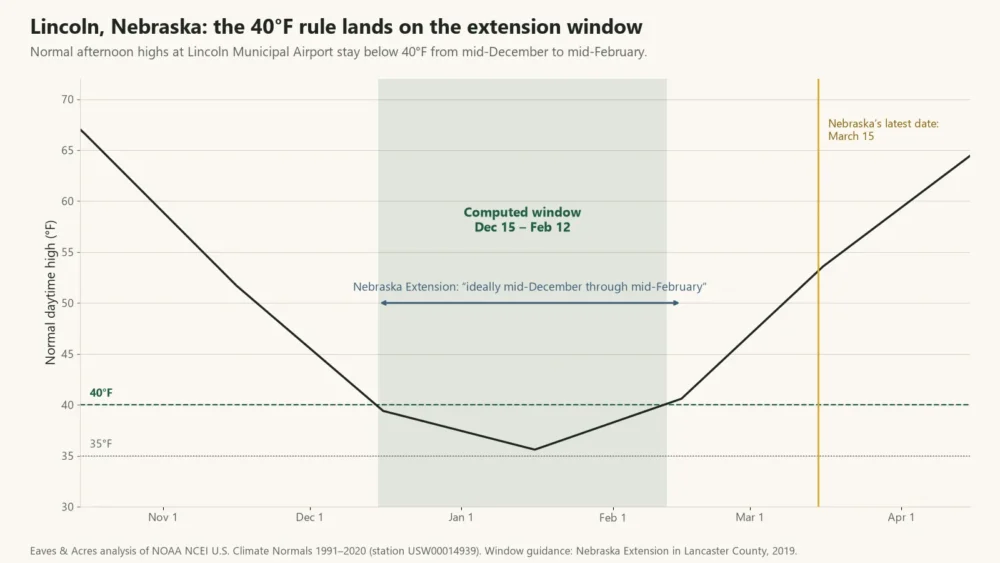
| Nebraska: Lincoln | Dec 15–Feb 12 | Ideally mid-December through mid-February; no later than March 15 (Nebraska Extension, Lancaster County) |
| Northern IN & IL: South Bend West Lafayette Champaign | Dec 8–Feb 28 Dec 10–Feb 24 Dec 13–Feb 19 | As early as Thanksgiving and as late as March; more effective in the northern half of both states (Purdue / Illinois AY-3-W) |
| Southern IN & IL: Evansville Carbondale | none none | Warm spells can make seed sprout and then die in the cold that follows (Purdue / Illinois AY-3-W) |
| Kansas City area | 1 day; the normal high bottoms out at 39.9°F | Start when temperatures stay below 40°F; research points to February for the best results (K-State, Johnson County) |
In Lincoln the computed window lands within three days of Nebraska Extension’s at both ends.4 In Minnesota it matches the mid- to late-November start UMN gives for the Twin Cities and the mid-March end, though UMN’s soil rule allows seeding from early November.2,3 In Indiana and Illinois it opens about two weeks after the earliest date in Purdue’s seeding guide, Thanksgiving, and sits inside its range.5
Too late to overseed, too early to dormant seed
The weeks between fall seeding and the dormant window are the worst time to sow. Bauer explains why: seed sown in a mild October will mostly sprout before winter, and the young seedlings can be lost entirely over the cold months.3
Our data shows how long that wait is. Across the 16,086 ZIP codes with a window of 30 days or more, it opens a median of 88 days after the last safe overseeding day.1 Measured from frost, it opens a median 55 days after the typical first 32°F frost and 43 days after the typical first 28°F hard freeze. So “seed after the first frost” is far too early; see frost vs. freeze for how the two differ.
Where dormant seeding works, and where it doesn’t
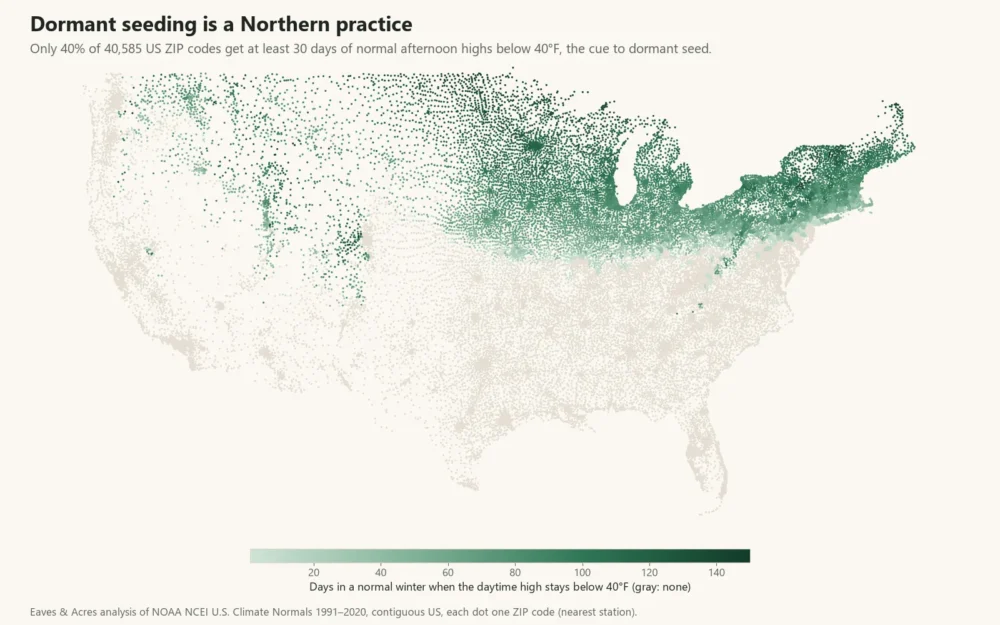
The window covers the Upper Midwest, the Great Lakes, New England, upstate New York and the northern Rockies. In Iowa, Maine, Michigan, Minnesota, Montana, New Hampshire, North Dakota, Vermont and Wisconsin, every ZIP code has at least a month of it. Further south the window shrinks to days, then vanishes:
| City (ZIP) | Days with normal high below 40°F | Coldest month’s normal high |
|---|---|---|
| Pittsburgh, PA (15222) | 14 (Jan 11–Jan 25) | 39.3°F |
| Salt Lake City, UT (84101) | 13 (Jan 5–Jan 18) | 39.7°F |
| New York, NY (10001) | 9 (Jan 13–Jan 22) | 39.5°F |
| Kansas City, MO (64105) | 1 | 39.9°F |
| St. Louis, MO (63101) | none | 40.6°F |
| Cincinnati, OH (45202) | none | 40.6°F |
| Philadelphia, PA (19103) | none | 41.6°F |
| Louisville, KY (40202) | none | 43.3°F |
| Washington, DC (20001) | none | 44.7°F |
| Denver, CO (80202) | none | 47.3°F |
| Seattle, WA (98101) | none | 47.8°F |
Dormant seeding is more effective in the northern-half of our states
Purdue warns that warm spells in southern Indiana and Illinois can make seed sprout and then die in the next cold snap.5 K-State’s Johnson County office, near Kansas City, says dormant seeding can start once temperatures stay below 40°F, but that research points to February seeding for the best germination and coverage.7 Where the normal high never drops below 40°F, as in Philadelphia, Washington or St. Louis, the reliable choice is fall seeding.
Dormant seeding is for cool-season lawns; wildflower and native seed mixes have their own fall sowing dates. For Bermuda grass or zoysia, see cool-season vs. warm-season grass; UMN notes that warm-season grasses can be dormant-seeded but face stronger competition from crabgrass.2
How to dormant seed a lawn
- Pick the seed. UMN says it works with all of Minnesota’s cool-season lawn grasses, including Kentucky bluegrass, the fine fescues and tall fescue.2 Rutgers notes that perennial ryegrass establishes fastest.6
- Buy extra. UMN suggests buying 10–20% more than you need, to patch any spots that fail in spring.2 Rutgers says rates are often raised 30–50% to offset winter losses.6 For base rates, Nebraska gives 2–3 lb of Kentucky bluegrass or 6–8 lb of tall fescue per 1,000 sq ft on bare soil, and half that to thicken a thin lawn.4
- Clear and loosen the surface. Bag heavy leaf litter so seed can reach the soil; just to thicken a lawn, UMN says no other preparation is needed. Nebraska advises core aeration or hand raking in fall, before seeding, for better seed-to-soil contact; our aeration guide has the timing.2,4
- Spread it on a dry day. UMN suggests a drop spreader for large areas, applying half the seed in each of two directions. The seed does not need raking in. On bare soil, especially slopes, UMN suggests a germination or erosion-control blanket to hold it in place.2 Rutgers adds that a blanket guards against wash-outs, wind and birds.6
- Skip the fertilizer. Rutgers advises against fertilizing during winter dormant seeding and never on frozen or snow-covered soil, where it runs off.6
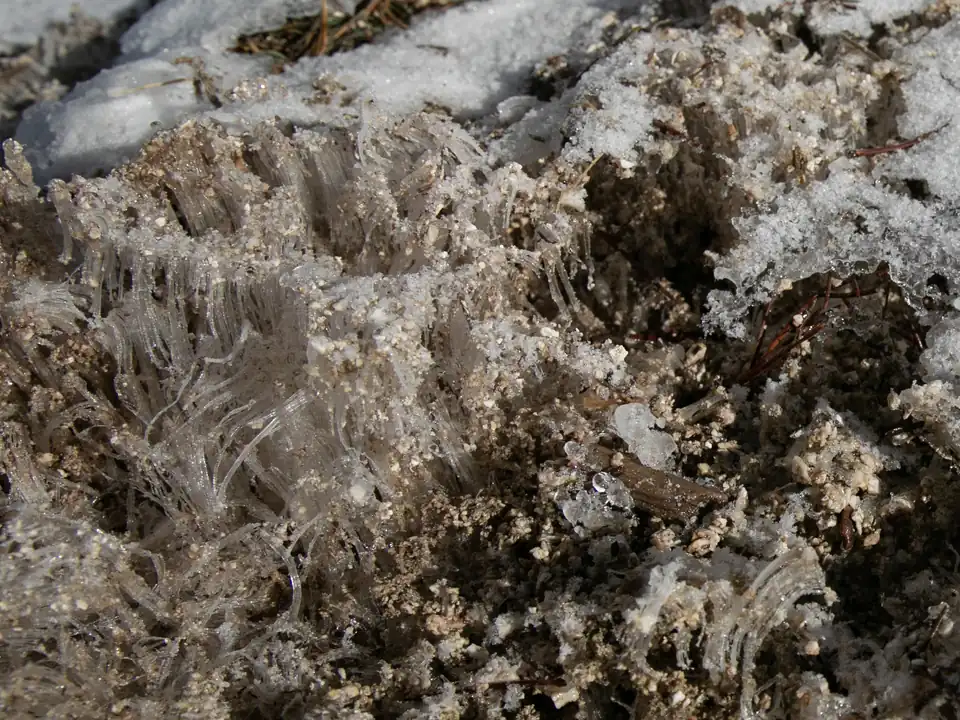
As the soil heaves and cracks, Purdue explains, crevices form that give the seed good germination conditions.5
Spring care and the pre-emergent conflict
Most crabgrass preventers also stop grass seed, UMN warns.2 Purdue advises against a pre-emergent in early spring after a dormant seeding.5 Nebraska names siduron (Tupersan) as the only pre-emergent to use with new seedings, applied mid-April to early May rather than with the seed.4 Our pre-emergent timing guide covers the crabgrass window.
Once seedlings appear, don’t let them dry out. UMN suggests hand watering if the irrigation is still off, a first mowing once most seedlings pass your mowing height (3 inches or more is best), and a starter fertilizer around then.2 Nebraska suggests watering two to four times a day from late April, keeping the top ½ to 1 inch of soil moist.4
Is dormant seeding worth it?
For a thin Northern lawn after a missed fall window, usually yes. Bauer says a dormant-seeded lawn can mature as much as a month earlier in spring than a spring-seeded one.3 The trade-off is risk:
dormant seedings are much riskier than seeding at more ideal times
Murphy lists seedlings killed by a hard frost after early sprouting, seed washed away and seed eaten by birds.6 K-State also flags birds and extreme cold,7 while UMN says it has not observed seed loss to birds.2 If you can seed in the late-summer window, do; dormant seeding is the backup.
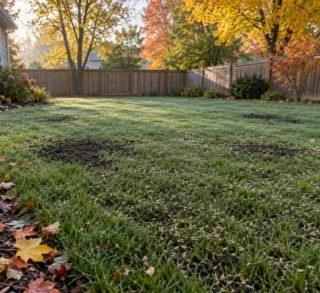 Related guideWhen to Overseed Your Lawn: The Last Safe Day Where You Live
How we worked out these dates, and their limits
Each window uses NOAA NCEI’s 1991–2020 monthly normal daily maximum temperature at the station nearest the ZIP code.1 We placed each month’s value at mid-month, interpolated the days in between, and counted the days below 40°F. The extension rules refer to soil temperature or actual highs; our dataset has neither, so these are normal-year estimates, and your yard can differ from a station a few miles away. Full details are on our methodology page.
Missed this winter’s window? Find your last safe day to overseed next fall, or browse our seeding guides.
Frequently asked questions
Yes, where winters stay cold. University of Minnesota Extension calls it an excellent way to seed with less water and little site preparation, and Purdue says it works best in the colder northern half of Indiana and Illinois. Rutgers adds that it is riskier than seeding at the ideal time, so plan to patch thin spots in spring.
It can be. Sam Bauer of University of Minnesota Turfgrass Science says a dormant-seeded lawn can mature up to a month faster in spring, but a spring cold spell can injure early seedlings and more seed is lost over winter. Purdue adds that it is easier to schedule, because spring rains often make seeding after March difficult. In a University of Nebraska–Lincoln comparison described by Nebraska Extension, late-April, late-August and late-November seedings all gave an acceptable stand after two months.
It depends on your winter. In a normal year the window opens in mid- to late November in Minnesota and the Dakotas, around the start of December in Wisconsin and Vermont, in early to mid-December in Michigan, Iowa, Nebraska, Chicago, Indiana and upstate New York, and in mid- to late December in Ohio, Hartford and Boston. It stays open into February or March.
For normal fall seeding in the North, usually yes: the last safe overseeding days in our table run from Aug 26 in Fargo to Oct 8 in Cleveland. But October is too early for dormant seeding. The University of Minnesota warns that October seed mostly sprouts before winter and the seedlings can die. Wait until highs fall below 40°F.
Advice differs. Nebraska Extension says not to spread seed over snow, because it needs contact with the soil. University of Minnesota Extension says spreading onto melting snow works, but that bare ground shows more clearly where seed is needed.
Cool-season grasses. University of Minnesota Extension says dormant seeding works with Kentucky bluegrass, the fine fescues and tall fescue, and Rutgers notes that perennial ryegrass establishes fastest. Warm-season grasses can be dormant-seeded, UMN says, but crabgrass competes more strongly with them.
Nebraska Extension gives 2–3 lb of Kentucky bluegrass or 6–8 lb of tall fescue per 1,000 sq ft for bare soil, and half that to thicken a thin lawn. University of Minnesota Extension suggests buying 10–20% extra for spring patching; Rutgers says rates are often raised 30–50% to offset winter losses.
Not in winter. Rutgers advises against fertilizer during dormant seeding and never on frozen or snow-covered soil. Water once seedlings emerge: Nebraska suggests two to four times a day from late April, keeping the top ½ to 1 inch moist. UMN suggests a starter fertilizer around the first mowing.
Timing. King’s AgriSeeds describes dormant seeding as early-winter sowing before the ground freezes, and frost seeding as late-winter broadcasting onto frozen ground, where freezing and thawing work the seed in. Frost seeding is mainly a pasture practice, often with clover. For lawns, UMN’s window covers both, from early November to mid-March.
Sources
- 1.U.S. Climate Normals 1991–2020. NOAA National Centers for Environmental Information, 2021. Used for: daily maximum temperature normals, first frost and hard-freeze dates for every ZIP and city Back to text
- 2.Dormant seeding to establish or improve your lawn, Jon Trappe. University of Minnesota Extension, 2025. Used for: soil-below-40°F rule, Minnesota window, species, extra seed, site preparation, spreading, snow, spring care, pre-emergent conflict Back to text
- 3.There’s Still Time to Dormant Seed Your Lawn, Sam Bauer. University of Minnesota Turfgrass Science, undated. Used for: 35–40°F daytime-high rule, Twin Cities timing, October germination risk, earlier spring maturity Back to text
- 4.Dormant Lawn Seeding, Sarah Browning. Nebraska Extension in Lancaster County, 2019. Used for: Nebraska window and March 15 limit, seeding rates, seedbed preparation, snow, siduron, spring watering Back to text
- 5.Establishing Turfgrass Areas From Seed (AY-3-W), Zac Reicher, Cale Bigelow, Aaron Patton and Tom Voigt. Purdue Extension and University of Illinois Extension, 2006. Used for: Indiana/Illinois window, freeze-thaw seed contact, northern vs southern half, spring pre-emergent after dormant seeding Back to text
- 6.Mild Winter, What Does It Mean for Overseeding of Turf or Dormant Seeding?, Jim Murphy. Rutgers Turf Blog, Rutgers University, 2023. Used for: dormant seeding risks, higher seeding rates, perennial ryegrass, no fertilizer on frozen soil Back to text
- 7.Is Dormant Lawn Seeding the Answer for Struggling Lawns?, Markis Hill. K-State Research and Extension, Johnson County, 2025. Used for: Kansas City-area timing, February seeding, birds and cold Back to text
- 8.Dormant Seeding Explained: Winter Lawn Renovation Tips (video), Roch Gaussoin. Nebraska Extension, Backyard Farmer, 2023. Used for: embedded video
- 9.Dormant Seeding and Frost Seeding. King’s AgriSeeds, 2014. Used for: dormant seeding vs. frost seeding definitions
- 10.AllenParkSeeds (photo). Simon Speed, Wikimedia Commons, CC0, accessed 2026. Used for: hero photo, cropped and resized
- 11.Needle ice at Solitary Geyser (photo). National Park Service, via Wikimedia Commons, public domain, accessed 2026. Used for: needle ice photo, cropped and resized
- 12.Dormant Seeding for Lawns, John Fech. GRO Big Red, Nebraska Extension, 2023. Used for: University of Nebraska–Lincoln comparison of late-April, late-August and late-November seedings

.jpg)
How this guide was made
- Written by the Yard & Garden Desk and reviewed by the Data & Methodology Desk.
- Data: dormant seeding windows are the days the NOAA NCEI 1991–2020 normal daily maximum temperature stays below 40°F at the station nearest each ZIP (monthly normals interpolated to days), from the University of Minnesota 35–40°F daytime-high rule; frost dates are the station’s median first 32°F and 28°F nights; the last safe overseeding day is the median 28°F hard freeze minus 45 days. Real winters vary. See our methodology.
- AI use: AI tools help us research, draft and check this guide. Every figure is checked against the source cited for it, and calculated figures come from our own code, described on the methodology page.
- Spotted an error? Tell us — the form opens with this page’s address filled in.
Change log
- Oct 7, 2026Re-checked against today’s search results and the cited sources (University of Minnesota, Nebraska, Purdue/Illinois, Rutgers, K-State). Added a FAQ on dormant vs. spring seeding with a University of Nebraska–Lincoln seeding-date comparison; added the blanket tip for bare soil and slopes; updated the University of Minnesota Extension link to its current address.
- Oct 4, 2026Published. Dormant seeding windows for 23 Northern cities and a national ZIP analysis from NOAA 1991–2020 normals, using the University of Minnesota 40°F daytime-high rule; checked against Minnesota, Nebraska, Purdue/Illinois and K-State timing.
Covers lawns, gardens, frost and planting. We write the guides and maintain the tools that tell you when to seed, feed and plant for your ZIP.
Keep reading
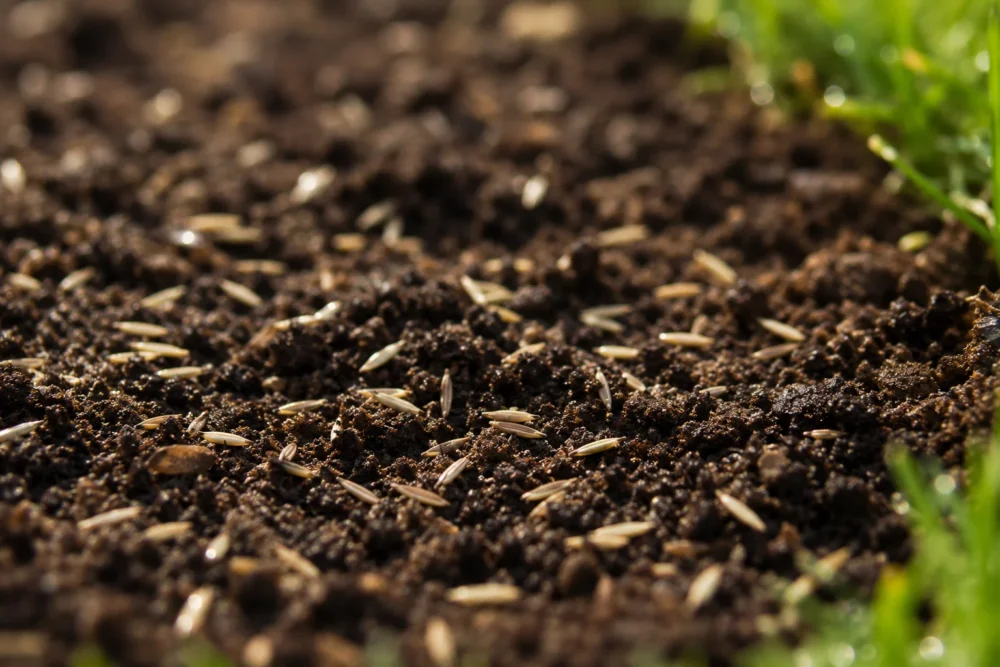
How Long Does Grass Seed Take to Grow? Germination Days by Grass and Season
Most lawn grass seed germinates in 3 to 30 days, from about a week for ryegrass to a month for Kentucky bluegrass and Bermuda grass. NOAA’s measured soil temperatures show why early-fall seed comes up so much faster than spring seed.
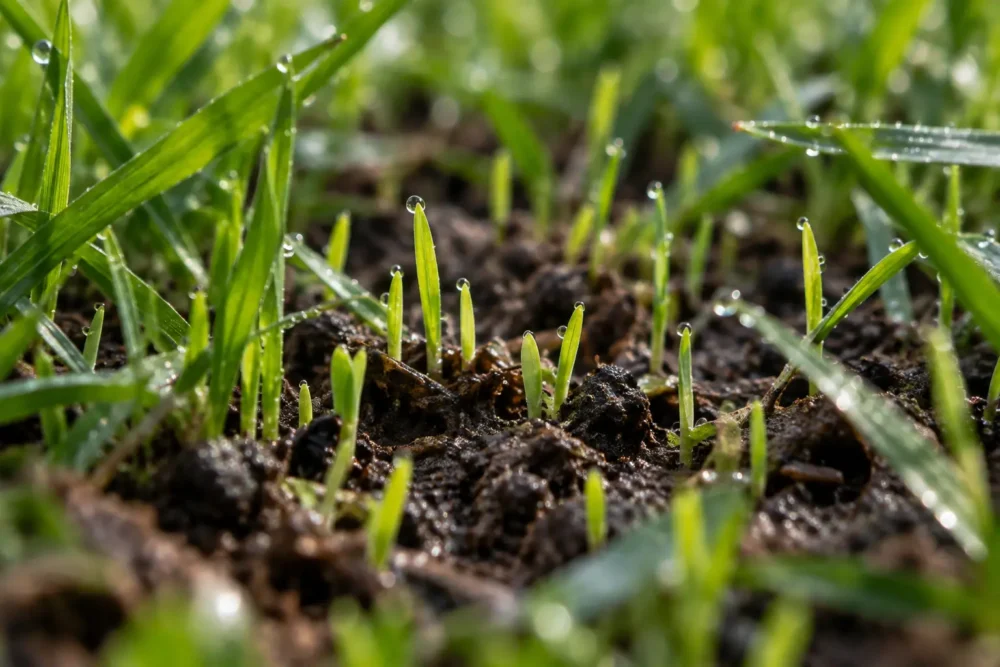
When to Plant Grass Seed in Spring: Soil Temperature Dates Where You Live
Get cool-season seed down before the top 2 inches of soil reach 50°F, and wait for 65°F soil for Bermuda grass. Typical dates for 48 US cities from NOAA’s measured soil temperatures and climate normals.
When to Aerate Your Lawn: Dates by Grass Type and City
Core-aerate cool-season lawns in late summer to early fall and warm-season lawns in late spring to summer. Windows for 27 cities from NOAA normals, checked against extension calendars.
Seasonal reminders for your ZIP
Get a short email when it’s time to overseed, start seeds, open the pool or service your furnace — timed to your climate.